
Key takeaways
- Cast iron: $40 to $70, assuming the coating remains intact and you perform occasional cleaning.
- Steel: $60 to $110, assuming no replacement and only routine wiping.
What's inside
Choosing between a cast iron vs steel kettlebell is less about which material is “stronger” and more about how the weight will behave in your home. A cast iron kettlebell is usually the practical fitness buy: it is widely available, comparatively affordable, and well suited to swings, squats, presses, and carries. A steel kettlebell—especially a competition-style model—typically offers more consistent dimensions across weights, a smoother handle, and a more predictable feel when you are practicing cleans or snatches.
The real decision is whether you want a compact, traditional tool for general strength training or a more standardized tool that supports precise technique and future progression. Your available floor space, noise tolerance, storage plans, and budget can matter as much as your workout goals. Here is how the two materials compare for a home gym in 2026.
As an Amazon Associate we earn from qualifying purchases at no extra cost to you. Product prices and availability are accurate as of the date shown and are subject to change.


Quick Verdict
Choose cast iron if you want the best value, a traditional kettlebell shape, and a simple piece of equipment for swings, goblet squats, deadlifts, rows, and presses. Cast iron is generally the better starting point for most home users, particularly when buying a first kettlebell in the 15- to 35-pound range.
Choose steel if you prioritize consistent size between weights, a competition-style shape, and a handle that supports repeated cleans, snatches, and technical drills. Steel is also attractive for compact storage because competition kettlebells often use a similar outer shell size whether they weigh 18 or 70 pounds.
For a mixed home routine, a cast iron kettlebell is usually the sensible first purchase. Move to steel when you are training regularly, using several weights, or refining competition-style technique.
Side by Side
| Factor | Cast Iron Kettlebell | Steel Kettlebell |
|---|---|---|
| Comfort | Traditional handle; comfort varies by casting and finish | Often smoother and more uniform, especially on competition models |
| Durability | Very durable, though chipped coating can expose metal to rust | Highly durable; powder-coated or painted finishes still need care |
| Price range | About $30–$180 for common home-gym sizes | About $45–$250, with premium models costing more |
| Maintenance | Keep dry; occasionally oil bare or lightly finished iron | Wipe clean and inspect the handle and coating; less seasoning required |
| Space needed | Size increases noticeably as weight increases | Competition shapes remain relatively consistent across weights |
| Look | Classic, industrial, often black or dark gray | Uniform, modern, and commonly color-coded by weight |
| Resale | Good for recognizable brands and common weights | Often strong among dedicated lifters, particularly for competition sets |
| Best for | General strength, conditioning, beginners, and value shoppers | Technique work, multiple-weight training, and standardized practice |
| Typical handle feel | May be thicker, more textured, or slightly irregular | Usually consistent in diameter and shape |
Where Cast Iron Wins
Value is cast iron’s biggest advantage. A basic cast iron kettlebell commonly costs about $1.25 to $2.50 per pound, although specialty finishes and heavier sizes can raise that figure. A 25-pound model may cost approximately $30 to $60, while a 50-pound model often falls between $60 and $120. That makes it easier to build a useful collection without spending several hundred dollars at once.
Cast iron also has the familiar shape most people expect from a kettlebell: a rounded bell with a handle that becomes more substantial as the weight increases. That shape works well for two-handed swings, Russian swings, goblet squats, farmer carries, and basic pressing. Because the bell is often smaller at lighter weights, it can also feel natural for beginners learning how to control the load close to the body.
Another benefit is availability. Cast iron kettlebells are sold in common increments such as 5, 10, 15, 20, 25, 30, 35, 40, and 50 pounds. This makes it relatively easy to replace one weight, add a heavier bell, or find a used model locally.
For reference, the Amazon Basics Cast Iron Kettlebell for Strength Training, Wide Handle, 25 Pounds, Black is listed at $34.65, while the 50-pound textured wide-handle version is listed at $79.99. Those prices illustrate why cast iron remains popular for outfitting a home gym on a budget. They are kettlebell examples rather than substitutes for choosing the right handle, finish, or weight for your routine.
Cast iron can also have a pleasing, traditional appearance. If you like an industrial home-gym look, a dark cast finish may blend more naturally with a squat rack, wood flooring, or black storage shelving than brightly colored competition equipment.
Where Steel Kettlebell Wins
Steel kettlebells stand out for consistency. Competition-style steel bells are designed with a standardized outer profile, so a 20-pound bell and a 35-pound bell can be close in overall dimensions. The weight changes internally rather than dramatically changing the bell’s size. That can make your setup more predictable as you progress.
This consistency is particularly useful for cleans, snatches, jerks, and long-cycle work. Your hand meets a similar handle position and the bell travels along a familiar path, even when the load changes. Steel can therefore be a better fit for someone practicing a specific technique or following a structured progression with several weights.
The handles are often smoother and more uniform than those on inexpensive cast iron models. That does not mean every steel handle is comfortable: some may feel too thick, too slick, or harsh during high-repetition work. Still, a well-finished steel handle can reduce distracting variations in diameter and casting texture.
Steel is also useful when storage space is limited. A set of four competition kettlebells may occupy less vertical and horizontal room than four traditionally shaped bells, though the base diameter and handle clearance still matter. Plan for about 12 to 18 inches of width per stored bell if you want enough room to lift each one safely without scraping nearby equipment.
The tradeoff is price. Steel kettlebells commonly cost around $2 to $4 per pound, and premium competition models can exceed $5 per pound. You may also find fewer low-cost options at local retailers. Steel makes the most sense when its shape and handle consistency will directly improve how you train—not simply because the material sounds more advanced.
Cost Over 5 Years
For a fair comparison, consider one 25-pound kettlebell used two or three times per week. A cast iron model may cost $35 to $60 upfront. A comparable steel model may cost $55 to $100. Add an estimated $5 to $10 for a floor mat or protective storage, and the five-year ownership cost is approximately:
- Cast iron: $40 to $70, assuming the coating remains intact and you perform occasional cleaning.
- Steel: $60 to $110, assuming no replacement and only routine wiping.
Neither material normally has a recurring operating cost. Maintenance is mostly prevention: keep the kettlebell dry, avoid leaving it on damp concrete, and inspect for chipped coating or sharp handle edges. A light coat of mineral oil can help protect exposed cast iron, but do not leave excess oil on a handle where it could become slippery.
The larger cost difference appears when building a set. Four cast iron bells at 15, 25, 35, and 45 pounds might cost roughly $140 to $300. Four comparable steel bells may cost about $220 to $500 or more. However, steel can retain value well if the handles and finish remain in good condition, partially narrowing the long-term difference if you sell later.
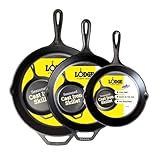
Do not confuse kettlebell pricing with cast iron cookware pricing. For example, a Lodge Pre-Seasoned Cast Iron Skillet, PFAS-Free, 10.25 Inches is listed at $24.90, and the Lodge Pre-Seasoned Cast Iron Skillet Set with 8-, 10.25-, and 12-inch pans is listed at $64.90. Those products demonstrate the broad affordability and durability of cast iron, but cookware and exercise equipment have different shapes, finishes, and safety requirements.
Which One for Your Home
Small apartment
Choose a compact cast iron kettlebell if you are buying one or two weights for swings, squats, and presses. A 20- to 25-pound bell is often manageable for general training, but measure your storage area first. A steel competition model is worth considering if you plan to own several weights and want them to occupy a more consistent footprint. In either case, use a dense rubber mat to reduce vibration and protect the floor.
Family with kids or pets
Prioritize secure storage over material. A 25-pound kettlebell can cause serious injury if pulled from an open shelf, and a 50-pound model is especially difficult to move safely. Store it low, stable, and out of walkways, but not where children can climb onto it. Cast iron’s lower price may make it easier to buy a dedicated storage tray rather than leaving the bell beside the sofa.
Rental
A cast iron kettlebell is usually the better value, but floor protection is essential. Do not drop it on hardwood, tile, or laminate. Use a rubber mat at least 0.5 inch thick for controlled exercises and keep the bell away from walls and baseboards. If noise is a major concern, a steel bell with a coated shell may not solve everything; your technique and mat will have more impact than the metal alone.
Long-term home
If you expect to train for years and build a collection, steel may justify its higher price. Consistent dimensions can make progression easier, and a quality competition bell may remain appealing on the used market. A practical hybrid is also possible: start with one or two cast iron bells for general movements, then add steel weights when you begin doing frequent cleans, snatches, or multi-weight programming.
FAQ
Is cast iron or steel better for beginners?
Cast iron is usually better for beginners because it costs less and is widely available in useful starting weights. Pick a handle that allows your hand to close comfortably without excessive rubbing. Technique and appropriate loading matter more than the material.
Are steel kettlebells more durable than cast iron?
Both can last for decades with normal indoor use. Steel may tolerate a more uniform finish, while cast iron can develop rust if chips expose bare metal and moisture is left untreated. Avoid dropping either type, especially on hard flooring.
Does a steel kettlebell feel lighter than cast iron?
No. A 25-pound steel kettlebell and a 25-pound cast iron kettlebell weigh the same. Their different shapes can change how the load sits against your forearm or moves around your body, which may make one feel more comfortable or predictable.
What kettlebell weight should I buy first?
For many adults new to kettlebells, 15 to 25 pounds is a reasonable starting range for learning control, while stronger or experienced users may begin around 25 to 35 pounds. The correct choice depends on the movement: a bell suitable for presses may be too light for swings, so buy for safe technique rather than maximum effort.



Write Your Review
No reviews yet. Be the first to share your experience!