
Key takeaways
What's inside
Best gym at home setups are designed as rooms, not as shopping lists. Where the floor is protected, where the wall carries load, how the air moves and where plates live decide whether the space works. These six pieces are chosen to build a usable room rather than simply to fill an empty one with equipment.
As an Amazon Associate we earn from qualifying purchases at no extra cost to you. Product prices and availability are accurate as of the date shown and are subject to change.

#1 Pick

#2 Pick

#3 Pick

#4 Pick
#5 Pick

#6 Pick

#7 Pick

#8 Pick
As an Amazon Associate we earn from qualifying purchases at no extra cost to you. Product prices and availability are accurate as of the date shown and are subject to change.
By Chris Parker
🛒 Best Price Today on Amazon
Prime members get fast, free shipping on everything above, plus member-only deals. New members get a 30-day free trial — cancel anytime.
How to Plan the Best Gym at Home in One Ordinary Room
The best gym at home is rarely assembled item by item, yet most are, and then rearranged three times. Planning the room first avoids that, because the floor, wall and airflow decisions are all far harder to change once equipment is standing on top of them.
Zone the Room Before Buying Anything
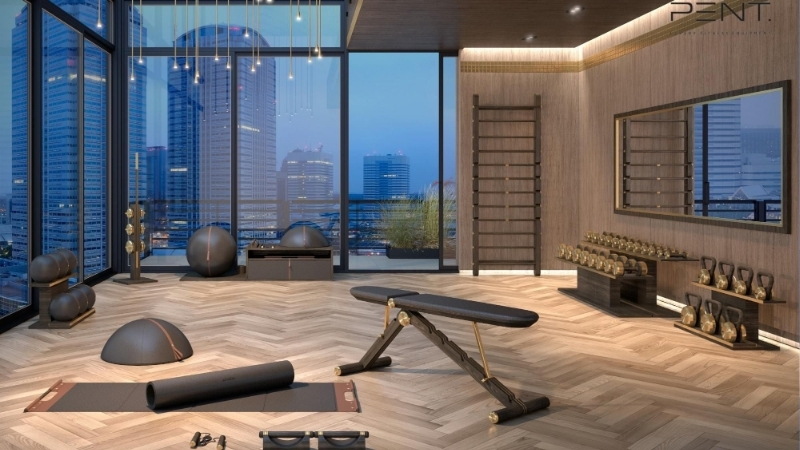
The best gym at home layout has three zones: a lifting platform where load meets floor, a clear area for movement without hitting anything, and a storage strip along one wall. Sketch those before choosing equipment, because their sizes barely change between setups.
The lifting zone needs roughly 6 x 6 ft (183 x 183 cm) in order to squat or press with a barbell safely. The movement zone needs enough room to lie down and extend both arms, which works out at roughly 7 x 4 ft (213 x 122 cm) for most people.
Storage is the zone people leave out of the plan entirely and then improvise, usually by leaning loose plates against a wall. Allocating a strip of wall to storage at the planning stage is what keeps the other two zones usable months later.
Floor, Walls and Ceiling Are All Load-Bearing Decisions
Flooring in the best gym at home is a structural choice rather than decoration. Rubber tiles around 20 mm thick absorb the point loads from plate edges that dent laminate and crack tile, and they reduce the impact transmitted through the joists to any room below.
Walls carry the equipment that saves floor space, which means locating timber studs or confirming masonry before buying anything wall-mounted. Plasterboard anchors are not suitable for racks or storage carrying real weight at any published rating.
Measure the actual dimensions of the room before ordering, ceiling height included, plus doorway width and floor build-up. A 20 mm tile layer can stop an inward-opening door, which is a problem discovered only after the tiles are down.
Airflow, Heat and Noise in a Closed Room
A spare bedroom with the door shut heats up remarkably quickly once you start working hard, and heat is the most common reason sessions get cut short at home. Airflow is therefore a genuine equipment consideration rather than a comfort extra.
A floor or wall fan moving air across the room does more than an open window in most cases, particularly in winter when the window is not an option. Position it so the air crosses the lifting zone rather than pointing it at one wall.
Noise runs in both directions. Matting handles impact transmitted downward, while a closed door and soft furnishings absorb the airborne noise of a fan and a bar being racked. Neither fixes the other, so both matter in a shared house.
Storage Decides Whether the Room Stays Usable
Equipment left on the floor is the reason spare rooms stop being spare rooms. Vertical and wall-mounted storage converts a floor problem into a wall problem, and walls are almost always the most underused surface in a domestic space.
Most of this category is still built around floor-standing frames and freestanding trees designed for wide garages. Wall-mounted racks, folding storage and vertical solutions remain a comparatively thin slice of what is available, which is worth knowing before assuming a compact option exists.
Anything that has to be put away should take under a minute to stow, or in practice it simply will not be put away at all. That single test predicts which pieces survive in a shared room far better than build quality or price ever does.
Top Picks: 6 Pieces for the Best Gym at Home Layout
In the best gym at home layout, two pieces define the room itself, three of them train you, and one keeps the space habitable. The table shows which of the three zones each piece belongs to and what it needs from the building around it.
| Piece | Zone | Needs | Space claimed |
|---|---|---|---|
| Interlocking rubber tiles | Lifting platform | Door clearance check | Floor, permanently |
| Wall-mounted folding rack | Lifting platform | Studs or masonry | Wall depth when folded |
| Bowflex SelectTech 552 | Movement zone | Reachable cradles | Under 2 sq ft |
| FLYBIRD folding bench | Movement zone | ~4 sq ft in use | Under 2 sq ft stored |
| Wall-mounted plate storage | Storage strip | Studs or masonry | No floor at all |
| Floor air circulator | Whole room | A socket | Corner or shelf |
1. Interlocking Rubber Floor Tiles
The first purchase rather than an afterthought. Tiles define the lifting zone, absorb the point loads that crack tile and dent laminate, and cut the impact noise that otherwise travels straight through joists to whoever is underneath.
Cheaper foam versions compress permanently under rack feet and heavy dumbbells, edges curl if the area is not fully covered, and total build-up can foul an inward-opening door. Check thickness against door clearance before ordering enough to cover a zone.
2. A Wall-Mounted Folding Rack
The piece that makes barbell training possible in a room that is not a garage. Fixed into studs or masonry, it folds to a few inches of wall depth between sessions, returning the entire lifting zone to the room the rest of the week.
It requires a structurally sound wall and the manufacturer’s specified fixings, and installation is a drilling job that is difficult to reverse in a rented property. Check the swing clearance for a 7 ft (213 cm) bar before choosing the wall.
3. Bowflex SelectTech 552 With a Stand
Adjustable dumbbells cover four movement patterns in under 2 sq ft, and the stand is what makes them work in a planned room. Raising the cradles to hand height removes repeated bending and keeps the trays out of the walking route.
The set has to be returned to its cradle every single time you change the weight, so the stand needs to sit inside the movement zone rather than tucked into a cupboard. The housing is plastic and cannot be dropped or rested on its ends.
4. FLYBIRD Folding Adjustable Bench
A bench doubles what dumbbells can do, unlocking incline and decline pressing plus supported rows. This one folds flat and stands upright, which comfortably passes the under-a-minute test that decides whether a shared room stays usable.
The pad is firmer and narrower than a commercial bench pad, and the folding frame flexes slightly more than a welded one does under heavy dumbbells. Both are fair trades for a bench that leaves the whole floor clear between sessions.
5. Wall-Mounted Plate and Barbell Storage
Pegs and a vertical bar holder move several hundred pounds off the floor entirely, which is the single biggest change you can make to how a small room feels. Weights sit at hand height and stop being shin-height obstacles in the dark.
Wall mounting demands timber studs or masonry and the correct fixings, and it commits you to a wall layout that is awkward to change later. Freestanding plate trees are the alternative wherever the wall structure will not take the load.
6. A Floor Air Circulator
The cheapest thing here and the one that most often decides whether a session finishes. A closed spare room heats up within fifteen minutes of working, and moving air across the lifting zone is more effective than opening a window in most seasons.
Fans add airborne noise in a room where you may already be trying to stay quiet, and floor models take up corner space that a wall-mounted version would not. Position it so the airflow crosses the working area rather than being aimed at a wall.
Frequently Asked Questions
Planning the best gym at home raises the same practical questions about room size, heat build-up and flooring almost every single time. Each answer below works from real measurements and building constraints rather than from preference.
What Is the Minimum Usable Room Size?
Around 7 x 7 ft (213 x 213 cm) supports dumbbells, a folding bench and floor work comfortably. Barbell training needs closer to 8 x 8 ft (244 x 244 cm) plus clearance to load plates, and a standard ceiling for anything pressed overhead.
Do I Need a Mirror?
Useful rather than essential. A mirror helps with checking bar path and position when nobody else is there to look, but it competes with wall space that storage or a folding rack may need more. Fit storage first and add a mirror if the wall allows.
How Do I Stop the Room Overheating?
Move air rather than trying to cool it. A circulator crossing the working area is far more effective than a window in most conditions, and it costs little. Leaving the door open helps in a house but works against you in a flat with sleeping neighbours.
Can I Train in a Carpeted Bedroom?
Yes, with rubber tiles laid over the carpet in the lifting zone. Carpet compresses permanently under bench and rack feet, and it offers almost nothing against point loads or impact transmission, so it is a surface to cover rather than to train directly on.
See More:
- Best changeable dumbbells
- Best rated yoga mat
- Best mat yoga
- Best home gym equipmen
- Best fitness equipment for home gym
Final Thoughts
Building the best gym at home starts with three zones, a floor that can take point loads and a wall that can carry storage. Measure the room and check stud positions before ordering, put the tiles down first, and keep everything else under a minute to pack away.





Write Your Review
No reviews yet. Be the first to share your experience!