
Our Top Picks
The best cross training shoes for most people are the Reebok Nano X4 for balanced lifting, HIIT, and short runs, while the Nike Metcon 9 is the stronger choice for heavy lifting and the TYR CXT-1 suits athletes who want a firm, wide platform for strength work.
Cross-training shoes are compromises by design: they need enough cushioning for jumps and intervals, enough lateral support for cutting, and enough stability for squats and deadlifts. No model feels like a dedicated running shoe and a weightlifting shoe at the same time. The right choice depends on which demand appears most often in your workouts.
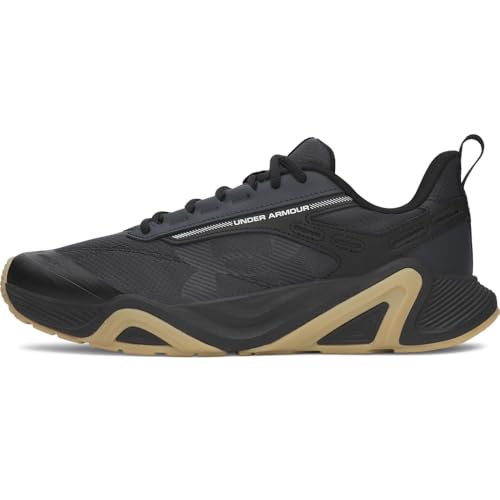
Under Armour Men's Charged Commit Trainer 5, 016 Gray, 9
Chosen because it specifies 016 Gray.
View on Amazon
Nike Men's Air Monarch IV Cross Trainer, White/Metallic Silver/Midnight Navy, 9 XW US
Chosen because it specifies White/Metallic Silver/Midnight Navy and 9 XW US.
View on Amazon
Reebok Nano X5 Mens Shoes, Cross Training Sneakers for Men, Black/Grey 5/Reebok Lee 3, 12
Chosen because it specifies Cross Training Sneakers for Men and Black/Grey 5/Reebok Lee 3.
View on Amazon
Nike Men's MC Trainer 4 Workout Shoes, Pencil Point/DarkSmoke Grey-Photon Dust, 11.5
Chosen because it specifies Pencil Point/DarkSmoke Grey-Photon Dust and 11.5.
View on AmazonBest cross-training shoes by workout priority
- Best all-rounder: Reebok Nano X4 — A versatile, moderately cushioned shoe with a stable heel and flexible forefoot for mixed gym sessions.
- Best for lifting: Nike Metcon 9 — Firm underfoot, highly stable, and equipped with a broad heel and removable heel inserts for extra support.
- Best for wide, stable footing: TYR CXT-1 — A broad toe box and flat-feeling platform favor squats, deadlifts, and strong lateral control.
- Best for HIIT and agility: Under Armour TriBase Reign 6 — Flexible through the forefoot, with a low, connected feel for jumps, lunges, and rapid changes of direction.
- Best value-oriented option: Puma Fuse 3.0 — A comparatively affordable trainer with a stable base and durable rubber suited to general gym use.
- Best if running is frequent: New Balance Minimus TR — A lightweight, low-profile option for short runs and conditioning, provided you are comfortable with minimal cushioning.
Head-to-head comparison
The figures below are useful for comparing the design intent of each shoe, but weight can change with size and production version. Heel-to-toe drop is the height difference between the heel and forefoot; a larger drop generally feels more familiar to runners, while a lower drop usually creates a flatter, more grounded lifting platform.
| Model | Approx. heel-to-toe drop | Approx. weight | Best suited to | Trade-off |
|---|---|---|---|---|
| Reebok Nano X4 | 7 mm | Approximately 12.5 oz per shoe | Mixed training, HIIT, short runs | Not as firm or specialized as a lifting shoe |
| Nike Metcon 9 | Approximately 4 mm, with removable inserts | Approximately 13–14 oz per shoe | Heavy lifting, CrossFit-style workouts | Feels bulky for sustained running |
| TYR CXT-1 | Approximately 4 mm | Approximately 12–13 oz per shoe | Strength work, wide-footed lifters | Less natural for longer runs |
| Under Armour TriBase Reign 6 | Approximately 2 mm | Approximately 10–11 oz per shoe | Agility, HIIT, functional training | Low drop may feel demanding for some runners |
| Puma Fuse 3.0 | Approximately 4 mm | Approximately 11–12 oz per shoe | General gym training, lifting, circuits | Less cushioned than a running shoe |
| New Balance Minimus TR | Approximately 4 mm | Approximately 8–9 oz per shoe | Short conditioning runs, minimalist training | Limited cushioning for high-impact sessions |
What matters more than the marketing label
Heel-to-toe drop and lifting stability
A 2–4 mm drop generally keeps your foot closer to a flat platform, which can feel secure during deadlifts and provide a direct connection to the floor. The downside is that it may place more demand on ankle mobility during squats. A 6–7 mm drop can feel more comfortable if you run regularly or prefer a slightly raised heel for squatting, but it is not automatically more stable.
The Nike Metcon 9 uses a firm heel and removable inserts that can increase the effective heel lift. The Reebok Nano X4 is a more moderate compromise. The TriBase Reign 6 feels especially close to the ground, making it appealing for lateral work but less forgiving if you are accustomed to highly cushioned footwear.
Outsole grip and lateral stability
Look for full-rubber coverage under the forefoot and heel, a broad contact area, and sidewall rubber that resists rolling during lateral movement. Deep grooves help the shoe bend during burpees and lunges, but excessive flexibility can reduce confidence under heavy loads.
The Metcon 9 and TYR CXT-1 emphasize a planted heel. The TriBase Reign 6 prioritizes flexibility and foot mobility without abandoning a stable base. For workouts involving sled pushes, rope climbs, or frequent pivots, outsole rubber and sidewall coverage matter more than a soft foam compound.
Cushioning and running distance
Cross-trainers are most comfortable for short runs embedded in a workout, usually around 400 metres to 3 kilometres at a time. They are not usually the best choice for regular runs of 5 kilometres or more because their firm platforms, lower stack heights, and lateral-support structures can feel harsh over distance.
For a session containing lifting, rowing, jumps, and a few short intervals, the Nano X4 offers the most balanced cushioning of the leading options. For mostly running-based conditioning, choose a dedicated running shoe instead. A simple test is whether your planned workout contains more continuous running than strength or lateral movement; if it does, a running shoe is usually the better tool.
Upper durability and breathability
Reinforced mesh, woven panels, and abrasion-resistant overlays help protect the upper from rope climbs, floor contact, and repeated flexing. The most common early failure points are the toe flex zone, the inner heel lining, and the area beside the little toe where the upper stretches during lateral movement.
The Metcon 9 is particularly reinforced around high-wear areas, while the Nano X4 balances structure with ventilation. Lightweight minimalist models can feel cooler but may show creasing and abrasion sooner if used for rope climbs or outdoor pavement workouts.
Toe-box fit
Your toes should spread slightly under load without touching the end of the shoe. The TYR CXT-1 has one of the roomier forefoot shapes in this group. The Nano X4 is moderately accommodating, while some Nike and Puma shapes feel narrower through the front for people with broad feet.
Measure both feet late in the day, when feet are often at their largest, and leave roughly 10–12 mm between your longest toe and the shoe end. Do not solve a cramped toe box by buying a much longer shoe: excessive length can cause heel movement and reduce lifting stability. Instead, look for a wider version or a naturally broader model.
Decision matrix: which shoe fits your training?
| Your situation | Recommended direction | Why |
|---|---|---|
| New to cross-training; workouts are evenly mixed | Reebok Nano X4 | Balanced drop, cushioning, grip, and support |
| Heavy squats, deadlifts, and presses are the priority | Nike Metcon 9 or TYR CXT-1 | Firm platforms and strong heel stability |
| Frequent jumps, shuffles, lunges, and circuits | Under Armour TriBase Reign 6 | Flexible forefoot and low, agile stance |
| Wide forefoot or preference for toe splay | TYR CXT-1 | Roomier front and broad support platform |
| Budget is a primary concern | Puma Fuse 3.0 | Often positioned in the lower general market price range |
| Short runs are a major part of every session | Nano X4 or a dedicated running shoe | More forgiving cushioning than minimalist trainers |
Price and ownership reality
Expect current mainstream cross-training shoes to occupy roughly the $100–$160 range before discounts, with premium or newly launched models sometimes higher. Cost per use is more informative than the ticket price. A $140 pair worn for 150 gym sessions costs about $0.93 per session; a $90 pair that loses its grip or cushioning after 70 sessions costs about $1.29 per session.
Rotate shoes if you train frequently. Letting the foam dry fully between sessions can reduce odor and preserve the upper. Remove surface dirt with a soft brush, wipe the outsole with mild soap and water, and air-dry at room temperature. Avoid hot radiators, dryers, and prolonged soaking, which can weaken adhesives and distort foam.
Replace cross-trainers when the outsole is visibly smooth in high-contact areas, the heel tilts inward or outward, the midsole remains permanently compressed, or the upper allows your foot to slide during lateral movement. Do not judge replacement only by the appearance of the tread: loss of structure can occur before the rubber is completely worn through.
Final recommendation
Choose the Reebok Nano X4 if you want one pair for lifting, HIIT, and occasional short runs. Choose the Nike Metcon 9 or TYR CXT-1 when stability and heavy strength work matter most. Choose the Under Armour TriBase Reign 6 for agile, floor-based conditioning, and choose a dedicated running shoe when sustained running is a central part of your week. Fit, floor contact, and the demands of your actual workouts should decide between them—not the model name alone.










Write Your Review
No reviews yet. Be the first to share your experience!