
Key takeaways
What's inside
Best equipment to workout at home is rarely the equipment with the most features. In a shared room it is whatever covers several movement patterns, stores out of sight and does not travel through the floor to the flat below. These six picks are judged on exactly those terms, with stored size and noise listed alongside the specs.
As an Amazon Associate we earn from qualifying purchases at no extra cost to you. Product prices and availability are accurate as of the date shown and are subject to change.




As an Amazon Associate we earn from qualifying purchases at no extra cost to you. Product prices and availability are accurate as of the date shown and are subject to change.
By Chris Parker
🛒 Best Price Today on Amazon
Prime members get fast, free shipping on everything above, plus member-only deals. New members get a 30-day free trial — cancel anytime.
How to Choose the Best Equipment to Workout at Home
Choosing the best equipment to workout at home usually fails on logistics rather than on training. The kit is too loud, too awkward to put away, or covers a movement you already had. The four criteria below deal with those problems in the order they usually appear after delivery.
Match Equipment to the Movements You Are Missing
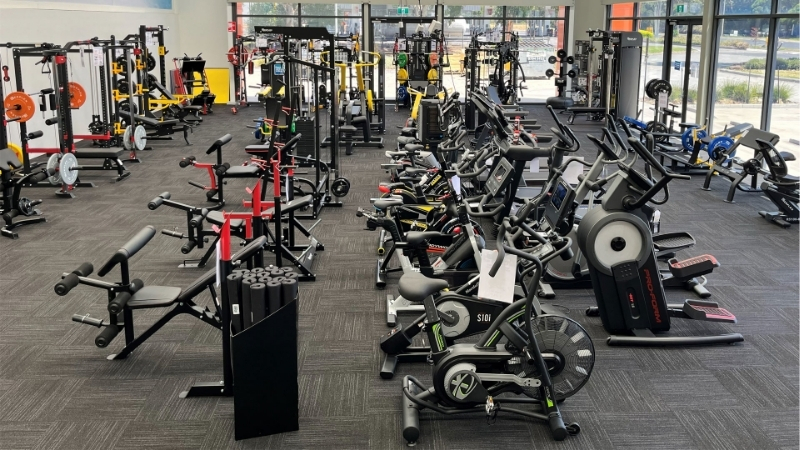
Write out the seven patterns before shopping for the best equipment to workout at home: horizontal push and pull, vertical push and pull, hinge, squat and conditioning. Then mark which ones your current kit already loads. Most duplicate purchases happen because nobody does this first.
Adjustable dumbbells cover five of the seven on their own. The vertical pull is the hardest to add at home, and conditioning is the pattern most often skipped, which is also the one that needs the most floor space and the most ceiling height.
The World Health Organization advises adults to accumulate at least 150 minutes of moderate activity plus two muscle-strengthening sessions per week, which works out at roughly 22 minutes a day. Equipment that removes travel time makes that target a scheduling question rather than a logistics one.
Footprint, Storage and Shared Rooms
The best equipment to workout at home has two footprints: in use and stored. A folding bench claims about 4 sq ft while you train and under 2 sq ft standing against a wall. A rower needs roughly 8 ft (244 cm) of clear length in use, whatever it does afterwards.
If the room has another job, storage size is the binding number. Bands, a suspension trainer and a kettlebell fit in one drawer. A rower that folds still has to live somewhere with about 5 ft (152 cm) of vertical clearance against a wall.
Measure the actual dimensions of the area you intend to train in before ordering, including the space you need to extend your arms sideways the width of the doorway the box has to come through, and any turn at the top of a staircase.
Noise, Flooring and Neighbours
Impact noise carries downward far better than airborne noise. Setting a dumbbell on a bare floor, jumping, or a rower chain running at speed all transmit through joists, and a rug does very little about it. Rubber matting is the only reliable fix.
Magnetic resistance is meaningfully quieter than air or chain systems on cardio equipment, which matters if you train early or live above someone. Air rowers and fans are loud by design, because the noise is the resistance working.
Floors take the other half of the damage. Plate edges and dumbbell ends dent laminate and crack tile, and carpet compresses permanently under a bench frame. Interlocking rubber tiles under the working area cost far less than the flooring they protect.
Durability and Replaceable Parts
Ask what fails first and whether it can be bought separately. On bands it is the latex tube and the clip; on suspension trainers the strap and cam buckle; on adjustable dumbbells the selector and shroud; on rowers the seat rollers and the resistance mechanism.
Latex degrades with sunlight, heat and age whether or not you use it, so bands are a consumable rather than a permanent purchase. Inspect them for surface cracking every few months and replace rather than waiting for a failure mid-rep.
Warranties are usually split between frame, moving parts and upholstery, and the terms rarely match. Read all three lines, and treat the shortest one as the realistic service expectation for the whole product rather than the headline figure.
Top Picks: 6 Pieces of the Best Equipment to Workout at Home
These six picks for the best equipment to workout at home cover every core movement pattern between them, and five of the six store out of sight in a room that has another purpose. The table compares stored size and noise, which are the two things product listings almost always omit entirely.
| Item | In use | Stored | Noise | Covers |
|---|---|---|---|---|
| Bowflex SelectTech 552 | Under 2 sq ft | Cradles under a bed | Low if set down | Push, pull, hinge |
| Bodylastics band set | Anchor point only | Small bag | Silent | Rows, presses, assistance |
| Yes4All adjustable kettlebell | Under 1 sq ft | Corner or shelf | Low, never drop | Swings, carries, squats |
| TRX All-in-One | Door or beam anchor | Fits in a drawer | Silent | Vertical and horizontal pull |
| FLYBIRD adjustable bench | ~4 sq ft | Folds, stands upright | Silent | Press angles, step-ups |
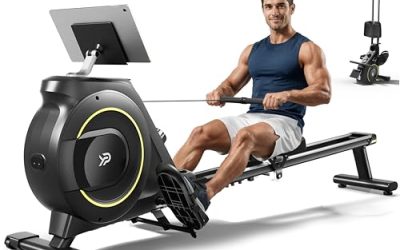
| Sunny SF-RW5515 rower | ~82 x 19 in (208 x 48 cm) | Folds upright | Quiet, magnetic | Conditioning, full body |
1. Bowflex SelectTech 552 Adjustable Dumbbells
The single most useful purchase for a room that is not a gym. One pair replaces fifteen fixed sets, adjusts from 5 to 52.5 lb (2.3 to 23.8 kg) per hand, and the cradles slide under a bed or behind a sofa when you are done training for the day.
They must never be dropped or rested on their ends, the increment widens to 5 lb above 25 lb, and setting them down on a bare floor still transmits noise. Put a mat under the training area if anyone lives below you or shares a wall.
2. Bodylastics Stackable Resistance Band Set
Completely silent, weighs almost nothing, and clips together so resistance builds in layers rather than in fixed jumps. With a door anchor it covers rows, presses, pull-aparts and pull-up assistance in a package that fits in a drawer.
Resistance is variable, so the load is lightest exactly where most lifts are hardest, and latex degrades with age and sunlight regardless of use. Treat bands as a consumable, check for surface cracking regularly, and never anchor to a door that opens toward you.
3. Yes4All Adjustable Kettlebell
A budget way to add swings, goblet squats and loaded carries without a rack of fixed bells. The adjustable plate system covers a useful range in under 1 sq ft, and it suits the hinge pattern that dumbbells handle awkwardly at higher speeds.
The shell is wider and less rounded than a cast bell, so the rack position is less comfortable during long overhead sets, and it must not be dropped or used for release-style work. Changing weight takes noticeably longer than a dial system.
4. TRX All-in-One Suspension Trainer
The most space-efficient way to add pulling work when a rack will not fit. It weighs a couple of pounds, packs into a drawer, and anchors over a door or to a beam, covering rows, chest presses, split squats and core work at whatever angle you choose.
Load is capped at a proportion of your body weight, so stronger lifters plateau on pulling movements. The door anchor needs a solid door that opens away from you, and adjusting difficulty means moving your feet rather than adding weight.
5. FLYBIRD Adjustable Bench
A bench roughly doubles what dumbbells can do, adding incline and decline pressing, supported rows and step-ups. This one folds flat and stands upright against a wall, which keeps a shared room usable for its original purpose the rest of the day.
The pad is firmer and narrower than a commercial bench, which some people find uncomfortable on longer pressing sets, and the folding mechanism adds slight flex compared with a fixed frame. Both are reasonable trades for the storage advantage.
6. Sunny Health and Fitness SF-RW5515 Rower
Magnetic resistance across eight levels makes this the quiet conditioning option, which matters in a flat. It works the full body rather than legs alone, folds upright after use, and costs a fraction of what a commercial air rower does.
Magnetic resistance does not scale with your effort the way air does, so the top setting will feel limited to strong rowers, and the shorter rail suits shorter users better. The seat rollers are the wear part on high-mileage units.
Frequently Asked Questions
Space, noise and whether light kit does anything useful account for nearly every best equipment to workout at home question. The four answers below stay with what the equipment does mechanically and where its limits sit, rather than general motivation.
How Much Equipment Do You Actually Need?
Adjustable dumbbells and a folding bench cover five of seven movement patterns in under 6 sq ft. Add a suspension trainer or bands for the vertical pull and you have a complete strength setup that stores out of sight, which is enough for a year or more of progress.
Will Training at Home Disturb Neighbours Below?
Impact is the problem, not volume. Setting weights down, jumping and chain-driven cardio all transmit through joists, while bands and suspension work are effectively silent. Rubber matting under the training area and magnetic rather than air resistance solve most of it.
Do Resistance Bands Build Real Strength?
Yes for assistance work, warm-ups and higher-rep training, with a caveat: resistance is variable and lightest at the start of the range, where many lifts are hardest. They complement dumbbells well but do not replace them for progressive loading.
Should I Check With Anyone Before Starting?
If you have an injury, a joint problem or any medical condition, speak to a doctor or a certified trainer before beginning a new programme. Equipment guidance covers what a product does mechanically, not what any individual should be doing with it.
See More:
- Best changeable dumbbells
- Best rated yoga mat
- Best mat yoga
- Best home gym equipmen
- Best fitness equipment for home gym
Final Thoughts
The best equipment to workout at home is whatever covers the most movement patterns, stores where you can live with it, and stays quiet enough for the building you are in. Measure the room, put matting down first, and add pieces one at a time.





Write Your Review
No reviews yet. Be the first to share your experience!