
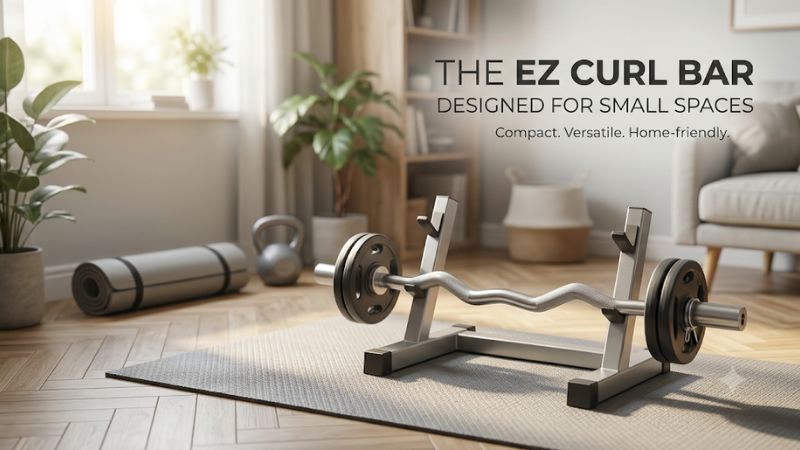
An EZ curl bar for small spaces needs room for your hands and plates at both ends, plus a clear path through each exercise. A short bar can free floor space and store easily, while a rackable model can simplify setup when the rack already has room. Measure your equipment in use before spending money.
Measure your usable space before choosing a bar
The best starting point is the spot where you will load the bar, followed by the spot where you will do the exercise. Those positions may be different in a small gym. Measure with your bench, furniture, and equipment where they stay during a normal workout. Include door swing and the route to plate storage.
A short bar can be easy to put away and difficult to use if the bench is wedged between two fixed obstacles. Work through one complete session in your head. Bring out the empty bar, collect the plates you need, load both sides, put the bench in position, and test where the equipment goes at the end. You may find that moving a plate stand creates more useful space than choosing a bar that is two inches shorter.
Measure the gap beyond each sleeve tip
An unplated EZ bar can fit inside a narrow span with little room at either end. To load it, the center hole of a plate must approach the sleeve from outside the tip. Leave enough room to carry the plate into line, slide it inward, and attach a suitable collar with your fingers clear of nearby obstacles.
In a 72-inch clear lane, a centered 47-inch bar leaves 12.5 inches at each end. A 54.5-inch bar leaves 8.75 inches. Those are useful layout figures, not universal clearance targets. A smooth bumper or a thick hand-grip plate may need a different approach than your small iron change plates. Use your broadest plate to mock up the movement at both ends. A lightweight cutout can help you check the path without handling a heavy plate around furniture.
If one end is next to a door casing, measure from the actual casing. If the other is open to a hallway, think about whether you can load there without blocking the rest of the household. A slightly off-center position can work when one side really needs more room, as long as both ends remain usable and the entire arrangement suits your exercise.
Give the bench a position for lifting and loading
Lying triceps extensions use a different footprint from standing curls. The bench occupies space and the loaded bar moves beyond the point where it rests or begins. Mark the position of the bench, the sides of the plates, and the path the bar will follow. Include the room you need to enter and leave the bench.
If the bench is used for several movements, it may need two positions. Standing curls could happen with the bench against a wall. Extensions may require you to pull it back out so the loaded plates clear nearby objects. In a room with a low shelf or a wall-mounted cabinet, check the space over the bench at the height the bar will actually reach. A clear floor plan can still have an obstruction higher up.
Create a controlled setup for getting the bar into position and returning it. With a short bar, use a method and load you can manage in that room. With a rackable bar, verify how the hooks, bench, and safeties are positioned for the specific exercise if the equipment permits performing it there. The setup matters as much as the product’s advertised footprint.
Trace the storage route from the training position
A narrow room can have enough working space near its entrance and very little room to turn a bar into a closet or behind a bench. Measure the storage opening and the bar’s full length. Check the height from the floor to any shelf or light if the bar must tilt upright before you can move it.
A 47-inch bar is easier to maneuver through a short opening than one measuring 74 inches, but shape and access still matter. A vertical storage holder can free up floor width, yet the bar needs to lift out of the holder before it can tilt into the room. For an under-bench location, check the height of the camber and sleeves and the distance you need to slide the bar out. Use a stable setup rated for the shape and weight of the bar.
Think through how the bar is handled with no plates attached. It should have a safe place where it will stay put between sessions. A short bar may have enough depth to bump a wall when stored on a narrow ledge. A horizontal holder compatible with specialty bars can give the bends and sleeves a dependable place without adding an obstacle at foot level.
Select the format that fits your room
Short Olympic and short standard bars can have similar overall lengths. The important difference is which plates they accept. A rackable Olympic bar adds shaft length between the sleeves, so it can start on compatible hooks. Choose the format that fits your actual equipment, plate-loading routine, and lightest exercise.
| Format | Example | Overall length | Where it works |
|---|---|---|---|
| Short Olympic bar with compact sleeves | XMARK Crowbar | 47 in | Tight floor area with moderate stacks of compatible Olympic plates |
| Short Olympic bar with longer sleeves | Rogue Curl Bar | 54.5 in | More room for existing thick plates and collars |
| Short standard threaded bar | CAP RB-47T | 47 in | Existing 1-inch plates and matching spin-lock collars |
| Rackable Olympic EZ bar | REP Rackable Curl Bar | 74 in | Suitable J-cups, a clear side-loading area, and planned rack use |
Choose a compact Olympic bar when its sleeves cover your routine
A 47-inch-class Olympic bar is a sensible size for accessory curls and extensions in a bedroom or shared garage. Verify the loadable sleeve length and starting weight, then check what those figures mean for your exact plates. A short bar fits best when you can use the plate collection you have at the loads you need.
The Crowbar example has 6.25 inches of usable sleeve. If the collar takes up 1.25 inches, your simplified plate budget is 5 inches. One 3-inch plate and a 1-inch change plate use 4 inches. Two 3-inch plates exceed that budget before the collar is installed. Thinner plates of an appropriate weight can change how much training the bar supports. Check the complete stack and follow the bar’s use limits.
In a room where you store the bar after every set of exercises, empty weight can matter almost as much as length. A 21 lb bar takes less effort to carry around a bench than a 30 lb bar. If you use the larger bar because its sleeves let you keep your current plate set, find a storage position close enough to make that heavier frame practical.
Choose a longer short bar when your plates are the constraint
An overall length near 54 or 55 inches remains manageable in many home gyms, and some bars in that class have 10 inches or more of loadable sleeve per side. That can be worthwhile if your largest accessory load calls for thick plates and a wide collar. Use your room measurement to price the extra space.
In a 78-inch lane, a 47-inch bar centered in the opening gives 15.5 inches of space on each side. A 54.5-inch bar gives 11.75 inches. You sacrifice 3.75 inches at each end. In the Rogue-versus-XMARK example, you gain 4.25 inches of loadable sleeve per side. Those numbers make the choice concrete. Decide whether your own gym can give up some side clearance to keep the existing stack simple.
Look at the cost and storage impact of buying new plates to solve a sleeve problem. A compact bar with thinner iron may be a good purchase if you need only a pair of change plates. If you need several additional pairs, a longer-sleeve bar can solve the problem with less extra equipment. Consider where the plates will live as well as the width of the bar.
Keep compatible 1-inch plates if you already own them
A standard threaded EZ curl bar takes plates with approximately 1-inch center holes and uses compatible spin-lock collars. It makes sense when a home gym already owns a set of standard plates for dumbbells or another bar. You can reuse those plates, keep one storage footprint, and add a cambered grip.
Before buying, count the plate pairs you need for your lightest and heaviest sets. Check whether the threaded sleeve has sufficient space once the spin-lock is engaged. A narrow bar with long threaded collars may still use more of its sleeve than you expect. Also consider the time it takes to change plates while sharing the bar with another lifter.
If your main inventory is Olympic plates, an Olympic EZ bar usually keeps the setup simpler. Measure the plate bore and confirm the sleeve size. A 1-inch shaft on an Olympic curl bar can still be paired with approximately 2-inch sleeves. Think of the grip and the plate interface as two separate choices.
Choose a rackable bar if the rack already solves setup
A rackable EZ curl bar can fit in a compact gym when the rack faces a long, open section of wall and plate loading from the hooks is part of your routine. Measure the shoulder span and the installed J-cups separately. Then check whether the camber rests on the contact surfaces in an orientation the maker supports.
A 74-inch bar in a 90-inch clear lane has 8 inches at each centered tip. That figure tells you whether you can begin to mock up loading. It does not answer whether handing plates from the storage tree around the uprights will be convenient. Use the largest plates for the test, and check both the hook level and any area needed for unracking the bar.
Some gyms have a narrow rack but a wide area in front of it. If the rack is the obstruction, a short bar used in that open area may have more usable room. Consider how long it takes to exchange your straight bar for the curl bar, especially where you have only one supported set of hooks. Buy rackability for regular use, with the storage and exercise paths verified.
Lay out the plates and accessories with the bar
In a small gym, the usable floor is often limited by equipment around the bar rather than the bar alone. Position frequently used plates and collars near the setup while keeping both sleeve ends and the bench path clear. Save the tightest corner for equipment you can easily reach and return without moving the workout station.
Place the most frequently used plates close by
Identify the small plates you use at several working weights and the larger plates you only use near the top. Place working change plates where you can pick up and replace both sides easily. If you store the heaviest plates farther away, leave room for them to pass between the rack, bench, and the tips of the bar.
A big plate tree can work when it sits along the side of the room and you pull plates clear of the sleeve path. If the tree occupies the only gap next to the bar end, relocating it may be the best space upgrade. Test the loaded stand with its largest plates in place. The width of the base is only one part of the space it needs.
Keep a dedicated place for matching collars. A lightweight pair that fits the bar has little value if it disappears behind a bench every session. If you use one bar with built-in locks and another with external collars, organize them by the sleeve system rather than treating all Olympic hardware as interchangeable.
Use a stable storage option the bar actually fits
A floor holder, wall-mounted rack, or compatible horizontal cradle can keep the bar accessible. Choose the option with clearance to put the bar in and take it out, and with mounting and load requirements you can satisfy. A holder designed around straight shafts may have a slot that lands on an awkward bend.
Make sure the two support points keep the empty bar stable. If the bends lift one part of the bar away from the intended support, check another approved position or a holder made for specialty bars. In a rental or shared room, a suitable freestanding holder can make sense when wall mounting is unavailable. Measure how far it projects once the sleeve ends and any other stored bars are in place.
Plan how you will start and finish heavy sets
A curl bar often ends up next to a bench because the standing and lying exercises share one implement. Decide where you bring the loaded bar to the start and where it goes at the end. Floor use, a dedicated short-bar stand, and full-rack setup can require different amounts of open space in front of the bench.
For lighter standing curls, you may have a simple path from the floor to your starting stance. For heavier lying work, compare the usable setup you already have with the equipment the exercise requires. Choose loads and positioning you can control in the available room. A short bar may be easier to carry, while a supported setup can make certain plate changes or starts easier to manage.
Run a two-minute layout check before checkout
Sketch the bar tip to tip where it will sit and mark your thickest plate at both ends. Lay out the bench and its clearance. Then trace the path to storage. Read the selected SKU against the sketch and identify the smallest gap. Test that gap with the relevant accessory before ordering.
An exercise area that works only when the room is empty may feel cramped after another piece of equipment arrives. An exercise area that can be restored in a minute is easier to use regularly. If the only thing limiting your setup is one movable object, adjust the layout before choosing shorter sleeves or replacing plates.
Frequently asked questions
In a small room, the final purchase often depends on a single measurement. It might be the depth required to pull a plate off storage, the space between a rack and the wall, or the turn you make with the empty bar. Check the limiting point with the exact bar and plates in mind before comparing finishes or price.
Is a 47-inch EZ curl bar enough for a small home gym?
A 47-inch model can handle many curls and extensions when its grip and sleeves suit your program. Measure your heaviest stack including collars and make sure the bar’s empty weight allows your lighter work. Check how you will start the exercise and where the bar will rest afterward.
Do I need Olympic plates for a compact EZ curl bar?
It depends on the sleeve format. Compact bars are sold for both Olympic-size and 1-inch standard plates. Read the sleeve specification for the exact model. Check whether you can reuse the same plates and matching collars across the other equipment you already have.
Can I put a short bar on wider J-cups?
An ordinary short bar with roughly 32 or 33 inches between sleeves is designed for a different use from a 51-inch-class rackable curl bar. Verify the support method authorized for your exact model. A wider cup does not create more shaft span between the shoulders.
Do thick bumper plates make a compact bar impractical?
Check your individual stacks. A single thick bumper pair and a thin change pair may work well. Several thick pairs can use up the sleeves quickly. Compare the total thickness available after installing the collars, alongside the bar’s loaded-use guidance.
Conclusion
For a tight home gym, choose the shortest EZ curl bar that holds your planned plates and collars, leaves room at both ends, and has a practical storage route. Keep a 1-inch system if it fits your existing plates, choose a longer short Olympic model for bulky stacks, and buy rackable length when you have compatible supports and room to load it.
More from Amazon
Programs that pair well with the guide above. Offers and eligibility are set by Amazon and may change.
Free shipping on eligible items, Prime Video and more. Eligible new members can start with a free trial.
Start a Prime free trialA Prime membership for ages 18-24 with a trial period. Eligibility is set by Amazon.
See Prime for Young AdultsAudiobooks and podcasts to listen to on the go. Eligible new members can start with a free trial.
Try Audible freeAd-free music streaming. Eligible new subscribers can start with a free trial.
Try Music Unlimited freeAs an Amazon Associate we earn from qualifying purchases.
Write Your Review
No reviews yet. Be the first to share your experience!