
The best women’s Olympic barbell for most home gyms is a 15 kg model with a 25 mm shaft, enough sleeve space for your plates, and rotation that suits your main lifts. The Rogue Bella Bar 2.0 is our all-around pick. For dedicated snatch and clean practice, a weightlifting-specific bar may be worth the extra cost.
The best women’s Olympic barbell picks at a glance
The Rogue Bella Bar 2.0 suits lifters who want one bar for strength work and occasional Olympic lifts. The REP Colorado 15 kg is a close alternative with composite bushings. The Fringe Wonder Bar Bearing, Rogue IWF Bar, and Eleiko IWF Training Bar make progressively more sense as weightlifting becomes your main sport.
| Barbell | Best use | Overall length | Sleeve length per side | Rotation |
|---|---|---|---|---|
| Rogue Bella Bar 2.0 Black Zinc | Best overall for a mixed home gym | 79.13 in | 13 in loadable | Bushings |
| REP Colorado Bar 15 kg | Mixed training with a choice of finishes | 79.1 in | 12.4 in loadable | Composite bushings |
| Bells of Steel Juno Bar | Value pick for strength work and back squats | About 79 in | Confirm usable length with seller | Utility-bar design |
| Fringe Sport Wonder Bar 15 kg Bearing | Bearing option for an expanding weightlifting program | 79 in | 12.5 in listed | Bearings |
| Rogue 25MM IWF Olympic Weightlifting Bar Bright Zinc | Competition-approved weightlifting bar | 79.14 in | 12.5 in loadable | Needle bearings |
| Eleiko IWF Weightlifting Training Bar 15 kg | Premium bar for weightlifting practice | 79.13 in | 12.6 in loadable | Needle bearings |
All six options weigh 15 kg and have a 25 mm shaft. They differ in the parts you experience during a training session, including center texture, where you place your hands, what your sleeves can carry, and how much you are paying for a competition or training designation. Match the exact finish and version in the listing before comparing specs or prices.
How we selected the best women’s Olympic barbell options
We compared published dimensions, shaft texture, grip marks, sleeve assemblies, and the manufacturer’s stated use. Each bar had to serve a practical use case in a home gym or on a weightlifting platform. The picks are based on published specifications and use-case analysis, with special attention to fit and progression.
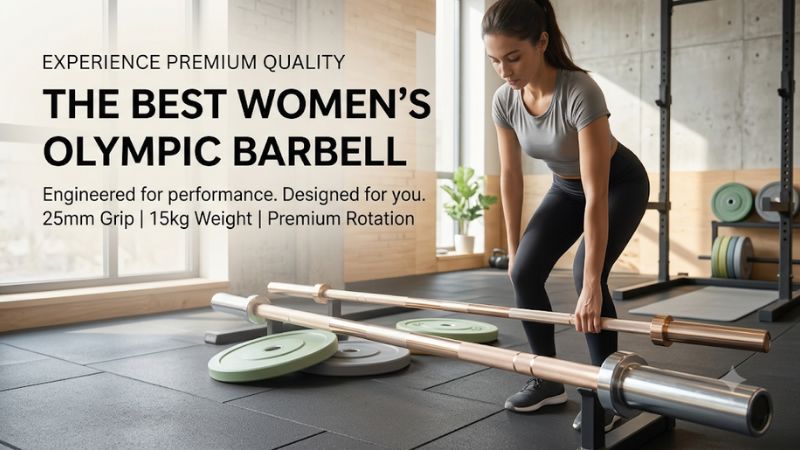
Why the 25 mm grip and 15 kg starting weight come first
A 25 mm shaft is useful for lifters who can get a more comfortable wrap around a narrower bar. That matters during pulls, high-rep work, and lifts where you actively change how you hold the shaft. The 15 kg empty weight also gives you roughly 11 pounds less starting load than a 20 kg bar.
The difference is especially useful when you need several warm-up sets below your usual working weight. A lifter warming up for an overhead press at 20 kg can add 2.5 kg per side on a 15 kg bar. A 20 kg bar begins at that target. If your weekly work starts well above 20 kg, hand feel or how closely the bar resembles event equipment may be a better reason to buy.
An Olympic sleeve is a separate measurement. The plates slide over sleeves around 50 mm in diameter, while your hands hold a 25 mm shaft. Confirm the plate bore and collars independently, including any specialty locking system you already own. That check takes priority over a preferred coating or a lower checkout price.
Why we treated sleeve length and rotation as separate decisions
Sleeve length governs whether your plates and collars fit. The rotation assembly influences how the load turns relative to the shaft while you lift. A bar can offer more loading space and use bushings, or offer slightly shorter sleeves with bearings and markings made specifically for Olympic weightlifting.
This distinction matters if your home gym already has thick bumpers. An extra 0.6 inch per side might determine whether a change plate and collar will fit at the end of a working set. A bearing upgrade would solve a different problem for a lifter regularly receiving cleans or snatches. Decide which feature you can attach to a real session before paying for it.
The thickness you need also depends on your plate mix. One lifter might use two dense bumpers and one change plate, while another uses several lighter, wider plates to reach the same load. Evaluate the exact stack and the equipment manufacturer’s guidance for how you intend to lift and set down the bar.
The best 15 kg barbells by training style
Start with the category that describes most of your weekly training. A dependable multipurpose bar can cover presses, rows, squats, and occasional faster lifts. A dedicated bearing bar is more relevant when the snatch and clean and jerk account for enough sessions to justify the design, markings, and price.
Rogue Bella Bar 2.0 Black Zinc for most home lifters
The Bella Bar 2.0 offers a 25 mm shaft, a 15 kg starting weight, and 13 loadable inches per sleeve. It measures 79.13 inches overall and uses bushings. The combination suits a home gym where the same bar goes from rack presses and squats to floor pulls and occasional Olympic lifts across a training week.
The primary reason to pick it is the versatility of its geometry. You get a familiar women’s-format grip with more sleeve room than several close competitors. The dual reference marks suit lifters who use different grip widths for different movements. The smooth center can be comfortable wherever the bar touches the front of the body. If center texture is part of how you set up a back squat, compare the Bella with the Juno.
The Black Zinc listing gives you a standard reference version. Other Bella finishes come at different prices, so verify shaft and sleeve materials before treating a more expensive model as the same purchase. Buy the Black Zinc version for one-bar use when the 13-inch sleeves match your plates. A frequent competitive weightlifter with a dedicated platform has more reason to shop the Rogue IWF model or the Eleiko training model.
REP Colorado Bar 15 kg for shared mixed-use training
The 15 kg REP Colorado combines a 79.1-inch length, a 25 mm shaft, composite bushings, and 12.4 loadable inches per end. Its moderate volcano-style knurling and dual reference marks suit a shared setup where one lifter trains with higher repetitions and another uses the same bar for general strength work.
A middle-of-the-road grip is useful when preferences differ across the household. You can use the marks to repeat familiar hand positions, and the branded finish options make it possible to pick a look that works for your storage conditions and budget. Compare the shaft and sleeves independently by SKU. Some buyers prefer a particular shaft coating while caring more about how plate inserts move over the sleeves.
The sleeve is a little shorter than the Bella’s published 13 inches. That is inconsequential when your largest plate stack leaves plenty of room and worth checking when you use several thick plates. Buy this bar when the composite-bushing design and available finishes make sense for your routine. Look at a dedicated weightlifting model if nearly all your sessions involve fast turnover and you want sport-specific grip marks.
Bells of Steel Juno Bar for a narrow grip and center knurl
The Juno is a 15 kg utility bar with a 25 mm shaft, a length around 79 inches, and center knurling. Bells of Steel lists powerlifting and weightlifting grip marks plus a medium-light shaft texture. This combination suits a buyer who trains several strength movements and likes contact at the center during back squats.
Center knurling is the difference that makes this option distinctive. It can help a lifter who prefers a textured contact point against a squat shirt, while a smooth center may suit frequent front rack work better. Think about which of those positions appears more often. Light or moderate repetitions do not require an especially coarse grip when your hands already wrap the 25 mm shaft comfortably.
Buy the Juno for a strength-first rack routine with general pulling and pressing. Ask the seller for the inside shoulder span and true usable sleeve length if your rack or collar clearance comes close. Because the key feature is the center contact, a buyer who rarely back squats and mainly practices cleans may get more out of one of the smooth-center picks. Compare by movement rather than by the women’s label alone.
Fringe Sport Wonder Bar 15 kg Bearing for more Olympic lifts
The 15 kg Wonder Bar is available with either bearings or bushings. The bearing variant is the pick here for lifters practicing more snatches and cleans. Fringe lists a 79-inch length, 25 mm shaft, dual grip marks, a smooth center, and 12.5-inch sleeves. Select the bearing version explicitly when ordering.
The value of the bearing version is most visible in what you train. A buyer who cleans, snatches, or cycles the bar frequently may appreciate a different rotation assembly from the one on a basic rack bar. The dual marks also help if you still use it for presses and general strength sessions. If you mainly squat and bench, the less expensive bushing version of the Wonder Bar remains a better use of the same budget.
Use the listed 12.5 inches as your first estimate for plate planning and ask Fringe to confirm exact usable length if the stack is close. A bar that feels appropriate for turnover still needs the right bumpers, collars, and landing surface for your routine. Buy this version when you want bearings without paying for a competition-approved bar and when your plate stack fits its geometry.
Rogue 25MM IWF Olympic Weightlifting Bar for competition practice
The Bright Zinc Rogue IWF model gives you a 15 kg bar with a 25 mm shaft, weightlifting marks, a smooth center, and needle bearings. Rogue lists 79.14 inches overall, 51.5 inches between sleeves, and 12.5 loadable inches per end. The manufacturer identifies this version as IWF approved for competition.
The main reason to pay for it is the opportunity to train on a bar designed for the specific events you perform. The mark placement, familiar narrow shaft, and rotation assembly can make it a better match for a focused weightlifting program than a general-purpose bar. If a club or event requires a particular approved model, verify the current equipment requirements and confirm that you are ordering the exact edition.
The trade-off is cost. A bar built around the platform gives you fewer obvious benefits if most of your time is spent on bench presses, rows, and back squats. A lifter who rarely competes may prefer buying versatile equipment and reserving the rest of the budget for plates or platform flooring. Select this Rogue when the competition designation and the lifts it was built around matter to your training.
Eleiko IWF Weightlifting Training Bar 15 kg for dedicated platform work
The Eleiko IWF Weightlifting Training Bar in article code 3085913 is made for weightlifting practice. It has a 25 mm shaft, 2,010 mm overall length, needle-bearing rotation, and 320 mm of loadable sleeve per side. Eleiko identifies this model as IWF certified for training and lists a chrome finish and training knurl.
This pick makes sense for a dedicated lifter who regularly repeats snatch and clean and jerk sessions and wants those movements to drive the purchase. Weightlifting markings give you an uncluttered setup reference. The training texture and sleeve design are features you will use repeatedly on a platform. Check the current model code, intended use, and warranty when comparing catalogs because Eleiko has sold different generations of 15 kg training bars.
It is a substantial purchase for someone assembling a first garage gym. The same weight and shaft diameter are available for less in multipurpose models. Buy the Eleiko if you are choosing a long-term bar for frequent Olympic weightlifting and your platform and bumper setup are already in place. If you need equipment approved for competition use, confirm the designation for the exact bar before ordering.
How to choose among the six bars
Once the starting weight and shaft diameter match, rank the features that affect your current sessions. A multipurpose lifter may benefit from the ability to share a rack, use clear reference marks, and load the same plates repeatedly. A weightlifting-focused buyer may give more weight to rotation and sport-specific marks.
Check the thickest plate stack and collar
Use a tape measure on the plates you already own. Measure the combined stack for one sleeve and add the length the collar needs to engage fully. Repeat with the thickest arrangement you use and with a realistic next progression. The set with the heaviest total load may use less space than a stack of wide bumpers.
Suppose your three plates per side total 11 inches, and the collar needs 1.5 inches of usable engagement. The complete stack occupies 12.5 inches. A 13-inch loadable sleeve leaves half an inch on paper. A 12.4-inch sleeve is already short in this example. A change plate can push either setup over the limit if you are counting on the last fraction of an inch.
Your choice depends on the available space and the allowed combination for your intended lifting. Even small plate differences can solve the problem if the replacement matches your program. Compare the cost of one thinner pair with the bar price difference before replacing equipment you already like.
Confirm rack width and the shape of your J-cups
Most of the bars here have a near-full-width working section. You still need the actual measurement between shoulders for the specific bar and the outside support span for your installed hooks. If the gap is narrow, test how the bar can be guided back onto both hooks without the shoulders or plates catching the hardware.
A wide rack can lose usable room when you install roller cups, thick side plates, or brackets next to the uprights. Use the installed setup at the heights you intend to train. Safeties can introduce another contact point at a lower height. Confirm the manufacturer’s compatibility guidance if you are close to the limit and check fit with the empty bar first.
The same evaluation applies to storage. If you use a vertical holder, allow enough overhead room to lift the empty bar out of it. If the bar needs to come down stairs or into a second room, rehearse the turn with a lightweight mock-up before choosing a longer model.
Spend on the feature your training will use most
A bar with bearings and dedicated weightlifting marks can justify its price when you practice Olympic lifts repeatedly. A coated multipurpose version can be more useful when the main concern is storage and upkeep in a humid room. A lower-priced utility bar is enough when its center texture, rotation, and sleeves meet your weekly needs.
Consider how the whole setup works as a purchase. If a premium bar takes the money you had set aside for a suitable set of practice plates or collars, it may put the first usable session further away. If your home platform already meets those needs, the bar becomes the component with the strongest reason to upgrade. Let the exercise and supporting equipment set the priority.
Frequently asked questions about 15 kg women’s bars
The women’s designation is a common way to identify 15 kg weightlifting geometry and is useful to buyers comparing specifications. What matters at home is the starting mass, diameter, sleeve space, and intended use. These questions address where commercial listings and event terminology can lead to different buying decisions.
Can anyone use a women’s Olympic barbell?
Yes. A 15 kg bar with a 25 mm shaft can suit any lifter who prefers its starting weight, hand feel, or proportions. An athlete preparing for an event should follow that event’s equipment requirements. For household training, select the bar around the people using it and the exercises it supports most often.
If a 15 kg bar fits better in your hands, that is a sufficient reason to compare it. If your normal lifts require more sleeve room or you prefer a thicker shaft, a different bar can work more comfortably. Measure those requirements using the equipment you expect to use.
Can I use the same plates as on a 20 kg Olympic bar?
Often, yes. A 25 mm grip can sit between sleeves sized for Olympic plates, so the smaller grip does not determine the plate bore. Confirm the exact sleeve dimensions, plate fit, and collar engagement. Sleeve length may shorten the usable stack even when the same plates slide onto both bars.
A 15 kg bar plus one 20 kg plate on either side is 55 kg before collars. Using the same plates on a 20 kg bar gives 60 kg. Count the actual bar and collar mass when it changes how you record a set.
Is a bearing bar necessary for snatches and cleans?
A good bushing bar can serve a mixed routine that includes snatches and cleans where the manufacturer supports those movements. A dedicated bearing bar becomes more attractive when the Olympic lifts make up much of your training and you value how the particular bar rotates, feels, and matches your competition practice.
Before upgrading, separate rotation from other issues. Thick plates can feel awkward to load because of sleeve length or room layout. A light training bar can help someone practice below 15 kg. Those are distinct requirements even when all three purchases are marketed toward weightlifters.
Conclusion
Choose the Rogue Bella Bar 2.0 Black Zinc for the broadest mix of home lifts, the REP Colorado 15 kg for a comparable multipurpose setup, or the Juno for center knurling. The Fringe bearing version is an affordable step toward frequent Olympic lifting. The Rogue IWF and Eleiko training bars suit lifters who have a specific reason to buy platform-focused equipment.
More from Amazon
Programs that pair well with the guide above. Offers and eligibility are set by Amazon and may change.
Free shipping on eligible items, Prime Video and more. Eligible new members can start with a free trial.
Start a Prime free trialA Prime membership for ages 18-24 with a trial period. Eligibility is set by Amazon.
See Prime for Young AdultsAudiobooks and podcasts to listen to on the go. Eligible new members can start with a free trial.
Try Audible freeAd-free music streaming. Eligible new subscribers can start with a free trial.
Try Music Unlimited freeAs an Amazon Associate we earn from qualifying purchases.
Write Your Review
No reviews yet. Be the first to share your experience!