
A budget trap bar earns its place when the handles fit your grip, the sleeves hold your plates, and the empty weight suits your first set. A basic closed hex bar can cover deadlifts and shrugs. Spend more for features you will use, such as a second grip height, an open entry, or feet that raise the plates for loading.
Quick verdict for a budget trap bar
Start with the CAP Olympic Trap Bar for basic low-cost pulling. The Titan Olympic Hex Weight Bar adds two grip heights and more detailed fit specifications. The VEVOR OB-95 is the open-frame pick, while Synergee’s 7 kg Hex Trap Bar is the standout when you want a low starting weight and raised handles.
The Body-Solid OTB50RH makes sense if you prefer a simple, dedicated raised grip. The Marcy HTB-6921 is the upper-budget option for buyers who want two knurled grip heights and a higher stated capacity in a traditional closed bar. This roundup uses $200 before tax and shipping as the shopping target for the bar itself. The prices below are U.S. listing snapshots and may change by seller or availability. Compare the full price you actually pay.
Budget trap bar price and specification comparison
Budget models can be close in price and very different in empty weight, handle finish, and loading area. The following numbers apply to exact versions. Compare the material and geometry with your training plan before treating the manufacturer’s capacity as evidence that one bar will serve you better than another.
| Trap bar | U.S. listing price observed | Best use | Published specifications or design |
|---|---|---|---|
| CAP Olympic Trap Bar, black OBIS-90HB | $89.99 | Basic price-first floor work | 24 in between grips as listed, 1 in grips, 500 lb claimed capacity |
| Synergee Hex Trap Bar, black 7 kg | $64.95 | Light starts with raised handles | 7 kg, fixed raised handles, 10 in loadable sleeves, 500 lb stated rating |
| Titan Olympic Hex Weight Bar | $174.99 | Two grip heights in a short closed frame | 44 lb, 56 in overall, 9.75 in loadable sleeves, 500 lb stated rating |
| VEVOR Open Hex Deadlift Bar OB-95 | $176.90 | Open entry and loading feet | 48.91 lb, 56.3 in overall, nominal 2 in sleeves, 800 lb stated capacity |
| Body-Solid OTB50RH | $177.61 | Raised-handle pulls and shrugs | 56 in overall, 9.75 in loadable sleeves, 600 lb stated capacity |
| Marcy HTB-6921 | $199.99 | Two knurled handle positions and a higher listed limit | 45 lb per Marcy, 10 in sleeves, 800 lb stated maximum |
How we evaluated affordable trap bars
We compared U.S. listings and manufacturer specifications for six identifiable models. We gave priority to a feature that changes how the buyer uses the bar, such as a lighter base, an open entry, or a documented sleeve length. The picks reflect those choices, with advertised capacities stated as manufacturer figures.
Models sharing a family page can use different weights or handle designs. For Synergee, the 7 kg pick is a specific configuration. For Titan, the recommendation is the 56-inch floor-use Olympic Hex Weight Bar. These details keep a buyer from using the numbers for a different version. We also leave some figures open where a listing gives too little detail to confirm them. Missing handle or sleeve dimensions should move a shopper toward a seller that can verify the exact bar when those measurements matter.
The price can also depend on who sells the bar. Direct listings may have shipping added, and a third-party seller may set its own return fees. Heavy equipment costs enough to send back that we treat a listing with clearer measurements or better local return terms as a better buy when the delivered prices are otherwise close.
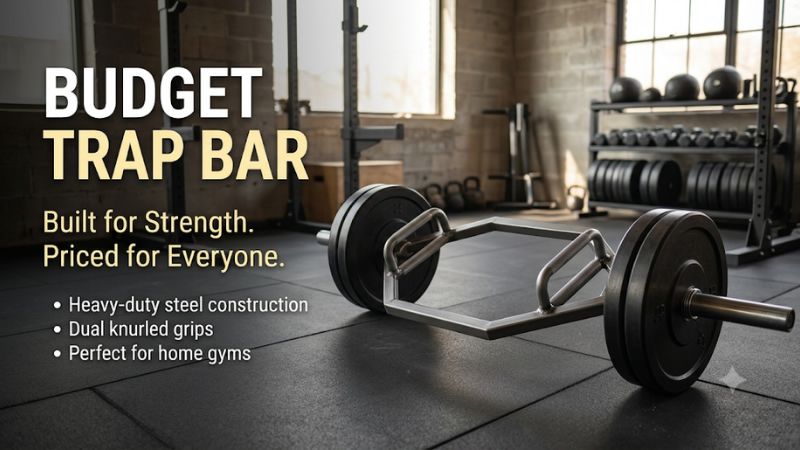
Six budget trap bars worth buying for the right setup
Choose by the feature you will use every week. A small starting load can matter more than handle height if two people share the equipment. A predictable raised grip may be enough for a program with deadlifts and shrugs. A step-through frame adds real value when getting into the bar or changing plates limits your setup.
CAP Olympic Trap Bar for a basic low-cost purchase
CAP lists 24 inches between grips, 1-inch-diameter grips, and compatibility with Olympic 2-inch plates on its black OBIS-90HB listing. The listed capacity is 500 lb. This bar is worth considering if you want a basic neutral-grip floor implement and plan to use moderate loads on a simple home setup.
Best for a buyer who already owns plates and needs an inexpensive way to add neutral-grip pulls or shrugs. The slimmer grips are a meaningful difference from some specialty bars with thicker handles. A fixed basic design is also straightforward to evaluate if you can get the seller to confirm the starting grip height and usable sleeve room.
CAP uses similar names across its trap bar range, so match the model code in the cart. The exact source we checked gives useful grip dimensions and the capacity claim. It does not give all the figures needed for a compact-gym or heavy-bumper calculation. If the plates are thick or a wall is close to either tip, get the actual outer and loadable dimensions before ordering.
Why it earns the pick is the low observed price and basic Olympic plate compatibility. The trade-off is less detailed documentation than the Titan or Body-Solid. Buy it when the seller confirms your existing plates and intended grip position. Compare a better-documented model if a failed fit would require an expensive return.
Synergee 7 kg Hex Trap Bar for a lighter empty start
The black 7 kg Synergee starts at about 15.4 lb and uses fixed raised handles. Synergee specifies 10 inches of loadable sleeve per side. The manufacturer describes the grips on this version as unknurled, making it a distinctly different purchase from the heavier 20 and 25 kg models on the same page.
Best for someone who wants to learn a neutral-grip pull at a lower load or share a home bar among people with very different starting weights. Think about what that empty weight means after adding plates. With two 10 lb plates, the nominal load is about 35.4 lb before collars, which is below the empty weight of most other bars here.
The raised grips give one fixed starting height, and plate diameter will determine how high the whole setup sits. If you need a second pulling depth on the same bar, a dual-handle model is more flexible. If you want strong knurling for long carries or heavy holds, the smooth raised grips are a meaningful disadvantage. Check the shape and your usual grip before buying for that use.
Why it earns the pick is the combination of an unusually low empty weight and long-enough sleeves for many light starts. The trade-offs are fixed height and unknurled grips. Choose it when you need a true low starting load. Pick the Titan or Marcy if adjustable range via two handle sets matters more.
Titan Olympic Hex Weight Bar for two grip heights in a short frame
Titan’s floor-use Olympic Hex Weight Bar is listed at 44 lb, 56 inches long, and 24.5 inches across the handles, with 9.75 inches of loadable sleeve per side. It combines a standard grip with a raised grip. This design is a useful middle ground for training at two start heights without a long rackable frame.
Best for moderate deadlifts and shrugs where you want a clearly documented frame and a familiar mid-40-pound starting point. Measure the handle spread against your natural hand position. If you can borrow a bar with comparable dimensions, try the raised and standard grips for both your warm-ups and the positions your program uses.
The main limit is the sleeve. With a hypothetical 1.5-inch collar, 8.25 inches remain for plates on each side. Two 3.5-inch bumpers fit that example, with 1.25 inches left. Choose any smaller plates and collar against their true measured dimensions. Know the limit before paying for a cheap bar and discovering it needs a new set of plates.
Why it earns the pick is the combination of dual grips, a 56-inch footprint, and specified loading dimensions. The trade-offs include the short sleeve and the need to flip the empty bar to change grip orientation. Buy it if two heights and a short closed frame are the features you expect to use. A supported open design is the better comparison if access through the frame is part of your training.
VEVOR OB-95 for an affordable open frame
VEVOR lists the OB-95 at 48.91 lb and 56.3 inches end to end. It has an open frame, knurled handles, loading feet, and sleeves described as compatible with nominal 2-inch plates. It earns attention for providing a step-through design at a price close to some basic closed hex bars.
Best for a buyer who values entering from the open side and wants a compact bar that can sit on its feet during plate changes. Positioning the opening toward the clear part of a room makes a difference when your workout area shares space with a rack, stairs, or furniture. Confirm the open area works with how you plan to stand or step.
The maker lists an 800 lb capacity. The 56.3-inch total length still makes the usable sleeve dimension important for anyone choosing thick bumpers. Verify that figure and collar fit with the exact seller before selecting it on the basis of the load rating. Match the model code, because VEVOR groups several closed and open bars, finishes, and capacities under similar listings.
Why it earns the pick is the distinct open frame in a short package. The trade-off is that buyers with dense plate stacks or narrow grip requirements may need more precise seller confirmation. Buy it if open entry and loading feet are the features you need. Compare the Titan if a published sleeve measurement matters more and you are comfortable with a closed frame.
Body-Solid OTB50RH for dedicated raised-handle work
The OTB50RH has raised knurled grips, a 56-inch overall length, a published 25-inch interior-to-interior handle measurement, and 9.75 inches of loadable sleeve. Body-Solid lists a 600 lb capacity. Compare the RH code with the non-RH version before ordering, because the handle layout is the main reason to choose this model.
Best for a buyer who expects to pull from an elevated grip every session and wants a simple bar for deadlifts and shrugs. A consistent handle position makes it easy to keep the exercise comparable from workout to workout. You can still vary starting position with approved plate or setup changes, but the model’s appeal is the straightforward raised grip.
The handle spacing uses an inside-to-inside reference in the manufacturer’s description. Compare similar measurement points where possible. A competing bar’s center-to-center number describes something different. If grip comfort is close between models, ask for a drawing or verify the dimension yourself in a place that sells the bar.
Why it earns the pick is the documented sleeve length and a setup designed around the raised handle. The trade-offs are a single intended grip height and limited room for thick stacks. Buy it if that specific setup matches your plan. Choose the Titan or Marcy if you want a low and a high handle on the same bar.
Marcy HTB-6921 for two knurled grip positions
Marcy lists the HTB-6921 at 45 lb, with raised and regular knurled handles, 10-inch sleeves, and an 800 lb maximum. This is the upper edge of the budget used in the roundup. It suits a buyer who wants two textured grips and a conventional closed shape for regular floor lifting.
Best for a buyer who wants a nominal 45 lb base and the ability to keep separate high- and low-handle variations in a training program. Both grips are knurled, which is a better match than a smooth raised-handle option if your regular work includes holds or shrugs. The familiar weight also simplifies logging with pound plates.
Ten inches of sleeve is close to the Titan and Synergee in practical plate room. Buy the Marcy for its grip layout and the maker’s stated use and load guidance. If you are trying to increase the amount of rubber on each sleeve, a longer budget-exceeding design may solve the actual problem. Also confirm the model code and empty weight when shopping a retailer listing titled as a 50 lb Marcy trap bar. The 45 lb figure here is the specification for the named HTB-6921.
Why it earns the pick is two documented knurled handle heights at about $200. The trade-offs are shorter sleeves and a closed frame. Buy it if you want the two grips and your plates fit. Compare the VEVOR for open step-through access or the Titan for a lower purchase price and a similar sleeve class.
Get better value from the plates you already own
The usable equipment is the bar plus the two plate stacks, collars, and room to handle them. Build the lowest and highest loads you expect before spending. This reveals whether you need a lighter base, longer sleeves, or thinner plates. It also gives you a fairer comparison of a $90 bar and a model near $200.
Calculate the empty bar and plate increments
Record the actual empty weight and the smallest compatible pair of plates you own. A 7 kg bar with a pair of 5 lb plates reaches about 25.4 lb. A 44 lb bar with that same pair reaches 54 lb, before collars. That difference changes the usefulness of the purchase for a newer lifter or a shared household.
Work through three realistic weights. For the low end, use the lightest load you need for the exercise, with equipment that establishes the right floor height. For a middle load, include the weights you change most often. For the high end, simulate the exact proposed stack on one sleeve. A model that fits all three is easier to own than a bar with an impressive maximum but a high minimum or an awkward middle.
Price the correct collars and check shipping
A nominal Olympic plate size tells you the general kind of bar to look for. Confirm the actual sleeve diameter and what type of collars securely clamp to it. Budget for a new set if required. Then compare the bar’s checkout total with pickup where a local seller carries the configuration you need.
For illustration, a $95 bar with $35 shipping and $25 collars is a $155 purchase before tax. A $145 alternative with suitable collars and no shipping charge is cheaper at checkout. The better purchase depends on the actual seller’s terms. Delivery and replacement policy matter especially if a threaded part is damaged or the bar arrives physically different from the listing.
Decide whether a used bar wins at the same price
A used bar can stretch the budget if the maker and model are identifiable and the sleeves and grips fit your existing setup. Inspect the bar unloaded. Check the condition of welds, end hardware, fasteners, and contact points, especially if the owner stored it outdoors or used it on a wet garage floor.
Compare the price against the new options with taxes and delivery included. A small discount may be less useful than return rights and a documented model. A substantial discount for a known higher-quality bar with clean condition and the right dimensions can be worth considering. Ask how it has been stored and confirm whether a warranty can transfer if that matters to you.
Frequently asked questions
A cheap trap bar can be a good buy when its exact model, sleeve fit, and starting weight are clear. Treat product names and large capacity labels as the beginning of the comparison. Small details, especially the gap between the grips and the width of the sleeve under a collar, can matter more after checkout.
Should I buy the least expensive 800 lb trap bar I find?
Start with the model’s load and use guidance, your plate stack, and the quality of the seller’s documentation. A higher stated number cannot provide extra sleeve room. It may also reflect test conditions that differ from another company’s rating. Pick the model that fits the working loads you actually expect and the kind of use the maker describes.
Can a 10-inch sleeve fit three bumper plates per side?
Sometimes. Three 2.5-inch plates take 7.5 inches before a collar, while three 3.5-inch plates need 10.5 inches by themselves. Measure the thickest part of each plate and add the width your collar requires to engage fully. Use the listed loadable portion of the sleeve for the comparison.
Is an open trap bar worth the extra money?
An open frame earns the difference if you routinely step through it, need room for split-stance work, or use loading feet for frequent plate changes. If a basic closed frame fits your stance and your workouts consist mostly of floor deadlifts and shrugs, the money may be more useful for plates or collars.
Which cheap trap bar is best for two people sharing one setup?
Compare each person’s lightest training load and comfortable grip width first. The 7 kg Synergee suits a lower start, while the Titan and Marcy offer two handle positions and heavier starting weights. Sharing also makes the plate changes more frequent, so evaluate how easy it is to change from one person’s usual load to the other’s.
Conclusion
Pick the CAP for simple low-cost floor work or the Synergee 7 kg for a lighter start. Choose Titan or Marcy for two handle heights, Body-Solid for a dedicated raised grip, and VEVOR if an open entry matters. Compare the delivered cost and check that your plates and collars fit before committing to a budget model.
More from Amazon
Programs that pair well with the guide above. Offers and eligibility are set by Amazon and may change.
Free shipping on eligible items, Prime Video and more. Eligible new members can start with a free trial.
Start a Prime free trialA Prime membership for ages 18-24 with a trial period. Eligibility is set by Amazon.
See Prime for Young AdultsAudiobooks and podcasts to listen to on the go. Eligible new members can start with a free trial.
Try Audible freeAd-free music streaming. Eligible new subscribers can start with a free trial.
Try Music Unlimited freeAs an Amazon Associate we earn from qualifying purchases.
Write Your Review
No reviews yet. Be the first to share your experience!