
The best trap bar for most home gyms has a grip width you can use comfortably, enough sleeve room for your plates, and a starting weight that fits your warm-up. An open frame gives you room to step through, while a traditional closed hex bar can be a better fit for a routine built around deadlifts and shrugs.
Quick verdict
The REP Open Trap Bar is the best overall pick if you want interchangeable grip widths, long sleeves, and an integrated loading jack. The Bells of Steel Open Trap Bar is the first model to compare for a tighter room. Choose the Rogue TB-2 if you want a conventional closed frame and plenty of sleeve space for thick plates.
The Eleiko Öppen is the premium option for lifters who want dual handles, a loading jack, and a published rack-fit drawing in a shorter package than the REP. Titan’s Rackable Hex Trap Bar is the alternative for a closed, rack-oriented setup with a narrower listed handle spread. Body-Solid’s OTB100 is an open-frame choice for people who need substantial sleeve room and have less lateral space than an 84- to 89-inch bar would require.
Best trap bar comparison by frame and sleeve length
The most useful dimensions are the ones that affect how the bar fits your body, plates, and training space. We show empty weight for the stated configuration where the source gives a consistent figure. Length and sleeve space are separate measurements, and the collar occupies some of the listed space on each sleeve.
| Trap bar | Best for | Frame | Overall length | Published sleeve space per side | What to verify |
|---|---|---|---|---|---|
| REP Open Trap Bar | Most versatile home setup | Open | 84.3 in | 16.5 in | Assembled weight and handle kit |
| Bells of Steel Open Trap Bar | Compact open-frame setup | Open | About 59 in | 9.7 in | Fit of thick bumper plates and collars |
| Rogue TB-2 | Heavy closed-frame work with long sleeves | Closed | 88.5 in | 16 in | Collar fit on 1.91-inch sleeves |
| Eleiko Öppen Bar, 3085748-03 | Premium open bar with documented rack geometry | Open | 77.13 in | 12.6 in | Rack drawing and exact model revision |
| Titan Rackable Hex Trap Bar | Closed-frame rack work with a narrow listed grip spread | Closed | 85 in | 16 in | Conflicting grip diameter figures and 48 mm sleeves |
| Body-Solid OTB100 Open Trap Bar | Long sleeves in a shorter open frame | Open | 73 in | 16.25 in listed plate sleeves | Assembled empty weight and collar fit |
How we selected these trap bars
We compared the published dimensions and features of identifiable models, then matched those details to real buying decisions. A bar earned a place when its shape, handle setup, loading area, or rack documentation solved a specific problem. The judgments below come from product specifications and equipment geometry.
An open frame was most valuable where a buyer wanted lunges, an easier entry path, or a loading jack as part of the design. Long sleeves mattered more for a gym that already had thick bumpers. Rackability mattered only where the frame could actually sit on the buyer’s installed supports. The construction details are documented. Grip feel, balance in motion, and wear depend on the lifter, load, and setup, so we treat those as practical considerations rather than measured results.
We also looked for inconsistencies that could change a purchase. A frame-only weight can understate what someone lifts after fitting both handles. A manufacturer can describe the same bar with two grip diameters on one page. Where a conflicting figure would affect the decision, we identify it so the buyer can verify the exact unit.
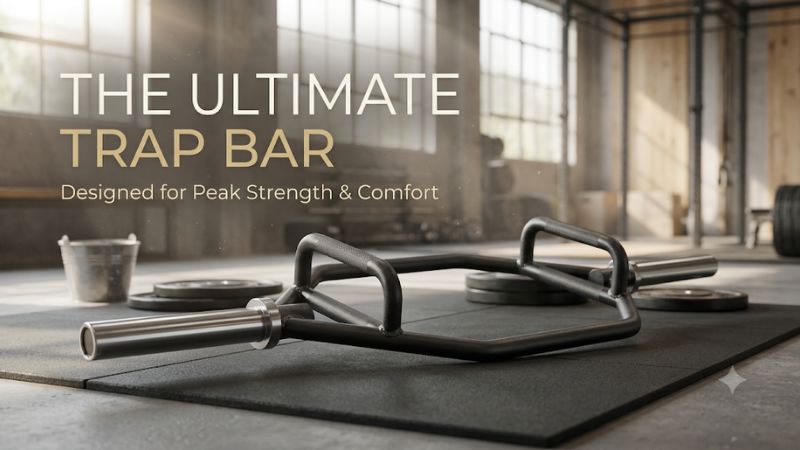
Six trap bars for different home gym setups
Start with the lift you plan to do most often. A neutral-grip deadlift needs suitable handle placement and a frame that clears your stance. Walking lunges place more value on an open side and a usable lane. If you want to train off J-cups or safeties, compare the frame geometry with the rack before ordering.
REP Open Trap Bar for the most configurable setup
REP lists 84.3 inches overall and 16.5 inches of usable sleeve per side. The fixed handle kits are 23 inches narrow, 25 inches standard, and 27.3 inches wide. The open frame and loading jack give this bar a broad range of uses, and its handle options let you solve grip-width problems without replacing the frame.
Best for a buyer who expects several people to use the bar or who already knows that a standard 25-inch spread is too wide or too narrow. The narrow setup is particularly worth considering if your hands sit well inside the usual grip spacing. Measure how the center of each hand hangs at your sides before choosing. For the rotating handle kit, check both the 24.6-inch spacing and the selectable diameters. A thicker rotating grip makes the exercise a different grip challenge.
The figure shown for the bare frame is 58.4 lb. REP lists 74.3 lb with the standard handles, 75.6 lb with the narrow set, and 71.2 lb with the wide set. The rotating-handle configuration is heavier again. That difference affects empty-bar warm-ups. A lifter who intended to start near 60 lb would already be above that target with any of those assembled combinations. Put the configured weight in your training log and budget.
The loading jack matters when you change full-diameter plates repeatedly. REP also lists short and long-term compatibility details for its own rack geometry, including use on standard 47-inch-wide REP racks and other racks up to 49 inches wide, subject to actual fit. Bring your rack’s installed support dimensions to that comparison. The main advantage is configuration flexibility. The main cost is a large, fairly heavy bar that occupies real floor space. Buy it if adjustable grip width matters. Move down the list if you mainly want an easy-to-move bar for a narrow floor station.
Bells of Steel Open Trap Bar for a compact floor station
At about 59 inches overall and 47 lb empty, this Bells of Steel model is substantially shorter and lighter than the REP configuration above. The design includes a loading jack, two grip heights, and about 9.7 inches of loadable sleeve. Its published drawing shows roughly 600 mm between grips.
Best for a home gym that needs a compact open bar for deadlifts and some step-through work. Its shorter end-to-end width leaves more room between the tips and side walls. The smaller starting weight also helps if you move the bar between storage and a clearing before every session. A 25 mm grip gives it a narrower handle diameter than several bulkier picks.
The plate constraint comes sooner. Two hypothetical 3.5-inch bumpers and a 1.5-inch collar use 8.5 inches. Add a 1.25-inch change plate, and the stack would need 9.75 inches, just beyond the listed 9.7. Those are sample dimensions, but the exercise shows how quickly the decision can change. Buyers who use thinner plates have a different load range even on the same bar.
You get the features that make an open trap bar convenient without reserving space for a seven-foot-class frame. The trade-off is the shorter plate stack. Buy it if storage and loading clearance limit your setup, and your working weights fit the sleeves. Look at the Body-Solid or REP if you need significantly more loading space per side. Confirm pricing and inventory with the U.S. storefront because storefronts can show different currencies and offers.
Rogue TB-2 for closed-frame deadlifts and shrugs
The TB-2 weighs 60 lb and measures 88.5 inches overall. It has two sets of knurled neutral handles, spaced 25 inches on center, and 16 inches of loadable space per side. Its conventional welded frame suits a buyer who mostly pulls or shrugs and already has room to load a long specialty bar.
Best for focused deadlift and shrug work where a closed frame is comfortable and the owner wants a long plate stack. The 60 lb base is lighter than the REP with standard handles, even though the TB-2 is longer overall. High and low handles give you two repeatable starting positions. Choose one as the baseline for an exercise so a change in range of motion does not get mistaken for ordinary load progression.
The sleeves deserve a separate compatibility check. Rogue specifies a 1.91-inch diameter and recommends axle collars because some standard barbell collars may fit loosely. A plate can slide onto a sleeve that a collar cannot clamp securely. Price the correct pair before buying, especially if your entire setup uses tight-fitting cam collars selected for 50 mm sleeves.
The welded frame, 25-inch grip spacing, and generous sleeve length are the case for buying it. The width and specialty collar requirement are the main trade-offs. Buy it if the frame suits the exercises you do and you have a permanent loading lane. Prefer an open option if stepping through the frame or changing full-size plates on an integrated jack will matter every session.
Eleiko Öppen Bar for a premium open setup
The Eleiko Öppen 3085748-03 weighs 25 kg and measures 77.13 inches overall. Eleiko lists two handle heights, a built-in rubber-footed loading jack, and 320 mm of loadable sleeve per side. The company also publishes a rack-fit drawing, which helps buyers check a costly specialty purchase before it ships.
Best for someone who combines floor work with an appropriate rack or platform and wants an open bar shorter than most full-length rackable options. At about 55.1 lb, its empty weight leaves more room at the low end than the REP with its standard handles. The 12.6-inch sleeves sit between the compact Bells and the longer REP. That helps when a buyer needs room for more plates but has a clear limit on overall bar length.
The rack drawing is worth using. It gives reference dimensions for inner and outer upright spacing. Read those together with the actual J-cup shape, frame contact points, and manufacturer’s instructions. The bar’s approximate seven-foot footprint is close enough to other equipment that it may look interchangeable on paper, yet a welded frame and straight shaft can sit very differently on the same hooks.
The advantages are the shorter premium format, documented geometry, and integrated jack. The trade-offs are the cost and less plate room than a 16-inch-sleeve model. Buy it if the published rack and frame dimensions match a setup you intend to keep. Reconsider if a less costly floor bar covers the same workouts or your widest bumper stack already needs longer sleeves.
Titan Rackable Hex Trap Bar for a narrower closed grip spread
Titan’s rackable model is 85 inches overall, weighs 60 lb, and has 16-inch loadable sleeves. Its specification table lists 22 inches of handle spread and 48 mm sleeves. It has high and low neutral grips and is intended to sit on J-hooks in compatible racks, with fit depending on the installed supports.
Best for a buyer who wants long sleeves and a narrower listed fixed grip spread than Rogue’s 25 inches. The shorter hand-to-hand distance is the reason to compare it, particularly when a broad grip makes you feel as though you are reaching out at the bottom. Because brands may report measurement points differently, confirm the center-to-center distance if you are choosing between two models based on an inch or less.
Titan’s product overview and specification table give different diameters for the grips. If thick or narrow handles are a deciding factor, confirm the figure with Titan before ordering. The stated 48 mm sleeve diameter also makes it important to verify collars. A nominal Olympic plate designation tells you which broad format to shop for. Clamp engagement still depends on the actual sleeve.
The strength of this pick is 16 inches of loadable room paired with a narrow listed spread and a rack-oriented frame. Its trade-offs are full-size length and the need to resolve the hand-grip specification. Buy it if the geometry and verified handle dimensions fit you. Choose a simpler floor bar if rack pulls and rack-based setup are only hypothetical uses.
Body-Solid OTB100 for long sleeves in a shorter open frame
The OTB100 combines a 73-inch overall span with 16.25-inch plate sleeves, 32 mm handles, and an integrated loading stand. Its open side and two grip heights are useful if you need to enter easily and want a shorter tip-to-tip footprint without moving to the roughly 10-inch sleeves common on compact models.
Best for a buyer who has enough width for a six-foot-class bar and needs space for thick plates. Relative to the 84.3-inch REP, the 73-inch dimension frees 11.3 inches total, or about 5.65 inches per side when centered in the same lane. That margin can turn a cramped loading zone into a workable one. Check the width of the open section as well if you buy it for movement through the frame.
The grip is a full 32 mm according to the manufacturer, which can matter if you wanted a slender handle or long loaded holds. Body-Solid’s page gives different product and assembled weights. Confirm the actual assembled empty weight with the seller if warm-up loads or portability determine the purchase. The published sleeve dimension is also a good starting point for a plate test, especially when wide collars occupy the last inch or two.
The draw here is long plate sleeves in a shorter open layout. The compromises are the thicker grip and an empty-weight figure worth confirming. Buy it if end clearance and bumper capacity matter at the same time. Pass on it if a narrow hand grip or a well-documented low starting load comes first.
What to check before buying the best trap bar for your gym
A good trap bar needs to fit at three moments. It should sit where you can load it, clear your body as you lift, and move into storage when the session ends. Compare those checks with the actual model. A compact overall length alone says little about the frame’s depth, grip comfort, or useful plate capacity.
Check grip spread and usable handle length
Compare the distance between the grip centers with how your hands hang when you stand in your normal pulling stance. Then compare grip diameter and knurled length. Your hands need enough space to land on the intended gripping area without crowding a weld, bracket, or the end of the available knurl.
Try holding two empty handles or similarly sized objects at the listed width. Keep your feet, elbows, and shoulders in the rough positions you use at the start of a pull. A wide bar may feel fine at lockout but less comfortable at the floor. If you can borrow or try a similarly sized trap bar, test both heights before choosing a fixed width.
Compare the working load with a real plate stack
Make an inventory of one side of the heaviest setup you expect to use. Add the thickness of every plate and the installed width required by the matching collar. Check protruding hubs and finishing plates as well. The plates need to fit under both the model’s stated guidance and the geometry of its sleeve.
For an illustrative 350 lb total on a 60 lb bar, you would need 145 lb of plates per side before counting collars. The arrangement of those plates determines the sleeve space. A mix of several thinner iron plates can take less room than three thick bumpers and a change plate for a similar total. Use actual dimensions. Published claims about how many generic bumpers fit depend on their individual thickness.
Price the space, assembly, and accessories
Measure the entryway, loading lane, and storage area with a tape. Include the space for hands beyond the tips, plus room to tip the bar for a jack or flip it between handles. Add any separate collars, handle kits, and installation tools to the price. This makes it easier to compare a complete bar with a frame sold separately.
When the bar arrives, inspect the sleeves and attachment points. Assemble and tighten the hardware according to the maker’s directions and test the empty bar before loading plates. Set it on a flat surface, check that both gripping positions are usable, and confirm the collar stays secured to the sleeve you purchased. These are useful setup checks for a welded bar and for a modular one.
Frequently asked questions
A trap bar can share plates with other Olympic-style equipment and still require different collars or storage. Verify those details on the exact model. Handles and loading positions can also differ between revisions even when a brand keeps the same name, so match the product code to the drawing and assembly instructions.
Is every open trap bar rackable?
Rackability depends on where the bar contacts the supports and what the manufacturer permits. An open frame describes an entry path. Ask for a drawing that shows the contact areas, then compare it with installed J-cups and safeties. Check the frame for interference with uprights or a crossmember.
A manufacturer-supported rack position can help for rack pulls or unloaded setup. For floor deadlifts alone, compare its extra length and cost with a compact model that fits the rest of your gym.
Do high handles let you lift more?
High handles generally shorten the pull by raising where your hands start. Some lifters use more weight from that position, depending on their technique and training. The meaningful comparison is your own repeatable result for the same bar, plates, handle height, and range of motion.
Log high and low handles as distinct variations. Also record the diameter of the plates if you switch between small iron plates and full-diameter bumpers. The low handles can start at a different height even when the nominal load matches.
Can I use the same collars from my straight bar?
Confirm the sleeve diameter and the collar maker’s supported dimensions. Some specialty bars have slightly undersized pipe sleeves. In that case, a plate may fit while a standard collar sits too loose. Buy the collar type the bar maker recommends and verify that it engages fully on each side.
Is a loading jack worth the extra cost?
A jack earns its cost when you change large plates frequently and have room to tip the frame into its loading position. It may matter less if the bar rarely changes weight or your routine uses one compact stack. Check the clearance created by the jack with your largest plate and follow the loading order in the manual.
Conclusion
Choose the REP Open Trap Bar for grip-width options and long sleeves, or the Bells of Steel for a compact open setup. The Rogue TB-2 and Titan Rackable suit closed-frame work, while the Eleiko and Body-Solid offer different balances of bar length and plate room. Make the final choice after checking your grip, collars, and loading space.
More from Amazon
Programs that pair well with the guide above. Offers and eligibility are set by Amazon and may change.
Free shipping on eligible items, Prime Video and more. Eligible new members can start with a free trial.
Start a Prime free trialA Prime membership for ages 18-24 with a trial period. Eligibility is set by Amazon.
See Prime for Young AdultsAudiobooks and podcasts to listen to on the go. Eligible new members can start with a free trial.
Try Audible freeAd-free music streaming. Eligible new subscribers can start with a free trial.
Try Music Unlimited freeAs an Amazon Associate we earn from qualifying purchases.
Write Your Review
No reviews yet. Be the first to share your experience!