
The choice of an Olympic barbell vs alternatives comes down to how you want to load and move resistance. A straight bar makes heavy, measurable progression easy to organize, while a trap bar, dumbbells, or a machine can serve a different need. Compare the exercises you’ll keep, the space you have, and the cost of a complete setup.
Olympic barbell vs alternatives at a glance
Choose an Olympic straight bar if you want traditional barbell squats, presses, deadlifts, or Olympic lifts and have space for the equipment those lifts require. Other tools can make more sense if you primarily need adjustable loads in a room without a rack, a neutral grip for pulls, or a set movement path.
| Equipment | Main advantage | Best fit | Main trade-off |
|---|---|---|---|
| Straight Olympic barbell | One shaft supports many lifts and uses a shared plate system | Barbell strength, Olympic weightlifting, and gradual plate progression | Needs clear loading space and a suitable rack for many lifts |
| Standard straight bar | Can preserve an existing 1-inch plate collection | Moderate straight-bar training with compatible equipment | Model-specific rack fit and capacity |
| Olympic trap bar | Centered standing position and neutral handles | Deadlifts, some carries, and accessory work | Bulky frame and fewer traditional straight-bar lifts |
| Pair of adjustable dumbbells | Two independent loads with small storage footprint | Unilateral work, presses, rows, and compact gyms | Per-hand load ceiling and device-specific adjustment increments |
| Kettlebell | Offset load and a broad handle suit swings and carries | Ballistic work and simple training stations | Requires additional bells or compatible adjustments to expand weight range |
| Smith machine or cable station | Guided bar path or adjustable cable direction | Buyers who want machine-based resistance and repeated setup | Larger fixed footprint and different loading mechanics |
The distinction that matters most is the movement you intend to keep. A trap-bar deadlift can fill the role of a heavy pull in a general routine, but the handle and position change the lift. Dumbbell bench pressing can train a pressing pattern while allowing both arms to move independently. The exercise goal determines whether that change is an advantage.
How the setup changes the training
Compare equipment at the level of a real session. Consider how you load your first working set, where the weight starts, how you add a small increment, and how you end the set. Those details explain why someone can be well served by a heavy barbell setup in one home and adjustable dumbbells in another.
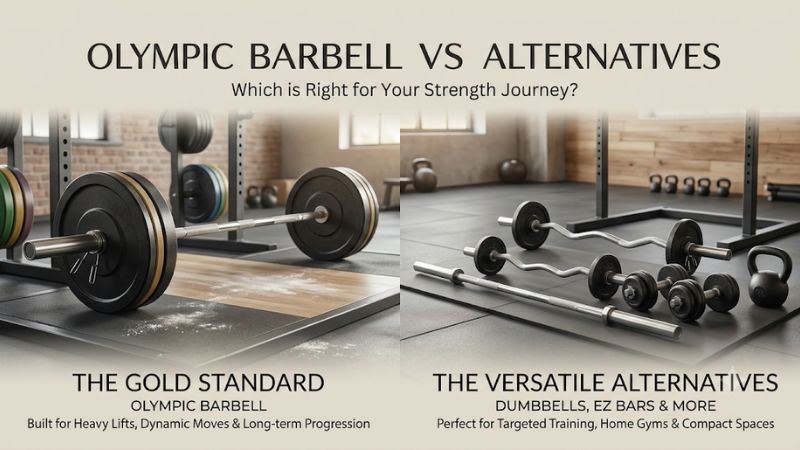
Straight Olympic barbell vs standard straight bar
An Olympic straight bar uses sleeves sized for nominal 2-inch plates, often with a rotating sleeve assembly. A typical standard straight bar takes nominal 1-inch plates. On a controlled squat, press, or row, the two formats can serve a similar pattern when the bar, plates, and supporting equipment fit the planned use.
The most important distinction for someone who owns plates is the cost of the system change. A good set of 1-inch plates already gives you useful resistance for a matching standard bar. If you plan to train light or moderate loads and can confirm fit, that can be a practical starting point. If you already own a substantial Olympic set, a bar that accepts those plates avoids duplicate storage and makes expansion straightforward.
Check the installed J-cup width and loads of both setups. Standard bars vary in length, weight, center shaft span, and rated capacity. A short 1-inch bar can be excellent for floor rows and awkward in a conventional power rack. An Olympic bar can have similar total length but a different distance between shoulders. Read the exact spec sheet before paying for either format.
Choose the Olympic bar when it matches your progression, your rack, and the variety of plate-loaded tools you plan to own. Keep the standard format when it already supports the lifts and weights you train and the equipment is in suitable condition. If you reach a verified fit or load limit, include the plates and collars in the cost of moving up.
Straight Olympic barbell vs trap bar
A conventional trap bar places the lifter within the frame, holding handles to the sides of the body with a neutral grip. A straight bar places the shaft in front of the legs during a deadlift. That difference changes the starting position and the way you organize the lift, even when the plate weight is the same.
Trap bars can come with low and high handles or an open back. High handles reduce the amount of vertical travel for the same standing finish, and open designs can give your legs or torso more room for certain movements. Compare the exact model’s handle width, empty weight, sleeve length, and how the frame rests on the floor. The shape can take up considerably more storage depth than a straight shaft.
An Olympic straight bar serves more conventional rack-based exercises and is necessary for practicing the traditional straight-bar versions of competition lifts. A trap bar can give a buyer a useful heavy pull and carry in the same piece of equipment. Some trap bars also support rack work, depending on their design. Check that in the manufacturer’s instructions before you assume a rack-based exercise is supported.
Choose the trap bar first if the priority is a centered, neutral-grip pull and the space accommodates the frame. Choose the straight bar first if your program includes conventional bench, squat, or weightlifting practice. If the trap bar uses compatible Olympic sleeves, you can share many of the same plates when you eventually own both.
Straight Olympic barbell vs adjustable dumbbells
An Olympic bar connects both hands to one rigid shaft. Adjustable dumbbells provide separate weights in each hand, allowing the two arms to choose their own paths. Dumbbells take up little room after storage and can work for presses, rows, split squats, and other exercises where one weight per hand is useful.
Compare the total resistance you can use safely and conveniently. A pair of 50 lb dumbbells provides up to 100 lb across two hands. The pair asks you to position each dumbbell separately before certain lifts, such as a bench press. A barbell can be supported on hooks for the start of a set and can accept more plates when its sleeves, rack, and rating allow. Both setups need their own approach to setting up and finishing a difficult set.
Check progression in per-hand terms. A selectorized dumbbell that moves from 30 to 35 lb raises the combined load by 10 lb when both hands move up. An Olympic bar with two 1.25 lb plates can go up by 2.5 lb total when load and plate tolerances are appropriate. Which step is more useful depends on the lift, your current weights, and the increments supported by the equipment.
Choose dumbbells when the compact storage and independent movement fit your home and exercises. Choose the bar when rack-based lifting, heavier total resistance, and easy small plate changes matter most. If you already own several pairs of dumbbells, they can cover assistance work while your bar takes over the exercises for which a rack and higher load have real value.
Straight Olympic barbell vs kettlebells
A kettlebell’s mass sits below the handle in common holding positions, and its handle shape supports one- and two-handed work. That geometry suits swings, carries, cleans with a kettlebell, and goblet squats. The barbell’s long shaft, sleeves, and even plate loading suit different movements and much finer choices of total weight.
A single moderately heavy kettlebell allows a compact circuit built around carries, hinges, and one-arm work. You can move it to a position where you have room to swing and return it to a small storage spot. The exercise itself still needs clear space around the lifter. Stored footprint and safe movement clearance are different measures.
For a fixed kettlebell collection, the gap between two bells depends on the sizes you own. Adjustable designs can provide more steps, subject to their load and locking mechanism. A barbell with suitable change plates lets you keep the same implement during a series of carefully spaced weight increases. That is useful when your program revolves around a heavy squat or deadlift rather than moving between many exercises.
Choose kettlebells when swinging, carrying, and one-arm work are the actual training you want. Choose a barbell when you want standard barbell movements, fine loading, or a high load ceiling. If you only have room for a small training kit at home, the kettlebell can cover many movements even after you stop looking at it as a replacement for the barbell.
Straight Olympic barbell vs Smith machine
A Smith machine carries the bar along a set track. Designs may use vertical or angled paths, and some have counterbalancing that changes starting resistance. A free bar travels in the path created by the lifter. Compare the machine’s actual path and stop positions with where you want the bar during each exercise.
A machine can make repeated setup convenient if you already have one installed and know where to set the safety stops. When you bench on it, the position of your bench and body relative to the track becomes part of the setup. Check whether you can place the bench where the fixed path feels workable. Also verify that you can operate the hooks and stops across the movement range.
A free bar needs the right rack, hooks, and safeties for rack-based training. It offers the ability to train the straight-bar path you use outside the machine. If you already own an Olympic plate collection, determine whether a plate-loaded Smith station accepts it. Some machines instead come with an integrated weight stack. Their starting resistance and total loading behavior will differ by design.
Choose a Smith station if the guided path and built-in setup match the exercises you want to perform and you have a permanent space for it. Choose a straight bar if free-bar practice is a training objective. When comparing cost, include the rack and bench that make the free-bar version usable, as well as the machine’s delivery and assembly.
Straight Olympic barbell vs cable station
Pulleys let a cable pull from different directions, depending on anchor and handle position. A straight bar’s resistance comes from gravity acting vertically on the implement and plates. A cable station can be especially practical for raises, pulldowns, and other movements that benefit from a line of pull away from the floor.
A cable can allow the same station to cover a row, pressdown, and single-arm accessory lift without moving loose plates between sleeves. Its pulley ratio affects the force at the handle and how far the cable can travel. Compare the listed effective resistance at one handle with the actual load you need. Check also whether using both handles changes the setup.
The Olympic bar remains useful for straightforward plate-defined loading and lifts you want to train in the conventional free-weight pattern. A cable row or a cable squat variation may meet a general resistance goal, while a heavy straight-bar deadlift requires a separate setup to reproduce the actual movement. A buyer should compare the exercise they will perform, not just two devices with numbers in pounds.
Choose cable equipment if it delivers the exercise paths and convenience you expect to use frequently. Choose the bar if conventional barbell work is the core requirement. When space is limited, a compact pulley attachment can be attractive, but its anchoring, pulley ratio, and intended use need independent checks before you count it as a full station.
Decide from your space, load, and next year of training
Map the complete equipment around the lifts you actually plan to run. A high-capacity bar with nowhere to set up is a different risk from a compact implement that cannot reach your working weight. Put current exercises, planned loads, and storage constraints on paper before giving any one design an overall ranking.
A shared room with no permanent rack
If your workout area doubles as a living room or bedroom, compare stored space and the floor area needed for the whole session. Adjustable dumbbells or a few kettlebells can be put away without dismantling a rack. That changes how quickly you can begin and end a workout while other people use the same room.
For a barbell option, simulate the path into and out of storage and check how you will load both ends. If you want bench presses or squats, include the rack, its safeties, and space to move a bench. If your barbell exercises happen from the floor, a compact model may be more realistic, but check the sleeve space and the bar’s intended function. Choose the setup you can bring out regularly without blocking a door or forcing another person to step over equipment.
A garage gym built around strength progression
If you have room for a rack, bench, and a clear loading aisle, a straight Olympic bar gives broad coverage across traditional strength lifts. Create a load plan for your current work and your expected progression six to twelve months out. Add collars and verify the heaviest plate stack, especially with thick bumpers.
A trap bar can make sense after you have established which additional movement earns the floor and storage space. You can often share Olympic plates between the two, subject to sleeve fit and the exact model. A cable station can also add useful exercise directions once you know which pulling or isolation work is missing. In a garage with a car sharing the floor, verify the width available during training before buying a frame-shaped bar or large machine.
A buyer who already owns 1-inch plates
Start by measuring the plates, writing down the exercises the current bar supports, and checking the condition and rating of the equipment. If you need only a couple of new pairs for your next weight increments, staying with the standard setup may cost less than moving to an Olympic bar and replacing the entire collection.
If your aim is a full power rack with a broad range of heavy plate loads, price the formats side by side. Include the bar, plates, compatible collars, and storage. Check whether the rack and safeties can accept both the existing bar and the proposed replacement. The most financially sound option is determined by the loads and fit your training will require, not an assumption that one sleeve format suits every lifter.
A lifter who wants to train the Olympic lifts
If you want to practice the snatch or clean and jerk as performed with a straight bar, buy a suitable Olympic weightlifting bar with compatible plates and space for the movements. A multipurpose model can support some weightlifting work when the manufacturer permits it. A dedicated model makes more sense if the lifts dominate your program.
Dumbbells and kettlebells can train related movements or provide accessory options. Their grips, load paths, and receiving positions create distinct exercises. When a ceiling or floor prevents the complete barbell lifts at home, floor pulls or controlled accessories may still fit the room. Practicing the complete lifts in an appropriate facility can serve the sport while allowing you to keep a smaller setup at home.
Frequently asked questions
Think about how the equipment choice changes your actual training record. A weight printed on a plate, a kettlebell, or a cable stack describes a part of the setup. Starting height, two independent implements, and pulley ratio change how a set feels, even when different types of equipment have the same number on paper.
Can dumbbells replace a barbell for general strength training?
Dumbbells can cover many pressing, rowing, and squatting patterns, especially for someone training with moderate loads in a small room. Their practical limit comes from the weight per hand, available increments, and how you get the dumbbells into position. Those differences matter more as the weights become heavier.
If your goal is a specific lift such as the barbell bench press, keep that lift in your setup. If your goal is training a pressing pattern and progressing it within the load range available, dumbbells can be a complete solution for that part of the routine.
Can I share plates between a trap bar and an Olympic barbell?
You can when both bars use compatible Olympic sleeves and have room for the plates and collars. Measure the usable sleeve on the trap bar because some frames make space for rack contact or handles by changing the length available at the ends. Also check actual empty weights so you can track the total load.
Use separate calculations if one bar needs wider collars or has a shorter loadable area. A shared plate set saves money only across the load range both pieces of equipment can accommodate.
Does a Smith machine bar start at the same weight as an Olympic bar?
The starting resistance depends on the machine. Its bar, guide components, and counterbalance affect the effective load you feel. Ask for the manufacturer’s stated starting resistance for the specific model and use that figure for consistent tracking. Two machines can differ even where both use Olympic plates.
Track your progress on the same machine with the same setup when possible. Compare how reps, range, and load develop within that exercise before comparing the number directly with a free Olympic bar.
Which setup is cheapest for someone starting with no equipment?
The lowest complete price depends on the exercises you need. One kettlebell or a basic dumbbell pair can get a limited routine started at a smaller total cost. A barbell setup costs more once you add plates, collars, a compatible rack, and safeties where required, but the same plate system can serve many heavier exercises over time.
Price your first three target loads in each format. Then price the first expansion, such as a heavier dumbbell setting, another kettlebell, or two extra plates. This gives a better buy decision than comparing only the cost of the empty bar against a complete piece of equipment.
Conclusion
Choose an Olympic barbell if your routine depends on traditional straight-bar lifts, small plate increments, and long-term load growth. Keep a standard bar if your existing plates and goals suit it. Pick a trap bar, dumbbells, kettlebells, or a machine when the grip, movement path, or space requirements match what you plan to train.
More from Amazon
Programs that pair well with the guide above. Offers and eligibility are set by Amazon and may change.
Free shipping on eligible items, Prime Video and more. Eligible new members can start with a free trial.
Start a Prime free trialA Prime membership for ages 18-24 with a trial period. Eligibility is set by Amazon.
See Prime for Young AdultsAudiobooks and podcasts to listen to on the go. Eligible new members can start with a free trial.
Try Audible freeAd-free music streaming. Eligible new subscribers can start with a free trial.
Try Music Unlimited freeAs an Amazon Associate we earn from qualifying purchases.
Write Your Review
No reviews yet. Be the first to share your experience!