
A budget Olympic barbell can cover years of home training if it fits your rack, accepts your plates, and suits the lifts you do every week. Start with the cost of the bar, collars, and delivery, then compare shaft grip, sleeve rotation, and the plates you can actually fit at your target working weights.
Quick verdict for a budget Olympic barbell
The XMARK Lumberjack is the first bar to compare for general use. The REP Delta Basic is a stronger fit for frequent squats and buyers who want a center knurl. Look at the Synergee Regional for a budget bearing bar, the RitFit Advanced for long sleeves, and Body-Solid or Fitness Gear for a simple starter setup.
This roundup uses roughly $200 before tax and shipping as the target for the bar itself. Exact prices and stock can change. A bar is worth considering at that price only after you include the collars you need, any difference in shipping or pickup cost, and the plate configuration the bar can accommodate. Phone-sized listing cards rarely show all those details at once.
Budget Olympic barbell quick comparison
Each bar here accepts Olympic-size plates, but the shaft, sleeve design, and published load information differ. Match these details to the equipment you own before comparing sticker prices. Listed limits reflect each company’s documentation. Static ratings and general maximum-load claims use different wording and may reflect different test conditions.
| Barbell | Best for | Published details | Main trade-off |
|---|---|---|---|
| XMARK Lumberjack 7 ft | General-use value | 42 lb, 28 mm shaft, 16.25 in loadable sleeves, brass bushings | Base weight differs from a conventional 45 lb bar |
| REP Delta Basic Bar | Center knurl for squats | 20 kg, 29 mm shaft, 16.3 in loadable sleeves, brass bushings | Center texture contacts the body in front-rack work |
| Synergee Regional 20 kg | Bearing sleeves at entry-level pricing | 20 kg, 28 mm shaft, 16.4 in loadable sleeves, needle bearings | Published overall length varies within the product page |
| RitFit 7 ft Olympic Barbell Advanced | Long sleeves on a budget | 20 kg, 28 mm shaft, 17.52 in listed loadable sleeves, needle bearings | Verify the exact Advanced SKU and its collar-inclusive plate fit |
| Body-Solid OB86C | Basic rack lifting with a thicker grip | 44 lb, 30 mm shaft, 15.62 in sleeves, 51.5 in between collars | Thicker shaft may feel less comfortable on pulls |
| Fitness Gear 7 ft Olympic Bar | Local-pickup starter option | 45 lb chrome steel bar, 300 lb listed maximum | Smaller load ceiling and fewer detailed fit dimensions |
How we evaluated budget bars
We checked identifiable products against manufacturer or retailer specifications and looked for a difference buyers would use. That meant prioritizing center knurl, actual empty weight, sleeve length, or a plausible pickup advantage over a larger advertised load number. The recommendations reflect the intended setup and documented construction.
Keeping an existing plate collection can make one affordable model much cheaper to own than another. For example, a bar sold for $20 less can lose that advantage if its sleeve shape forces you to abandon a lock collar that fit your old bar, or if its return policy makes an incorrect order expensive. Larger differences are possible when short sleeves force a buyer to replace several bumper pairs with thinner ones.
Budget models can share a product page across different configurations. We used exact models when a finish, load figure, diameter, or sleeve mechanism might otherwise be carried over from the wrong version. Bar lengths, rack dimensions, and included hardware should still be checked on the exact checkout listing, because retailers do not always display the same fields as manufacturers.
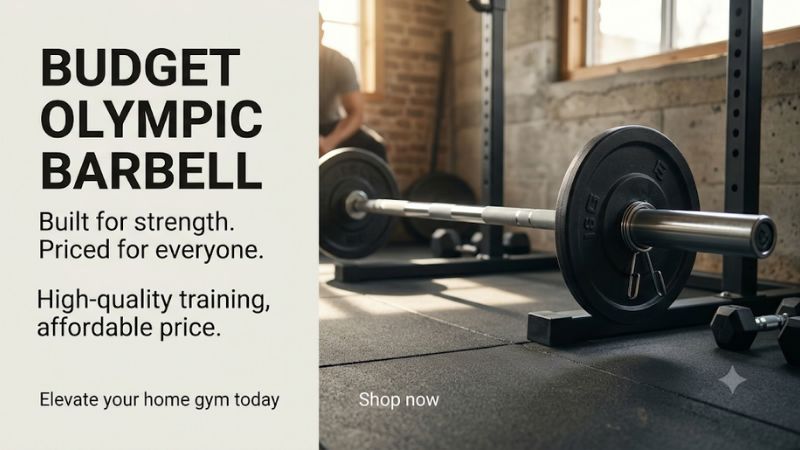
Six budget Olympic barbells worth comparing
Start with your primary lift. A lifter who benches twice a week and deadlifts occasionally can spend differently from someone who cleans regularly. Each pick earns its place by answering a distinct requirement, from buying a rack-compatible bar locally to fitting a larger bumper stack without buying thinner plates.
XMARK Lumberjack 7 ft for general-use value
XMARK lists the Lumberjack at 42 lb, with a 28 mm shaft, brass bushings, and 16.25 inches of loadable sleeve. A published 51.5-inch center shaft span gives you a useful figure for pre-purchase rack checks. It suits a home gym that needs to cover multiple lifts on one affordable straight bar.
Best for a first garage setup where rows, presses, squats, and floor work all use the same bar. The mixed markings and medium knurl offer useful reference and grip for a range of lifts. The 28 mm shaft is narrower than the 29 and 30 mm options in this roundup, a meaningful difference when you spend much of a session holding the bar in your hands.
The 42 lb starting weight matters if you use standard gym calculations. With a single 45 lb plate on each side, this bar reaches a nominal 132 lb before collars. A lifter recording the same setup as 135 lb will create a discrepancy when transitioning to a different bar. Note the 42 lb base in your log and choose change plates that support the steps your program uses.
Advantages are the published rack span, long sleeves, and bushing construction suited to mixed training. Trade-offs include the nonstandard empty weight for a pound-based routine and the need to check the exact finish’s cleaning instructions. Choose it if you want clear dimensions and regular mixed use. Choose the Delta if a clearly specified center knurl matters more than a 28 mm grip.
REP Delta Basic Bar for squat-focused value
The Delta Basic uses a 20 kg, 29 mm shaft with medium knurl, center knurl, brass bushings, and smooth sleeves. REP lists 16.3 inches of loadable sleeve per side and a 700 lb static rating. Its design serves strength-focused lifters who want center texture without the more aggressive grip of some dedicated power bars.
Best for buyers who back squat often and want to train bench and deadlift with the same bar. The center knurl is the feature you use every time the bar sits on your upper back. A 29 mm diameter puts the grip in the familiar range of power-style bars, while two sets of marks help when more than one person trains on the same equipment.
The center texture also touches your body during some front-rack movements. If your weekly training involves a long series of cleans, decide how frequently the shaft rests against exposed skin and whether that contact bothers you. The static rating describes a manufacturer specification. Read the intended-use guidance before treating it as a measure of how the bar handles drops or off-center storage.
Advantages include the center knurl, known sleeve length, and a conventional 20 kg base. Trade-offs include center contact during frequent cleans and a thicker grip than the XMARK, Synergee, or RitFit. Choose it if the squat is central to your program. Look at the Synergee first if fast sleeve rotation and a 28 mm grip matter more.
Synergee Regional 20 kg for a budget bearing bar
The 20 kg Regional uses a 28 mm shaft and needle bearings. Synergee lists 16.4 inches of loadable sleeve and dual grip marks, with hard chrome and black phosphate configurations. It belongs on the shortlist for buyers who want to practice cleans regularly while keeping the equipment budget closer to a first bar.
Best for trainees who do a mixture of strength work and dynamic lifts and specifically want a bearing-based bar. The 28 mm grip and turning sleeves are more useful reasons to buy it than the high advertised capacity. If you mainly bench and row, the XMARK and Delta offer practical bushing options and may suit the lifts you actually do at a comparable checkout total.
Synergee’s product page gives two different overall lengths for the 20 kg Regional in separate sections. Their difference is small in a roomy gym. It matters when you have already measured the loading path down to the fraction of an inch. Ask for the current drawing or confirm the shipped SKU if space is that tight. Use the published 16.4-inch sleeve length as a starting point for plate-stack calculations and allow space for your collar.
Advantages are the bearing sleeves, familiar 20 kg base, and full-size sleeve space. Trade-offs include the page’s inconsistency on total length and a setup oriented toward regular dynamic work. Buy it when your budget covers suitable plates and flooring as well. Choose a bar with documented overall length if a tight room leaves little margin.
RitFit 7 ft Olympic Barbell Advanced for long sleeves
RitFit’s Advanced specification lists a 20 kg bar, 28 mm shaft, needle bearings, center knurl, and 17.52 inches of loadable sleeve. The long published sleeve is the main reason to compare it with other budget models, especially if your existing bumper plates have wide rims and your collars take up substantial space.
Best for a buyer who already owns thick plates and wants additional sleeve room without replacing those plates. An extra inch per end compared with several alternatives may let you keep a smaller change plate inside the collar when you approach your heaviest working sets. Loadable length needs to be measured in the actual area that accepts plates and a fully secured collar.
A retail page can show different capacity options or terminology for related bars. Match the cart item to the Advanced specification. For any particular rack, get the dimension between the inside sleeve shoulders and compare it with installed J-cup width. Determine that fit separately from the long sleeve dimension. Without a reliable diagram, this is a better buyer question than asking whether the bar is “standard length.”
Advantages include the generous stated sleeves, 28 mm shaft, and bearings. Trade-offs are the variant check and the need to budget for collars, which RitFit says are sold separately. Choose it when sleeve space prevents an expensive plate change. If your load fits comfortably within 16 inches per side, a better-documented rack fit or preferred center texture may give you more value.
Body-Solid OB86C for basic lifting with a thicker grip
The chrome Body-Solid OB86C is a 7-foot-class, 44 lb bar with a 30 mm grip. Body-Solid lists 51.5 inches between collars, 15.62-inch sleeves, and a 600 lb capacity. These dimensions make it an easier option to screen for rack fit when you want a straightforward bar for conventional home strength work.
Best for buyers who prefer a fuller grip for presses or basic rack work and want a long-enough sleeve without paying for a more specialized build. The 30 mm shaft is the meaningful distinction. It places more material in the hand than a 28 mm bar, which some lifters appreciate when benching. People with smaller hands may notice the thicker grip most during rows and deadlifts.
Identify the OB86C specifically when searching. Body-Solid also sells other Olympic bars, including shorter products and models with higher stated capacity. A shop listing that says only “Body-Solid Olympic bar” can collapse those distinctions. Check both the code and the three main dimensions so you can compare the shipped product consistently.
Advantages include a documented collar spacing, a usable full-size form, and an identified model that is easier to cross-check. Trade-offs include a 30 mm grip for pulling and slightly less sleeve room than the XMARK or Delta. Choose it if basic strength training, the thicker shaft, and a low delivered price align. Consider a 28 mm pick if grip diameter is high on your list.
Fitness Gear 7 ft Olympic Bar for a simple local purchase
The Fitness Gear 7-foot Olympic Bar is a 45 lb chrome steel bar with a listed 300 lb maximum. Its value depends on your program and the retailer’s pickup price. It can make sense for controlled entry-level work, especially if you can buy locally and verify the dimensions you need before taking it home.
Best for someone doing light-to-moderate general lifting who wants a familiar 45 lb start and has little reason to pay extra for specialist rotation or knurl design. Shopping in person where stock is available can help you confirm the item’s dimensions and fit the purchase around an existing plate set. Calculate a year of likely progression before deciding that the load rating leaves enough headroom.
The 300 lb listed maximum is the tightest ceiling in this roundup. Ask the seller how the rating is defined if your intended working load approaches it. A buyer who expects to deadlift near that figure or wants the most room for later upgrades should price the XMARK, Body-Solid, or REP before checking out. Return costs and the price of a replacement bar can dwarf a small initial saving.
Advantages include the familiar weight convention, a straightforward setup, and the potential for pickup. Trade-offs include a lower listed limit and less detailed public fit information than several other picks. Choose it if the verified fit and price match an entry-level routine. Spend more on a model with better-documented headroom if it will be your only bar for heavier training.
How to stay on budget after adding plates
The cheapest bar on the screen may become a more expensive setup once you add accessories or replace plates. Calculate the total cost at the point you can start lifting. This makes it easier to spot when a slightly higher initial price buys better compatibility, or when a cheaper local purchase really does save money.
Price what you need for the first three working loads
Write down three planned total loads, the empty bar weight, and the plates and collars needed for each. Price enough compatible plates to cover those targets. A bundle is a good buy when it covers their increments and gives you pairs you will use often. A larger total bundle weight alone can hide gaps in the range.
As an example, a 100 lb collection made up of a few heavy plates can feel limiting for a lift that progresses in 5 lb steps. A lighter base with a pair of smaller plates might serve more sessions. If you want to use the same plates for floor pulls, check plate diameter and whether the base weight can be practiced from the intended height.
Compare total price and return logistics
Calculate bar, collar, shipping, and any pickup expense or time as separate lines. Check whether a seller pays for returns when a bar arrives damaged and how an ordinary fit return is handled. A straight bar ships in a long package, which can be awkward or expensive to return through some sellers.
For an illustrative comparison, a $140 bar with $30 shipping and $25 collars costs $195 before tax. A $165 option with free shipping and included compatible collars costs $165. When the more expensive bar is the better fit as well, the decision follows from the full setup price instead of the advertised list.
Use capacity figures and plate fit for different decisions
Static ratings and tensile strength have their uses, and sleeve space is a different limit. First confirm the maker’s guidance for your exercise and target loads. Then build the largest plate stack you want to fit. Calculate it in inches, including the collar. A tall load claim cannot make a crowded sleeve longer.
For example, with 16.25 inches per side and a hypothetical 1.5-inch collar, you have 14.75 inches available for plates. Three 3.5-inch bumpers take 10.5 inches, before any finishing plates. A fourth takes the total to 14 inches. Add a 1-inch change plate and the stack exceeds the 14.75-inch plate budget. Use your measured thicknesses to avoid paying for a solution to the wrong constraint.
Frequently asked questions
Budget bars offer a wide range of construction in nearly identical-looking listings. Once you have a shortlist, verify the model code, the exact sleeve format, and whether you need to pay for collars. A few practical checks can help you distinguish a lower purchase price from a purchase you will have to repeat.
Is buying a used Olympic bar a better deal?
A used bar is worth considering when you can identify the model, inspect the shaft and sleeves, and confirm that it suits your expected loads. Look for signs of bending, deep corrosion, damaged end hardware, or sleeves that bind. Verify whether the manufacturer’s warranty transfers before including that in the value.
A local seller can sometimes demonstrate the empty bar in a rack or show it with a compatible plate. Compare what you will actually save with the cost of a new model that has clearer return terms. If you cannot verify the maker’s original use limits or the model is unlabeled, price it accordingly.
Does a 300 lb maximum mean the same thing across brands?
Use the model’s stated limit and the manufacturer’s explanation of how it applies. Listings may refer to loaded plates, all-in weight, or a static rating under a particular condition. Contact the manufacturer or seller if that distinction will affect how close your planned load gets to the quoted figure.
The rack and its safeties have load limits too. Check those independently. The bar’s ceiling does not create a higher capacity for the fixture that supports it.
Do Olympic collars normally come with a budget bar?
Some products include collars or spring clips and others sell them separately. Check the package contents of your exact selection. A correct collar should fit the sleeve and engage fully over the part of the sleeve intended for it. Include the collar width in your loading math and its price in the checkout total.
If a listing bundles a bar and plates but leaves collar material or dimensions unclear, confirm the fit before paying extra for the bundle. There is little value in an accessory you would immediately replace.
When should I stretch past the budget tier?
Spend more when you have an identified need such as a manufacturer-confirmed rack dimension, extra loadable sleeve space, a lighter starting weight, or design features suited to frequent sport-specific sessions. Those differences show up in use and can spare you the cost of replacing a bar that is close to its limits.
A higher price matters less when it buys a cosmetic finish or a larger paper rating you will never approach. Choose the least expensive verified model that supports the training you expect to do and the plates you already own.
Conclusion
Start with the delivered price and the fit of your rack and plates. Pick the XMARK for mixed use, REP Delta for squat-focused value, Synergee for bearing rotation, or RitFit if longer sleeves solve an existing plate problem. Body-Solid and Fitness Gear are viable starter choices when their grip, load ratings, and total price fit your plan.
More from Amazon
Programs that pair well with the guide above. Offers and eligibility are set by Amazon and may change.
Free shipping on eligible items, Prime Video and more. Eligible new members can start with a free trial.
Start a Prime free trialA Prime membership for ages 18-24 with a trial period. Eligibility is set by Amazon.
See Prime for Young AdultsAudiobooks and podcasts to listen to on the go. Eligible new members can start with a free trial.
Try Audible freeAd-free music streaming. Eligible new subscribers can start with a free trial.
Try Music Unlimited freeAs an Amazon Associate we earn from qualifying purchases.
Write Your Review
No reviews yet. Be the first to share your experience!