
The best fractional weight plates give you the next barbell increase you can actually use. Start with the sleeve diameter and the total change you want across both ends. REP is a flexible Olympic set, while thin steel pairs, rubber-coated plates, and 1-inch kits suit different bars and loading needs.
Quick verdict
Choose REP for four useful pound increments on an Olympic bar. Choose Rogue for documented rubber-coated options, Weight It Out for a thin single pair, or Micro Gainz Olympic plates for compact steel with a published ±5 g tolerance. Micro Gainz also has separate options for 1-inch bars and kilogram training.
Start with a familiar lift and your existing smallest plates. If the smallest pair in your gym adds 5 lb to the bar, a pair of 0.5 lb plates gives you a repeatable 1 lb increase. A pair of 0.25 lb plates gives you a 0.5 lb increase. Both can be useful, but they solve different problems. Choose the step you expect to log and repeat.
Buy a mixed set if it fills several known gaps or serves more than one lifter. A dedicated pair makes sense when you already have most of the loading steps you need. The most important measurements are the sleeve diameter, the open length after your plates and collars are accounted for, and the thickness of the specific micro plates you intend to use.
Quick comparison of the best fractional weight plates
Weights in the table are per disc unless described as the total increase across both ends. A pair of 0.25 lb plates adds 0.50 lb to a barbell when loaded symmetrically. The standard 1-inch and Olympic versions require different sleeves. Confirm the bore and unit on the exact product before ordering.
| Product | Best for | Published specifications | Smallest balanced increase | Main trade-off |
|---|---|---|---|---|
| REP Fitness Fractional Change Plate Set (LB) | Best all-around Olympic pound set | Powder-coated steel, pairs of 0.25, 0.50, 0.75, and 1.00 lb, 3% stated tolerance | 0.50 lb | Full set even if you need one pair |
| Rogue LB Fractional Plates | Rubber coating and documented thickness | Pairs or eight-piece set, 50.40 mm opening, ±10 g stated tolerance | 0.50 lb | The lightest disc is 0.35 in thick |
| Weight It Out Fractional Solid Steel Mini Olympic Plates | A thin 0.25 lb pair | 0.155 in thick and 3.375 in diameter at 0.25 lb | 0.50 lb | Bare-metal contact compared with rubber-coated options |
| Micro Gainz Olympic Size Fractional Weight Plates, eight-piece LB set | Compact steel with documented accuracy | 3.5 in diameter, pairs of 0.25 through 1.00 lb, ±5 g stated tolerance | 0.50 lb | Olympic sleeves only for this configuration |
| Micro Gainz Standard 1-Inch Fractional Weight Plates, eight-piece LB set | Standard bars and suitable 1-inch handles | 1.05 in opening, 3 in diameter, ±10 g stated tolerance | 0.50 lb | The 1 lb disc measures about 0.67 in thick |
| Micro Gainz Olympic Size Kilogram Fractional Weight Plates, six-piece set | Kilogram training logs | Steel pairs of 0.25, 0.50, and 1.00 kg | 0.50 kg | The smallest addition is about 1.10 lb |
How we selected the plates
The recommendations draw on manufacturer listings for the exact sets and pairs, with attention to bore size, material, thickness, weight labels, and published tolerance. We compared how each product would load on a compatible sleeve and which training increments its package provides without extra pieces.
A useful weight tolerance is meaningful in context. On a 0.25 lb disc, 3% of nominal mass is around 3.4 g. On a 1 lb disc, it is around 13.6 g. A flat ±5 g tolerance and a percentage tolerance describe different limits across a set. Compare them at the weight you expect to use most often.
These picks are based on documented specifications and loading arithmetic. They do not claim detailed research or measured coating life. The fit of a bore on your bar, how easily you grip a disc, and the space a collar needs still depend on the exact equipment. The descriptions below distinguish a stated specification from what it means in a home gym.
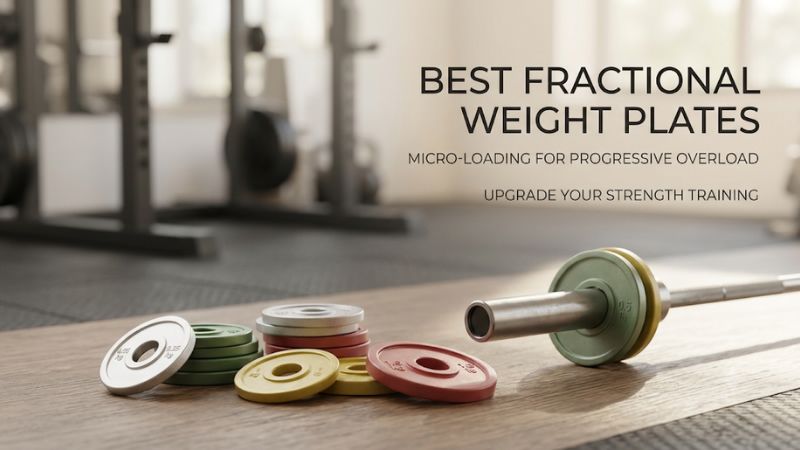
Six fractional weight plate picks by use case
A product earns its place here by filling a specific loading need, from a 0.5 lb step to the right fit for a standard bar. Start with the bore and the unit of measurement, then compare whether the coating, tolerance, or disc profile gives you an advantage on the sleeves you already use.
REP Fitness Fractional Change Plate Set (LB)
REP is the best all-around choice for buyers who want several small pound increments in one Olympic kit. Its eight-piece set supplies two each of 0.25, 0.50, 0.75, and 1.00 lb. Each size is color coded with an engraved weight marking, which helps identify the right pair without relying on appearance alone.
Best for. Home lifters who want several options below a 5 lb barbell jump and log their lifts in pounds.
Why we picked it and key specifications. REP specifies steel with a powder-coated finish, compatibility with nominal 2-inch Olympic sleeves, and a 3% weight tolerance. The whole kit weighs 5 lb nominally. Any one pair adds from 0.50 to 2.00 lb, depending on the size selected.
Practical use. A pair of 0.50 lb discs adds 1 lb to an overhead press. A pair of 0.75 lb discs adds 1.5 lb to a separate lift. When you need a 2.5 lb increase, you can combine the 1 lb and 0.25 lb discs on each side if the stack and collars fit. This gives a buyer options with plates already on hand.
Pros and cons. The weight selection covers common fine increments, and the engraved labels are useful when the gym has different brands. The complete set can be unnecessary if you only need one size. Powder-coated steel also has a different contact surface from a rubber-coated product.
Buy if you want a straightforward four-pair Olympic kit. Skip if you need a standard 1-inch bore or have already identified one specific pair to buy.
Rogue LB Fractional Plates
Rogue is the pick for buyers who want an exterior rubber coating and detailed dimensions for each size. The 0.25 and 0.50 lb discs have a published 120 mm diameter. The 0.75 and 1 lb discs measure 125 and 130 mm. Choose a single pair or the full set, depending on how many steps your training needs.
Best for. Olympic pound users who want an individual coated pair or prefer a coated set with thickness information.
Why we picked it and key specifications. Rogue lists a 50.40 mm opening and ±10 g tolerance. Thickness runs from 0.35 in for the 0.25 lb disc to 0.55 in for the 1 lb disc. The intermediate 0.50 and 0.75 lb sizes are listed at 0.45 and 0.50 in. Those values let you check an existing stack before buying.
Practical use. On a bench setup with plenty of sleeve room, a coated 0.50 lb pair gives a 1 lb balanced step while offering a different contact surface from painted metal discs. On a short bar, combining the 0.25 and 0.50 lb discs takes 0.80 in of room per side before the collar. Measure that stack if you plan to use two sizes together.
Pros and cons. Rogue provides useful size-specific dimensions and sells individual pairs. The coating can be appealing if you want less exposed metal where the plates contact each other. The discs use more axial room than the thin steel option at the same light weight.
Buy if you value the coating and can leave room for the whole retention system. Skip if the sleeve is already nearly full and the thickness would compromise collar fit.
Weight It Out Fractional Solid Steel Mini Olympic Plates
Weight It Out is a strong choice when you need one light pair and sleeve length is limited. The 0.25 lb Olympic disc is listed at 0.155 in thick and 3.375 in across. That is a specific physical advantage for a lifter who has space for a small plate near the end of a loaded stack.
Best for. A short Olympic sleeve where a thin 0.25 lb pair can provide the specific 0.50 lb increase you need.
Why we picked it and key specifications. The maker lists individual solid-steel pairs. Its 0.50, 1.00, and 1.25 lb discs are listed at 0.25 in thick, with different outside diameters. The mixed set is a separate choice with a different size mix from the usual 0.25, 0.50, 0.75, and 1.00 lb assortments.
Practical use. Fit depends on the space left beside the working plates and the way the collar locks on the sleeve. If the 0.25 lb disc fits without making the collar sit on an unsupported section, the balanced pair adds 0.50 lb. The smaller diameter also makes it easier to set apart from wider change plates in a small storage box.
Pros and cons. Published thickness for each size makes the line easy to screen for a crowded sleeve. A single pair avoids buying unnecessary increments. The metal finish lacks an exterior rubber layer, and shoppers building a set should verify their intended sizes and stock by variant.
Buy if you need a specific fine step and have little sleeve length to spare. Skip if you want 0.75 lb discs as part of the same ready-made assortment or prefer a rubber-covered surface.
Micro Gainz Olympic Size Fractional Weight Plates, Eight-Piece LB Set
The Olympic pound set from Micro Gainz suits a buyer who wants a compact disc diameter and a documented tolerance. The set contains two each of 0.25, 0.50, 0.75, and 1 lb, plus a carrying bag. The maker lists its discs at 3.5 in in diameter and within ±5 g of nominal weight.
Best for. An Olympic-bar user who values compact storage and wants a clear mass tolerance for each nominal size.
Why we picked it and key specifications. The published ±5 g is a useful comparison point, particularly for the larger sizes in this set. The discs share the same nominal outside diameter while supplying four different masses. Compare thickness at your selected combination because a small diameter alone does not establish how much sleeve length the stack needs.
Practical use. A lifter alternating between a 0.50 lb bar increase and a 2 lb increase can use one pair at a time. The carrying bag can keep all eight pieces with the bar or in a gym bag. Since similar-sized discs can be mistaken for each other, face the markings outward at storage and check both labels before loading.
Pros and cons. This package combines documented accuracy, small outside diameter, and portable storage. The four-pair kit can be more than an occasional lifter needs, and the Olympic version cannot be substituted for the company’s standard 1-inch line.
Buy if you want an Olympic pound kit with an explicit gram tolerance and compact carrying dimensions. Skip if a single pair solves your gap or the bar has standard sleeves.
Micro Gainz Standard 1-Inch Fractional Weight Plates, Eight-Piece LB Set
The standard Micro Gainz set fills a compatibility gap for lifters with an older 1-inch bar or suitable plate-loaded handles. The maker publishes a 1.05 in opening, 3 in outside diameter, and ±10 g tolerance. It includes a pair each at 0.25, 0.50, 0.75, and 1.00 lb and a carrying bag.
Best for. Standard 1-inch equipment that accepts the intended plate and collar arrangement.
Why we picked it and key specifications. The manufacturer distinguishes this set from its Olympic products and lists thickness by weight. The 0.25 lb plate is approximately 0.167 in thick, while the 1 lb version is about 0.67 in. The thickness difference matters more on short threaded handles than the identical outside diameter suggests.
Practical use. One matching disc on each side of a standard bar adds twice the label. For two double-ended dumbbell handles, four matching discs are usually needed to load one disc per end. An eight-piece mixed kit supplies only two of each size. Plan the quantity and collar clearance before using it for a matched dumbbell pair.
Pros and cons. It is a purpose-specific 1-inch purchase with useful dimensions and several steps. Standard sleeves and threaded ends can differ by model, and the heavier discs may consume substantial space. It cannot fit an Olympic sleeve.
Buy if you have confirmed the 1-inch equipment and want several small steps. Skip if you need four identical discs at one weight or your handle lacks sufficient space for the required collar.
Micro Gainz Olympic Size Kilogram Fractional Weight Plates, Six-Piece Set
This Micro Gainz kilogram kit is the strongest choice here for a lifter whose main plates and training log use kilograms. It contains two each at 0.25, 0.50, and 1 kg. These give balanced single-pair increases of 0.50, 1.00, and 2.00 kg, with more options when you stack compatible pairs.
Best for. An Olympic-sleeve setup where the lifter wants smaller metric steps and a consistent training log.
Why we picked it and key specifications. The maker lists steel construction and outside diameters of 3.75 in for 0.25 kg, 4.875 in for 0.50 kg, and 5.5 in for 1 kg. There are six discs in the package. A 0.25 kg disc is about 0.55 lb, so the smallest balanced increase is about 1.10 lb.
Practical use. Someone progressing from 60 to 60.5 kg can add one 0.25 kg disc at each end. A 0.50 kg pair gives a 1 kg step when the program calls for it. Staying with the same unit keeps the loading arithmetic and training log straightforward. For a mixed stack, check room for the exact discs and collars.
Pros and cons. Three metric pairs give a useful range without requiring conversion every session. The set fits a narrower audience than a pound assortment. A lifter who needs a strict 0.50 lb bar increase will need a different pair.
Buy if your equipment and working targets are in kilograms. Skip if you need exact pound increments or are shopping for the smallest increase in this roundup.
Check these details before ordering
The correct bore keeps the plate on the intended sleeve, and the correct thickness gives you space to use the collar as designed. Then check how many matching discs the package supplies and whether the tolerance is useful at your intended weight. Each choice affects how the plates work after they arrive.
Measure the sleeve and reserve room for the collar
The loadable sleeve is the bar end where plates go, separate from the narrower shaft you grip. Identify the type from the bar maker and confirm sizing before buying. With your working plates in place, check the remaining space on each end and subtract the space needed for the collar to engage as designed.
For example, a 0.35 in disc takes more axial room than a 0.155 in disc at the same nominal weight. On a full-length bar with spare space, the size difference may have little consequence. On a short handle or compact bar already loaded with thick plates, it can determine whether the collar still fits. Use the exact measurement for the plate you want.
Compare tolerance at the weight you will use
A tolerance gives the possible deviation from the labeled mass, while the difference between the two actual discs depends on where they fall within that range. Compare percentages and grams at the same nominal weight. A tolerance that suits larger discs may represent a meaningful fraction of a small microloading step.
At 0.50 lb, the nominal mass is about 227 g. A ±10 g allowance is approximately 4.4% of that mass. If your training log depends on actual load, weigh the pair on a suitable scale and record how you measured it. For normal training, using the same matched pair consistently can make the progression easier to reproduce.
Count pairs according to the equipment you will load
One pair covers one barbell when you place one disc on each end. Two simultaneously loaded bars usually need two matching pairs at that size. For a set of two double-ended handles, you may need four identical discs if the approved loading pattern uses a disc at each end of each dumbbell. Check this before ordering.
A mixed kit can offer several increments without having duplicates at any one size. Buy it when that variety helps you. Buy identical pairs when you need the same step across several sleeves. Consider identifying a permanent home for each pair so the discs remain matched over repeated sessions.
Frequently asked questions
The most common purchase errors involve a bore that does not fit, a unit that differs from the home gym, or a set label mistaken for the weight of each disc. Check the package breakdown and the actual sleeve before using the listed weights to plan your progression. These details matter even for the smallest pair.
What is the smallest barbell increase in this roundup?
The smallest is 0.50 lb with two 0.25 lb discs placed symmetrically on a compatible barbell. If your plates are labeled in kilograms, two 0.25 kg discs add 0.50 kg, or about 1.10 lb. Double the label only when there is one matching disc on each end and the rest of the load stays the same.
Can rubber-coated fractional plates replace collars?
Use the bar, plate, and collar manufacturers’ loading directions. A coated bore can affect contact and fit, while a standard friction-fit plate has a different purpose from an approved locking collar. Verify where the plate belongs on the sleeve and use the required collars with the correct amount of engagement.
Can I mix two brands in one stack?
You can use compatible discs that seat properly on the same sleeve and leave room for the required collars. Use matching masses and arrangements on each side. Because brands can assign different colors to the same weight, read the labels. Check the bore, thickness, and condition of every disc in the combination.
Are 1.25 lb plates fractional plates?
Some retailers use fractional or change plate for a 1.25 lb disc. One such disc per side adds 2.50 lb to a barbell. That is useful if you want to halve a 5 lb jump, while buyers seeking 0.50 or 1 lb total increments need smaller discs. Read the package quantities and actual labels before comparing product names.
Conclusion
Choose REP for a flexible Olympic pound kit, Rogue for coated pairs, or Weight It Out when sleeve space is tight. Select Micro Gainz for a compact Olympic set, verified 1-inch fit, or kilogram tracking as appropriate. Buy the pair that gives your intended total increase with enough sleeve room for the required collars.
More from Amazon
Programs that pair well with the guide above. Offers and eligibility are set by Amazon and may change.
Free shipping on eligible items, Prime Video and more. Eligible new members can start with a free trial.
Start a Prime free trialA Prime membership for ages 18-24 with a trial period. Eligibility is set by Amazon.
See Prime for Young AdultsAudiobooks and podcasts to listen to on the go. Eligible new members can start with a free trial.
Try Audible freeAd-free music streaming. Eligible new subscribers can start with a free trial.
Try Music Unlimited freeAs an Amazon Associate we earn from qualifying purchases.


Write Your Review
No reviews yet. Be the first to share your experience!