
Our Top Picks
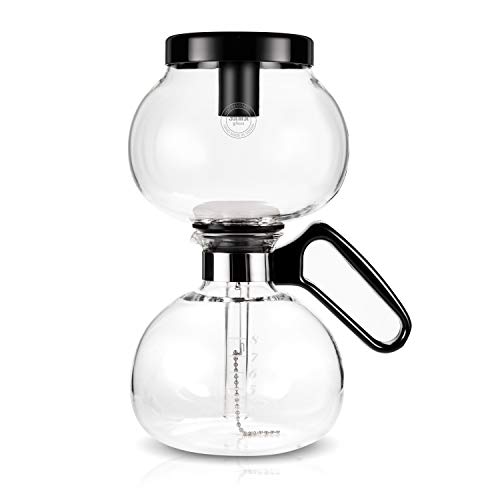 Yama Glass 8-Cup Stovetop Siphon Coffee Maker32 ounces (8 cups)8 x 8 x 11 inches2.4 poundsCheck on Amazon
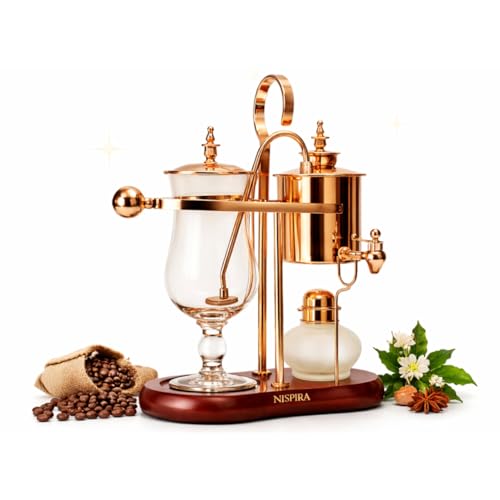 Nispira Belgium Royal Family Balance Syphon Unique Gravity12.2 x 5 x 15.74 Inches5.07 PoundsCheck on Amazon
The best siphon coffee makers for most home brewers are the Hario Technica for classic stovetop brewing, the Hario NEXT for convenient electric heating, and the Yama Stovetop Siphon for a compact, visually striking setup.
Siphon brewers produce clean, aromatic coffee by moving water between two chambers with vapor pressure and vacuum. They are more involved than a pour-over, but the process gives you control over temperature, agitation, and brew time. The right choice depends less on the theatrical brewing method than on four practical questions: how much coffee you make, where you will heat it, how much counter space you have, and whether you want glass or metal to handle the wear.
Yama Glass 8-Cup Stovetop Siphon Coffee Maker, 24 Oz Vacuum Brew, Heat-Resistant Borosilicate Glass
Chosen because it specifies 24 Oz Vacuum Brew and Heat-Resistant Borosilicate Glass.
View on AmazonNispira Belgium Royal Family Balance Syphon Unique Gravity Vintage Coffee Maker Vacuum Brewing System Copper 500 ml
Picked as a relevant option in this category.
View on Amazon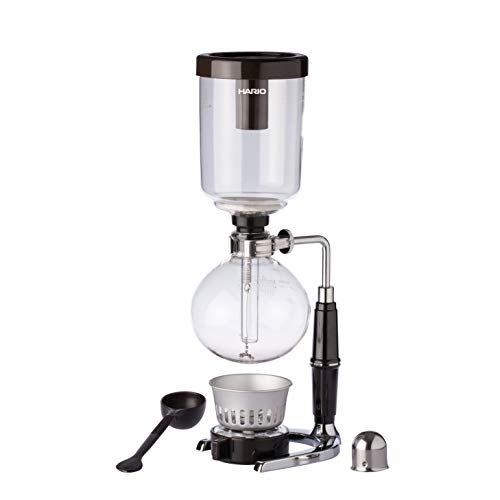

YUCHENGTECH Syphon Coffee Maker Tabletop Glass Siphon Pot Glass Technica Siphon Vacuum Coffee Maker(3 Cups(360ml))
Picked as a relevant option in this category.
View on AmazonQuick comparison of the best siphon coffee makers
| Model or type | Approx. capacity | Construction | Heat source | Approx. footprint | Best for |
|---|---|---|---|---|---|
| Hario Technica TCA-3 | 360 ml, about 3 small cups | Heat-resistant glass globes, metal stand, cloth or paper filter options | Alcohol burner | About 14 × 16 cm | One or two people learning the traditional method |
| Hario Technica TCA-5 | 600 ml, about 5 small cups | Heat-resistant glass, metal stand, reusable filter assembly | Alcohol burner | About 14 × 16 cm | Frequent home brewing and small gatherings |
| Hario Technica TCA-8 | 1,000 ml, about 8 small cups | Heat-resistant glass, metal stand, reusable filter assembly | Alcohol burner | About 16 × 18 cm | Several servings in one brew |
| Hario NEXT | About 600 ml, depending on version | Heat-resistant glass with stainless-steel components | Electric heater or compatible stovetop, model-dependent | About 16 × 18 cm | Brewers who want less burner handling |
| Yama Stovetop Siphon | Heat-resistant glass with a metal frame and stovetop-compatible lower bowl | Gas or electric stovetop, depending on model | Roughly 15 × 18 cm | Users who already have a suitable cooktop | |
| Electric siphon brewer, general type | About 500–750 ml | Glass brewing chamber with stainless-steel or plastic base | Built-in electric heating element | About 18 × 22 cm | Repeatable indoor brewing with no flame |
Capacities are commonly measured to small coffee-cup servings rather than 240 ml mugs. A “5-cup” brewer may therefore make roughly two large mugs. Dimensions and included filters vary by region and production year, so confirm the manual before buying replacement parts.
Best choices by brewing situation
- Best classic choice: Hario Technica TCA-3. Its 360 ml size limits waste and heats relatively quickly. It suits one large mug or two smaller servings, and its compact stand is easier to store than larger siphons.
- Best for regular two-person brewing: Hario Technica TCA-5. The 600 ml chamber gives enough headroom for two substantial cups without committing to the bulk of a 1-liter model.
- Best for entertaining: Hario Technica TCA-8. Choose it when you routinely serve several people. It takes more heat and counter space, and brewing a full batch for one person is inefficient.
- Best if you dislike open flames: Hario NEXT or a comparable electric siphon. Electric heating reduces fuel handling and makes indoor use simpler, although the base occupies more counter space and adds another electrical appliance.
- Best for stovetop flexibility: Yama Stovetop Siphon. It is a sensible option when you want to use an existing cooktop rather than store a separate alcohol burner. Check compatibility with induction: many glass-and-metal stovetop siphons are not induction-ready without a suitable adapter.
Glass versus stainless steel: which construction makes sense?
Glass brewing chambers
Glass is the defining material in most siphon brewers because it lets you see water rise, coffee brew, and the finished liquid return to the lower bowl. That visibility is useful, not merely decorative: you can spot excessive boiling, a poor seal, or a clogged filter before the brew is finished.
Heat-resistant borosilicate glass tolerates rapid temperature changes better than ordinary glass, but it is still the part most likely to end ownership early. A sudden cold rinse, a knock against a sink, or tightening a metal clip too far can cause damage. Never use a chamber with a chip, hairline crack, or visibly distorted rim.
Stainless-steel parts
Stainless steel is valuable for stands, filter screens, clips, lids, and lower bowls. It resists dents and staining better than glass and usually survives daily handling. It does not eliminate maintenance: coffee oils can collect in mesh, burner supports can discolor, and mineral deposits can form around joints.
Some products marketed as stainless-steel siphons still use glass for both brewing chambers. Read the construction description carefully. A stainless stand is not the same as a stainless lower bowl, and a metal filter is not necessarily easier to clean than a cloth filter.
Heat sources and what they change
An alcohol burner is traditional, inexpensive, and portable, but it requires fuel, ventilation, and careful flame management. A small flame can make the brew take too long; an aggressive flame can cause turbulent boiling and make timing less consistent. Keep the burner on a stable, heat-resistant surface and allow it to cool before refilling or storing.
Butane burners offer more adjustable heat and can speed the rise phase, but they add fuel-canister storage and another consumable. A compatible gas or electric stovetop is convenient if the brewer is designed for it, though an open kitchen flame can heat the handle and surrounding stand.
Electric siphons are easiest to repeat. They generally have a larger base, may take longer to store, and can be harder to repair if the heating element fails. For a brewer used several times a week, the reduced fuel handling may outweigh the additional purchase cost.
Capacity: avoid buying a brewer that is too large
Measure your normal serving before choosing a size. Suppose your recipe uses a 1:15 coffee-to-water ratio and you drink a 300 ml mug. You would need approximately:
- 300 ml of water
- 20 g of coffee, calculated as 300 ÷ 15
- Extra water for retention and transfer losses, so a 360 ml brewer is a practical minimum
For two 300 ml mugs, the same ratio calls for 600 ml of brewed water and about 40 g of coffee, before accounting for losses. A 600 ml siphon can be tight at that volume, so a larger model may be more comfortable. Do not fill a siphon to its absolute maximum if your recipe requires room for agitation.
Small models usually heat faster and are easier to rinse. Large models reduce the number of batches for guests but need a larger burner area, more storage clearance, and a deeper sink or basin for cleaning.
Counter-space and storage requirements
Plan for more than the stand’s footprint. You need room to place the upper globe safely, operate a burner or reach an electrical outlet, and set down a hot lower bowl. A practical setup area is about 40 × 30 cm for a small stovetop model and closer to 50 × 35 cm for a large or electric model, including workspace around the brewer.
Vertical clearance matters too. Upper chambers, handles, and lids can bring the total height to roughly 30–40 cm. If the siphon will live in a cabinet, store the glass globes separately from metal utensils and avoid stacking anything inside them.
Cleanup, filters, and the parts that wear first
Let the brewer cool, separate the chambers, and discard the grounds before rinsing. Wash the glass with warm water and a mild, unscented detergent. Clean the filter immediately: coffee oils become harder to remove when they dry inside fine mesh or cloth.
- Cloth filters: produce a smooth cup but require rinsing, refrigeration or another manufacturer-approved storage method, and periodic replacement. A neglected cloth filter can impart stale flavors.
- Metal filters: are convenient and reusable, but trapped fines and oils require thorough brushing or soaking. Do not force a brush through delicate mesh.
- Rubber or silicone seals: commonly lose flexibility before stainless-steel parts do. Replace them when the upper chamber no longer seals firmly or steam escapes around the joint.
- Glass globes: need the most cautious handling. Avoid thermal shock and never scrub with abrasive pads.
- Burners and stands: collect soot, spilled coffee, and mineral residue. Wipe them after cooling rather than allowing buildup to harden.
Descale mineral deposits with a manufacturer-approved method. Do not use abrasive cleaners on polished metal, and do not put glass components into a dishwasher unless the instructions specifically allow it.
Common buying and brewing mistakes
The most common mistake is choosing capacity by the label alone. Compare the actual milliliter volume and your mug size. Another is buying a stovetop model without checking whether the base sits securely on the cooktop. A third is assuming that every replacement filter, seal, and upper globe fits every siphon; many parts are model-specific.
For better results, use a consistent grind slightly finer than typical drip coffee, preheat water when appropriate, and time the brewing stage rather than relying only on visual bubbling. Excessive stirring can force fines through the filter, while insufficient stirring can leave coffee unevenly extracted. Let the brewer cool naturally after use instead of shocking hot glass with cold water.
Bottom line
Choose the Hario Technica TCA-3 if you want the smallest traditional setup, the TCA-5 for the most useful everyday capacity, and the TCA-8 for serving several people. Choose the Hario NEXT or another electric siphon when flame-free convenience matters more than a compact base. Choose a Yama Stovetop Siphon when using your existing cooktop is the priority. Whichever style you select, budget for replacement seals and filters, reserve roughly half a meter of working space, and treat the glass as the component that determines the brewer’s practical lifespan.










Write Your Review
No reviews yet. Be the first to share your experience!