
Our Top Picks
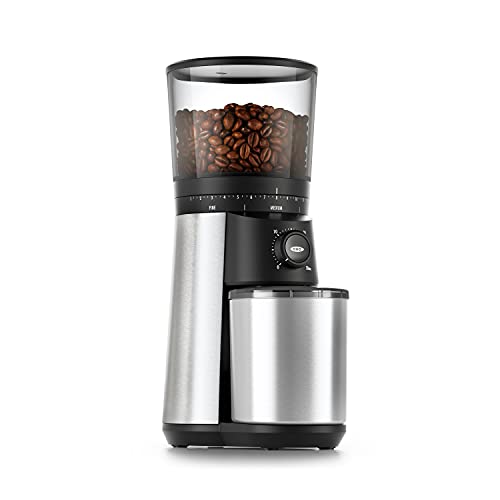 OXO Brew Conical Burr Electric Coffee Bean GrinderOne Size6.8 x 11.8 x 14.8 inches4.5 poundsCheck on Amazon
The best electric burr grinders for fresh coffee depend on whether you prioritize espresso adjustment, quiet morning use, large-batch brewing, or low retention: the Baratza Encore ESP is the safest budget all-rounder, the Fellow Opus is the easiest compact choice, the DF54 offers the most espresso control per dollar, and the Eureka Mignon Specialita is the stronger upgrade for frequent espresso.
Best electric burr grinders at a glance
| Grinder | Burrs | Grind adjustment | Hopper capacity | Best for | Typical market range |
|---|---|---|---|---|---|
| Baratza Encore ESP | 40 mm conical steel | 40 numbered settings; espresso-focused first 20 | About 250 g | New espresso users and filter coffee | About $150–$200 |
| Fellow Opus | 40 mm conical steel | 41 settings plus internal calibration | About 110 g | Small kitchens and mixed brew methods | About $175–$225 |
| DF54 | 54 mm flat steel | Stepless dial with micrometric adjustment | About 250 g | Espresso value and single dosing | About $230–$300 |
| Eureka Mignon Specialita | 55 mm flat hardened steel | Stepless micrometric adjustment | About 300 g | Frequent espresso preparation | About $550–$700 |
| Niche Zero | 63 mm conical steel | Stepless adjustment | About 58 g | Low-retention single dosing | About $650–$750 |
Prices vary by region, promotions, and included accessories. Burr diameter alone does not determine cup quality, but it can affect grinding speed, heat management, and how easily a grinder produces a consistent espresso dose.
OXO Brew Conical Burr Electric Coffee Bean Grinder - 12 Oz, Silver
Chosen because it specifies 12 Oz and Silver.
View on Amazon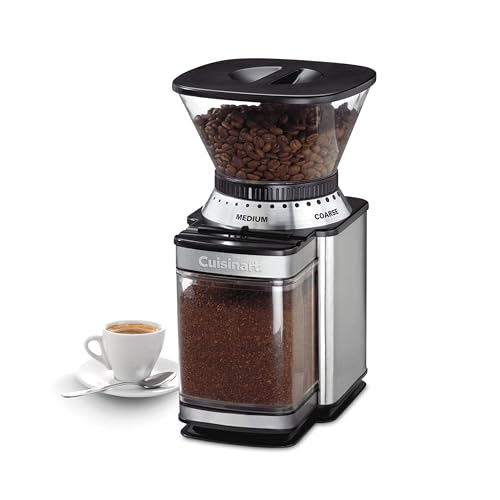
Cuisinart Electric Burr Coffee Grinder, 18 Settings, 4-18 Cups, DBM-8P1
Chosen because it specifies 18 Settings and 4-18 Cups.
View on Amazon
Aromaster Conical Coffee Bean Grinder, 48 Settings, Anti-Static, Sliver
Chosen because it specifies 48 Settings and Anti-Static.
View on Amazon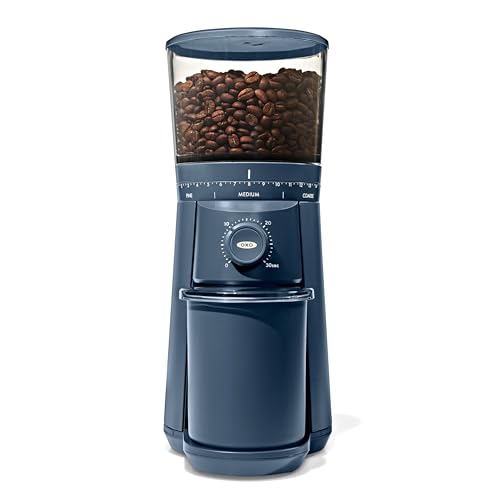
OXO Brew Conical Burr Electric Coffee Bean Grinder - 12 Oz, Storm Blue
Chosen because it specifies 12 Oz and Storm Blue.
View on AmazonOur picks by situation
| Your situation | Best match | Why | Main compromise |
|---|---|---|---|
| Budget under $200, mostly filter coffee | Baratza Encore ESP | Accessible controls, repairable design, and a useful espresso range | More grind retention and noise than premium single-dose models |
| One grinder for espresso, pour-over, and French press | Fellow Opus | Compact, broad range, timed dosing, and a relatively tidy workflow | Changing between settings can require recalibration and careful dialing in |
| Espresso several times per week | DF54 | Flat burrs and stepless adjustment make small espresso changes easier | Its chute and declumping system need regular cleaning to prevent buildup |
| Daily espresso for multiple people | Eureka Mignon Specialita | Quiet operation, substantial burrs, large hopper, and stable adjustment | Less convenient for rapid switching between different beans |
| Single dosing and minimal stale coffee | Niche Zero | Small hopper, low-retention path, and simple workflow for changing beans | Limited hopper capacity and a premium price |
Head-to-head: what separates these grinders?
Burr material and geometry
Steel burrs are the practical default in this group. They tolerate everyday grinding and are widely available as replacements. Conical burrs, used by the Encore ESP, Opus, and Niche Zero, generally suit users who want a forgiving grinder for several brew methods. Flat burrs, used by the DF54 and Specialita, are particularly attractive for espresso because their adjustment can make very fine changes in flow and extraction.
Do not treat burr size as a direct quality score. A well-aligned 40 mm burr set can outperform a poorly aligned larger set. Burr wear also matters: grinding oily dark coffee, flavored coffee, or large volumes of hard light-roast beans can increase residue and eventually dull the cutting edges.
Grind-size range and adjustment
The Encore ESP uses numbered settings, with its lower range aimed at espresso and its upper range covering filter, French press, and similar methods. It is easy to understand, but each numbered step can be noticeable when dialing in a slow or fast espresso.
The Opus covers espresso through coarse brewing and adds an internal adjustment system. That broad range is useful, although moving repeatedly between espresso and pour-over is not as immediate as changing one external dial.
The DF54 and Specialita use stepless adjustment. There are no fixed clicks, so you can make very small changes. This is valuable when an espresso shot is only a few seconds away from the desired flow. The trade-off is that returning to a previous bean or recipe is less repeatable unless you record the dial position carefully.
Dose consistency and retention
A grinder can deliver a consistent dose only when the input, timing, and cleaning routine are consistent too. Hopper-fed grinders are convenient for several consecutive drinks, while single-dose grinders make it easier to change beans without leaving a large quantity in the grinder.
The Niche Zero is designed around single dosing and has a short, relatively low-retention path. The DF54 also works well as a single-dose grinder, though grounds can collect around its declumper and chute. The Encore ESP and Opus are practical hopper grinders, but their retained grounds and static behavior can vary with humidity, roast level, and dose size.
For a 18 g espresso dose, a grinder that retains 1 g after a bean change has temporarily mixed about 5.6% old coffee into the next dose. That is not automatically a problem, but it matters when switching from a dark roast to a light roast or dialing in a new recipe.
Hopper capacity and workflow
A large hopper is helpful when one bean is used repeatedly. The Specialita’s roughly 300 g hopper can hold enough coffee for many drinks, while the Encore ESP and DF54 sit near the 250 g range. These capacities are convenient but encourage storing beans in the hopper, where light, heat, and air can reduce freshness faster than an airtight container.
The Opus has a smaller hopper of about 110 g, and the Niche Zero is intentionally much smaller at about 58 g. That is an advantage if you weigh each dose and rotate between beans, but it is less convenient for preparing coffee for a household or office.
Noise
Every electric grinder makes a noticeable mechanical sound, especially with light-roast beans. The Eureka Mignon Specialita is among the quieter choices because of its motor and housing design. The Niche Zero is also often preferred for a less aggressive sound profile. The Encore ESP and Opus are more budget-oriented in their acoustic isolation; their short grinding times help, but they are not silent.
If someone is sleeping nearby, a single-dose workflow can reduce the total noise more effectively than choosing a slightly quieter grinder: weigh the beans first, grind once, and avoid repeated timed cycles.
Cleaning, wear, and ownership costs
Plan a quick external and chute clean each week, with a deeper burr-area cleaning every few weeks or whenever changing between very different roasts. Use a soft brush or grinder vacuum designed for dry coffee grounds. Do not wash burrs or put water inside the motor housing. Follow the manufacturer’s instructions before removing burrs, since incorrect reassembly can change calibration.
- What wears first: burr edges, hopper seals, adjustment threads, rubber feet, and plastic grounds containers.
- Common mistake: judging grind size before the grinder has fully cleared retained coffee from the previous setting.
- Another common mistake: using oily beans that coat the burr chamber and cause clumping or inconsistent feeding.
- Useful habit: run the grinder briefly while adjusting coarser, rather than forcing the adjustment mechanism against stationary beans.
- Replacement planning: choose a model with replacement burrs and service documentation available in your region.
For occasional users, a low-retention grinder may be worth more than a large hopper. For a busy espresso routine, a quiet motor, stable adjustment, and easy access to the burr chamber can matter more than saving a few grams of retained coffee.
Which grinder should you buy?
Choose the Baratza Encore ESP if value and simplicity matter most
It is the sensible entry point for someone who makes filter coffee but wants to try espresso without buying two grinders. The stepped adjustment is easy to learn, the hopper is generous, and the design has a strong serviceability advantage. Pick it over the Opus when straightforward controls and a repair-friendly ecosystem matter more than compact styling.
Choose the Fellow Opus for a compact mixed-brew setup
The Opus is a good fit for a small counter and a person who alternates between espresso, AeroPress, pour-over, and French press. Its broad range is useful, but new owners should record both the external and internal settings when dialing in recipes.
Choose the DF54 for espresso precision at a moderate price
The DF54 is the more compelling option when espresso is the priority and you are comfortable weighing doses, adjusting steplessly, and cleaning the chute. Its flat steel burrs and single-dose-friendly workflow offer more control than many entry-level stepped grinders.
Choose the Specialita or Niche Zero for a specialized routine
The Specialita suits households that prepare the same espresso bean repeatedly and value quiet, fast hopper-fed grinding. The Niche Zero is better for users who change beans often, single-dose every drink, and accept its smaller capacity and higher price.
Final verdict
The best electric burr grinders are not interchangeable: buy the Encore ESP for the lowest-risk entry point, the Opus for compact versatility, the DF54 for affordable espresso adjustment, the Specialita for quiet daily espresso, or the Niche Zero for low-retention single dosing. Whichever model you choose, consistent weighing, sensible storage, and regular cleaning will improve dose consistency more than a small difference in advertised burr size.










Write Your Review
No reviews yet. Be the first to share your experience!