
Our Top Picks
The best car buffers and polishers for most owners are dual-action (DA) machines with variable speed, a 5- or 6-inch backing plate, and moderate vibration; choose a rotary only when you need maximum correction speed and already understand paint-temperature control.
Quick picks by situation
| Situation | Best machine type | Useful specification | Why it fits |
|---|---|---|---|
| First paint-correction machine | 15 mm dual-action | 5-inch plate, 500–900 W, variable speed | Good correction with a manageable learning curve |
| Small panels, motorcycles, trim, and spot repair | Compact DA or short-throw DA | 2–3 inch interchangeable backing plates, 250–500 W | Better control around edges and tight spaces |
| Large SUV or frequent detailing | Long-throw DA | 15–21 mm throw, 5–6 inch plate, 800–1,200 W | Covers broad panels quickly |
| Heavy oxidation or professional correction | Rotary | 900–1,200 W, 600–3,000 rpm, 5–7 inch plate | Fastest cutting, but requires disciplined technique |
| No extension cord or occasional mobile work | Cordless DA | 18–20 V battery, 5-inch plate, 20–40 minutes per battery | Convenient, quieter, and easy to move around a vehicle |
Rotary versus dual-action polishers
Dual-action: the safer default
A dual-action polisher rotates the pad while simultaneously moving it in an orbit. That changing motion spreads heat and reduces the chance of creating sharp holograms or burning through thin clear coat. It is the best starting point for removing light swirls, wash marring, oxidation, and dullness.
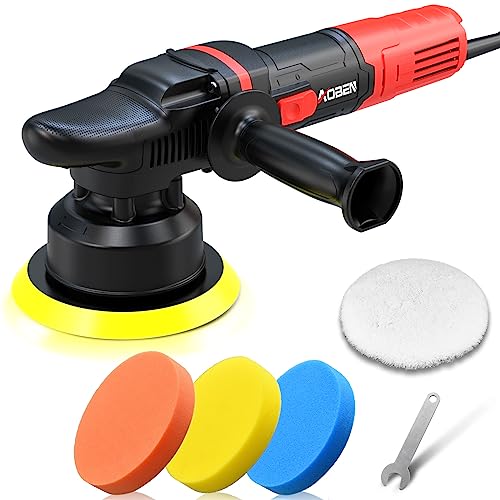
AOBEN Car Buffer Polisher,6 inch Dual Action Polisher,Random Buffer Polisher kit with 6 Variable Speed 1000-4500rpm,Detachable Handle,4 Buffing Pads for Car detailing Polishing and Waxing
Chosen because it specifies 6 inch Dual Action Polisher and Detachable Handle.
View on Amazon
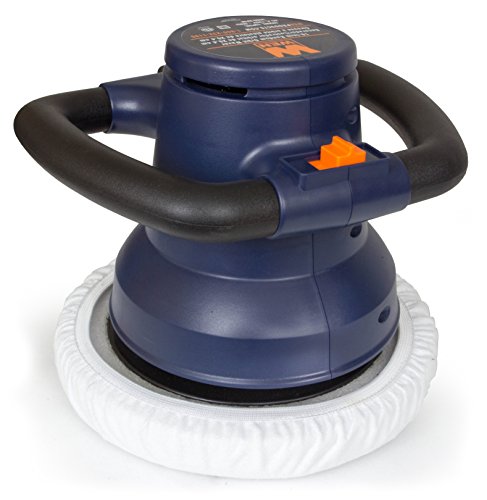
WEN 10PMC 10-Inch Waxer/Polisher in Case with Extra Bonnets
Picked as a relevant option in this category.
View on Amazon
DEWALT Buffer Polisher, 7-in-9-in, 12 amp, Variable Speed Dial 0-3,500 RPM’s, Soft Start Corded Car Buffer (DWP849X)
Chosen because it specifies 7-in-9-in and 12 amp.
View on AmazonDA machines are not automatically harmless. Excess pressure, a dry pad, a stationary machine, or aggressive compound can still damage paint. However, their forgiving behavior gives beginners more room to learn. A 15 mm long-throw DA is a useful middle ground: it corrects faster than a small 8 mm unit but is less awkward than a 21 mm machine on curved panels.
Rotary: faster correction with less margin for error
A rotary polisher spins the pad on one fixed axis. It transfers more cutting energy directly to the paint, making it effective for severe oxidation, sanding marks, and hard clear coats. The trade-off is concentrated heat and a greater chance of holograms, edge damage, or uneven correction.
Choose a rotary if you already know how to monitor panel temperature, reduce pressure near edges, and refine the finish with a DA or finishing pass. For a first machine, a rotary is usually the wrong shortcut: its higher correction speed does not compensate for the cost of correcting technique mistakes.
What specifications matter most
Speed control
Look for a variable-speed trigger or dial rather than a single-speed motor. A practical working range is about 2,500–5,500 orbits per minute for a DA, and roughly 600–3,000 rpm for a rotary. Low speed helps spread polish and finish delicate areas; higher speed adds cutting power, but also heat and sling.
A soft-start function is valuable because it prevents compound from being flung off the pad at startup. Electronic constant-speed control is another useful feature: it helps the pad maintain movement when moderate pressure is applied.
Throw and pad size
The “throw” is the diameter of the DA’s orbit. An 8 mm short-throw machine is precise and stable. A 15 mm machine is the most versatile choice for a full-size vehicle. A 21 mm long-throw machine can cover large flat panels quickly but may be harder to control on narrow body lines.
Five-inch pads are generally easier to control and place less load on the motor. Six-inch pads cover more area but require more power and can become awkward near mirrors, pillars, and creases. A useful compromise is a machine supplied with a 5-inch backing plate, with optional 3-inch and 6-inch plates for different work.
Power, weight, and vibration
For corded DAs, roughly 500–900 W is adequate for home correction, while demanding long-throw machines often use about 800–1,200 W. More watts do not automatically mean better correction; gearing, orbit size, pad rotation, and speed regulation matter just as much.
Weight affects fatigue. A machine around 2.3–3.0 kg is easier to use on vertical doors and upper panels than one above 3.5 kg. Balance is equally important: a well-balanced 3 kg polisher can feel less tiring than a lighter machine that vibrates strongly.
| Machine category | Typical weight | Typical working speed | Recommended pad | Approximate market range |
|---|---|---|---|---|
| Compact corded DA | 1.8–2.5 kg | 2,500–5,500 OPM | 3–5 inches | $100–$220 |
| Standard 15 mm DA | 2.3–3.0 kg | 3,000–5,500 OPM | 5 inches | $180–$450 |
| 21 mm long-throw DA | 2.5–3.5 kg | 2,500–5,000 OPM | 5–6 inches | $250–$550 |
| Corded rotary | 2.3–3.2 kg | 600–3,000 rpm | 5–7 inches | $150–$400 |
| Cordless DA | 2.3–3.6 kg with battery | Variable; model-dependent | 5 inches | $250–$600 before extra batteries |
Strong choices by design
Best beginner-friendly corded DA: Griot’s Garage G9
The G9 is a sensible first machine because its 8 mm orbit, 5- and 6-inch plate compatibility, variable speed, and moderate size make it predictable on most panels. It is better suited to learning controlled section passes than chasing maximum correction speed. Pair it with a medium foam pad for general polishing and keep a softer finishing pad available.
Best compact and versatile option: FLEX PXE 80
The FLEX PXE 80 is designed for small-area work and uses interchangeable heads and backing plates. Its compact format is useful around door handles, bumpers, pillars, wheels, and motorcycle panels. It is not the fastest choice for an entire large SUV, but its control and reach can prevent the common mistake of forcing a full-size machine into spaces it cannot comfortably cover.
Best long-throw DA for larger vehicles: Rupes LHR15 Mark V
The Rupes LHR15 Mark V is a refined 15 mm DA aimed at efficient correction without the bulk of a 21 mm machine. Its ergonomic balance and 5-inch format suit mixed panel shapes. It is a strong choice for owners who detail several vehicles per year and want a substantial upgrade from entry-level equipment.
Best large-panel specialist: Rupes LHR21 Mark V
The LHR21 Mark V’s 21 mm throw is intended for broad, relatively flat surfaces. It can reduce working time on hoods, roofs, and doors, but its long orbit is less comfortable near tight contours. It makes the most sense when coverage speed matters more than maximum versatility.
Best rotary category: DeWalt DWP849
The DeWalt DWP849 is a variable-speed rotary with a powerful corded motor and support for large polishing accessories. It is appropriate for experienced users working on oxidation or serious defects. Beginners should use the lowest practical speed, keep the pad moving, tape vulnerable trim, and plan a DA finishing step to remove rotary haze.
How to choose pads and avoid false economies
The polisher is only one part of the system. A typical correction setup needs at least two cutting or polishing pads and one finishing pad. Using one pad for an entire vehicle overloads the foam with spent compound and clear-coat residue, reducing cutting and increasing heat.
For a five-inch pad, plan on four to six pads for a full vehicle if you want consistent performance. Clean or change the pad after each small section when it becomes saturated. Microfiber cutting pads can correct quickly but usually create more haze than foam, so reserve them for defects that a foam pad cannot address.
Pad diameter also changes workload. A 6-inch pad has about 44% more face area than a 5-inch pad, calculated as 6² ÷ 5² = 1.44. That can improve coverage, but the larger pad also places more demand on the machine and is less precise near edges.
A beginner-safe paint-correction workflow
- Wash and decontaminate. Remove grit, tar, and bonded particles before machine polishing so they do not become abrasive debris.
- Inspect in bright, angled light. Identify whether the problem is haze, swirls, oxidation, or scratches that are too deep for polishing.
- Test a small section. Use the least aggressive pad and polish combination that produces an acceptable result. More cutting is not always better.
- Work a small area. A section about 45 by 45 cm is manageable. Use overlapping horizontal and vertical passes with light, even pressure.
- Control heat. Keep the machine moving, allow panels to cool, and never chase a defect indefinitely in one spot.
- Wipe and inspect. Remove residue with a clean microfiber towel and check the result from multiple angles before escalating the combination.
- Refine and protect. Follow heavy correction with a finishing polish when needed, then apply the chosen wax, sealant, or coating according to its instructions.
Ownership costs and maintenance
The first consumables to wear are usually pads, backing-plate hook-and-loop material, microfiber towels, and extension-cord components—not the motor. Keep at least one spare backing plate if the machine supports interchangeable sizes. Inspect the plate for delamination and replace it if it wobbles or sheds material.
After each session, brush or blow loose compound from the machine vents, wipe the housing, and clean pads according to their material. Do not soak the machine. Store pads flat or in breathable containers, and avoid leaving foam compressed under heavy objects.
Cordless models add battery expense. If one battery provides 25 minutes of practical polishing and a vehicle requires 75 minutes, the minimum is three battery cycles; allowing for reduced performance and breaks, two batteries may be workable, while three is more convenient. For occasional driveway detailing, a corded DA is often cheaper over several years.
Final buying verdict
For most people, buy a variable-speed 15 mm dual-action polisher with a 5-inch backing plate, manageable vibration, soft start, and readily available replacement pads. Choose a compact DA when your work involves tight areas, a 21 mm DA when large-panel speed is your priority, and a rotary only when you have the technique to manage heat and finishing haze. The best machine is the one whose size, control, and consumable costs encourage careful, repeatable paint correction rather than aggressive correction that the paint does not need.


Write Your Review
No reviews yet. Be the first to share your experience!