
Our Top Picks
Best GPS Running Watches for Every Training Routine
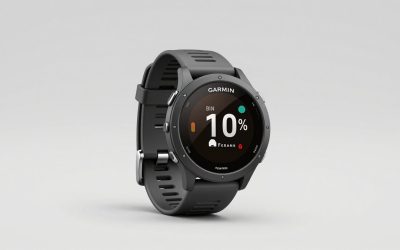
The best GPS running watch depends on what you need most: choose the Garmin Forerunner 265 for a well-rounded training and mapping package, the Coros Pace 3 for low weight and long battery life at a lower price, or the Garmin Forerunner 965 if detailed maps and a larger display matter more than cost.
GPS performance varies with buildings, tree cover, weather, and how a watch is worn, so no model guarantees perfect tracks. For most runners, the practical decision is whether they need full-color maps, how often they can charge, and which training metrics they will actually use. Prices below are broad market ranges and can vary by retailer and region.

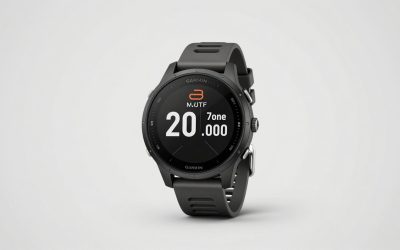
Garmin Forerunner 55, GPS Running Watch with Daily Suggested Workouts, Up to 2 Weeks of Battery Life, Black - 010-02562-00
Chosen because it specifies GPS Running Watch with Daily Suggested Workouts and Up to 2 Weeks of Battery Life.
View on Amazon
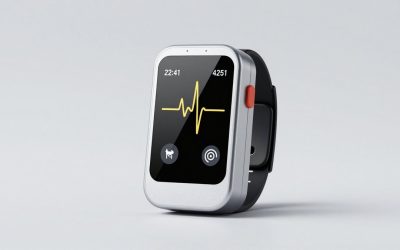
Amazfit Bip 6 Smart Watch, 1.97" AMOLED Display, GPS, iOS/Android
Chosen because it specifies 1.97" AMOLED Display and GPS.
View on Amazon
Garmin Forerunner® 165, Running Smartwatch, 43mm, Whitestone
Chosen because it specifies Running Smartwatch and 43mm.
View on Amazon
Garmin vívoactive® 5, Health & Fitness GPS Smartwatch, 42mm, Black
Chosen because it specifies Health & Fitness GPS Smartwatch and 42mm.
View on AmazonQuick comparison
| Watch | Weight | GPS battery life* | Mapping | Typical price range | Best fit |
|---|---|---|---|---|---|
| Coros Pace 3 | 30 g with nylon band; 39 g with silicone band | Up to 38 hours standard GPS | Breadcrumb route navigation, not full-color topographic maps | About $200–$250 | Runners prioritizing value, lightness, and battery |
| Garmin Forerunner 265 | 47 g (46 mm); 39 g (42 mm) | Up to 20 hours GPS (46 mm); 24 hours (42 mm) | Course guidance and route line; no full-color routable maps | About $350–$450 | Daily training with detailed metrics and a bright AMOLED display |
| Garmin Forerunner 965 | 53 g | Up to 31 hours GPS | Full-color, routable maps | About $500–$650 | Racing, travel, and unfamiliar routes |
| Polar Pacer Pro | 41 g | Up to 35 hours training mode | Route guidance with breadcrumb navigation | About $250–$350 | Runners who want a focused training watch and recovery tools |
*Manufacturer-stated maximums are not directly comparable: settings such as screen use, GPS mode, music, and connected sensors can reduce runtime. Check current specifications for the exact size and software version before buying.
Choose by the way you run
For a first GPS watch or a tight budget: Coros Pace 3
The Pace 3 keeps the essentials—GPS recording, structured workouts, pace and heart-rate data, and route following—in a particularly light package. Its nylon-band configuration is easy to wear for long runs, and its stated GPS runtime leaves room for several training days between charges for many runners. It is a strong value if you want training features without paying extra for full maps or a more premium display.
The trade-off is navigation: a breadcrumb route can show whether you are on course, but it is not the same as seeing streets and terrain on a detailed map. If you often explore unfamiliar trails, plan routes on a phone or computer and consider a watch with onboard maps.
For regular training and racing: Garmin Forerunner 265
The Forerunner 265 balances a bright AMOLED screen with training load, recovery, workout guidance, and race-focused features. Its two case sizes are a useful comfort choice: the smaller 42 mm version weighs less, while the larger model offers a bigger screen and longer stated GPS runtime. Both are better suited to runners who will use the training analysis than to someone who only needs distance and pace.
It can guide you along a saved course, but it does not provide the full-color routable maps found on the Forerunner 965. If your routes are familiar and you mainly want structured training and clear data, paying extra for full maps may not improve your daily runs.
For trails, travel, and route changes: Garmin Forerunner 965
The 965 is the map-first choice here. Full-color maps make it easier to understand turns and surrounding paths without checking a phone, which is useful when a route changes or a trail network gets confusing. It also offers a large screen and extensive performance features.
That capability comes at a higher price and a slightly larger, heavier case than the 265. If you run the same neighborhood loop most days, its maps may be an expensive feature you rarely use. Also remember that map detail and navigation availability depend on the region and the maps installed.
For a simpler training focus: Polar Pacer Pro
The Pacer Pro is a sensible alternative for runners who want running and recovery guidance without making a smartwatch experience the priority. It supports route guidance, but like the Pace 3 and 265, it is not a substitute for full onboard maps. Compare the metrics and app workflow with your existing training habits before choosing; the best analysis is the one you can interpret and use consistently.
What the headline specifications mean in practice
- GPS accuracy: Multi-band or multi-frequency GPS can help in difficult settings such as dense city streets or tree-covered routes, but it does not eliminate signal errors. Buildings, narrow valleys, and a loose watch fit can still affect the track. If precision matters, compare saved routes from your own typical running environment rather than relying on a single advertised feature.
- Battery life: Published GPS figures are best-case estimates. Frequent notifications, music, bright displays, and more demanding satellite settings can shorten runtime. For an ultramarathon or long navigation-heavy day, leave a substantial buffer rather than planning to finish near the stated maximum.
- Maps versus route lines: A breadcrumb display tells you where a planned route goes; full maps add geographic context and may support rerouting. If you run familiar roads, a route line is often enough. For remote trails or travel, map detail can be worth the price premium.
- Running metrics: Pace, distance, heart rate, and workout intervals are useful for most runners. Advanced measures—such as training readiness, running power, or detailed recovery estimates—are best treated as guidance, not definitive measures of fitness. Some metrics depend on compatible accessories or software features.
- Comfort: Case diameter is only part of fit. Case thickness, band material, wrist shape, and how snugly the sensor sits all matter. A watch that shifts during intervals may be distracting and can affect optical heart-rate readings.
A quick decision matrix
| Your situation | Start with | Why |
|---|---|---|
| New to GPS watches; mostly road runs | Coros Pace 3 | Light, capable, and relatively affordable |
| Train several times a week and follow structured workouts | Garmin Forerunner 265 | Strong training feature set with a choice of case sizes |
| Run unfamiliar trails or travel routes often | Garmin Forerunner 965 | Full-color onboard maps add useful context |
| Prefer training and recovery tools over maps and smartwatch extras | Polar Pacer Pro | Focused running feature set and route guidance |
Ownership details worth checking
The band is usually the first part to show wear: sweat, sunscreen, and repeated bending can make it dirty or less comfortable over time. Rinse the watch and band with fresh water after sweaty or muddy runs, then dry them before charging. Follow the maker’s cleaning instructions, and avoid harsh cleaners that can damage coatings or seals. Check whether replacement bands use a common attachment size before buying.
Battery capacity gradually declines with age, and GPS-heavy use accelerates how often you need to charge. Use the least demanding GPS setting that still suits your route, and disable features you do not need during a run. Avoid assuming that a high water-resistance rating makes a watch immune to every kind of exposure; follow its care guidance after swimming, salt water, or prolonged moisture.
Bottom line
For most runners who train regularly, the Garmin Forerunner 265 offers the broadest balance of metrics, display, and fit options. Choose the Coros Pace 3 to spend less and keep weight and charging worries down; choose the Forerunner 965 if detailed maps will change how confidently you navigate. The Polar Pacer Pro is a worthwhile comparison for runners who favor a focused training experience. Before deciding, prioritize the feature you will use every week—not the longest feature list.

Write Your Review
No reviews yet. Be the first to share your experience!