
Our Top Picks
 ICYTHRP Programmable Timer Ice Machine for Knee After11 x 12.2 x 7.6 Inch12.2 x 11 x 7.6 inches4 poundsCheck on Amazon
The best cold therapy machines for at-home recovery are the Breg Polar Care Wave for most users, the Aircast Cryo Cuff IC for simple low-noise icing, and Game Ready GRPro 2.1 for athletes who need adjustable compression and frequent, organized treatment. The right choice depends less on the lowest advertised temperature than on how evenly the pad covers the body part, how often you will refill ice, and whether the pump noise and setup are acceptable in your living space.
Best cold therapy machines at a glance
| Machine | Cooling approach | Water/ice requirement | Typical pad coverage | Hose length | Noise and circulation | Best for |
|---|---|---|---|---|---|---|
| Breg Polar Care Wave | Motorized cold-water circulation | Water plus ice; roughly 3–4 L reservoir | About 10–13 in wide, depending on pad | Approximately 6 ft | Low pump hum; continuous circulation | Most home users and routine recovery |
| Aircast Cryo Cuff IC | Gravity-assisted or powered cold-water circulation | Water plus ice; approximately 6 qt cooler | Joint-specific cuffs, commonly 8–12 in coverage | Approximately 5–6 ft | Very quiet in gravity mode; intermittent powered circulation | Knees, shoulders, elbows, and low-noise use |
| DonJoy IceMan CLEAR3 | Motorized cold-water circulation | Water plus ice; approximately 3 L reservoir | Roughly 10–12 in wide, depending on pad | Approximately 6 ft | Quiet-to-moderate pump; steady circulation | Simple, compact icing without compression |
| Game Ready GRPro 2.1 | Actively circulated cold water plus pneumatic compression | Water plus ice; approximately 5–6 L reservoir | Large anatomical wraps, often 10–16 in across | Approximately 8–10 ft with the hose assembly | Noticeable pump and compressor; adjustable circulation | Frequent users wanting cold plus compression |
| Hyperice X | Thermoelectric contact cooling; no water loop | No water or ice | Small, targeted treatment zones | No water hose | Quiet fan/compressor sound; no circulating water | Portable, clean, quick sessions |
These figures are useful for comparing ownership, but exact pad dimensions, hoses, reservoir capacities, and included accessories vary by package. Confirm the current configuration before buying, particularly if you need a shoulder, ankle, hip, or large-knee wrap.
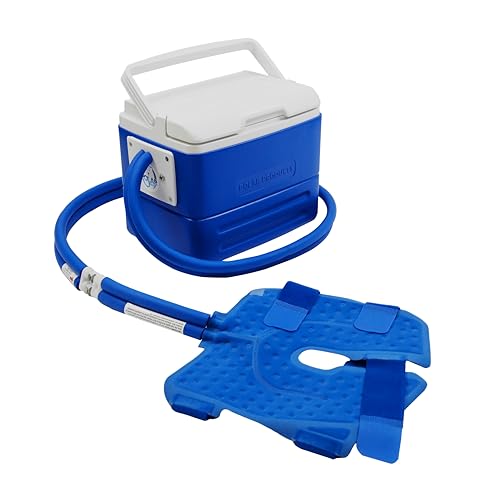
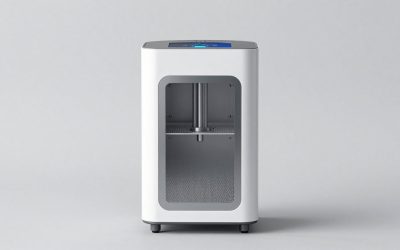
Polar Active Ice 3.0 | 9 QT Cold Therapy Ice Machine | Programmable Timer | Knee & Joint Pad | Cryotherapy Pain Relief System | Ace Bandage Style Compression
Chosen because it specifies 9 QT Cold Therapy Ice Machine and Programmable Timer.
View on Amazon
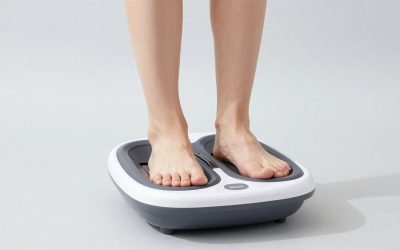
Cold Therapy Ice Machine for Foot After Surgery with Foot-Specific Pad
Picked as a relevant option in this category.
View on AmazonICYTHRP Programmable Timer Ice Machine for Knee After Surgery w/Quiet Pump
Picked as a relevant option in this category.
View on Amazon
ONLYCARE Ice Machine for Knee After Surgery, Portable Cold Therapy Machine
Chosen because it specifies Portable Cold Therapy Machine.
View on AmazonHow the leading options differ
Breg Polar Care Wave: the balanced choice
The Polar Care Wave is a strong middle ground because it combines a powered pump with a relatively compact cooler and straightforward controls. It generally circulates cold water continuously rather than relying only on a bag of ice resting against the body. That makes pad temperature more consistent over a session.
Its limitations are typical of water-circulating systems: you must add ice and water, keep the unit upright, and drain it after use. It also does not provide the same level of compression control as Game Ready. Choose it when you expect regular use but do not need a highly programmable professional-style system.
Aircast Cryo Cuff IC: the quiet and simple option
The Cryo Cuff uses a cooler and body-part-specific cuff. The cooler can often be positioned above the joint so gravity helps move cold water through the pad, reducing pump noise. The powered version adds intermittent circulation, which is useful when the cuff warms during longer sessions.
This design is particularly convenient for a knee or ankle because the cuff holds its position without straps and tubing spread across a large pad. The trade-off is less flexibility: a joint-specific cuff is not as useful for another body area, and the large cooler takes up more refrigerator-style volume than a small gel pack.
DonJoy IceMan CLEAR3: compact powered circulation
The IceMan CLEAR3 is aimed at users who want circulating cold water without compression. Its appeal is the uncomplicated control layout and a reservoir that is smaller than many high-capacity clinical systems. It works well when the main requirement is a pad that stays cold while you read, work, or rest.
Do not confuse circulation with active refrigeration. Like most ice-based machines, it does not create cold from room-temperature water. You still need ice, and the final temperature depends on the ice-to-water ratio, room temperature, pad contact, and session length.
Game Ready GRPro 2.1: the premium compression system
Game Ready is the most capable choice in this group for users who specifically want adjustable pneumatic compression alongside cold therapy. Its wraps are often larger and more substantial, and the control unit offers more settings than basic pump-and-cooler systems.
That capability brings practical costs: more weight, a larger footprint, more tubing, more pump noise, and a higher general market price. It is difficult to justify for occasional icing of a small joint. It makes more sense when multiple people use the system, when large anatomical coverage matters, or when compression adjustment is a priority approved by a clinician.
Hyperice X: the cleanest setup
Hyperice X avoids the main inconvenience of ice machines: there is no reservoir, melting ice, or water hose. It uses thermoelectric cooling and is designed for targeted areas rather than wrapping an entire limb in circulating water.
It is a better fit for a small apartment, office, or travel bag. It is not a direct replacement for a large knee or shoulder wrap if broad, continuous coverage is your priority. Its temperature behavior also differs from ice-water systems, so compare the treatment area and control method—not only the temperature number.
Decision matrix: which machine fits your situation?
| Your situation | Best fit | Why | What to accept |
|---|---|---|---|
| Occasional use and limited budget | Basic gravity cold-water cuff or small powered unit | Lower purchase and operating complexity | More manual refilling and less precise control |
| Daily use for several weeks | Breg Polar Care Wave or DonJoy IceMan CLEAR3 | Powered circulation saves repeated repositioning | Ice consumption and cleaning after use |
| Noise-sensitive bedroom or shared room | Aircast Cryo Cuff in gravity mode or Hyperice X | Little or no continuously running pump | Less active circulation or smaller treatment area |
| Large coverage and adjustable compression | Game Ready GRPro 2.1 | Large wraps and configurable compression | Higher cost, bulk, and audible operation |
| Small home, office, or travel | Hyperice X | No ice, water, or hose to transport | Targeted rather than full-limb coverage |
Temperature range is only one part of the comparison
Ice-water machines commonly produce water temperatures in roughly the 35–55°F range during a session, depending on the amount of ice and circulation. A machine advertising a very low minimum temperature may not hold that temperature at the pad once the ice melts or the pad is separated from the skin by clothing.
Look for a pad that distributes water across the treatment area rather than concentrating it at the inlet. A long hose is helpful when the cooler must sit on the floor, but excess hose can kink or become a tripping hazard. For most bedrooms, 6 feet is workable; 8–10 feet is more convenient for a couch or bed but requires better cable and tubing management.
Also check whether the pad is reusable, washable, and replaceable. The pad is commonly the first expensive part to wear: hook-and-loop fasteners lose grip, seams can fatigue, and the internal channels may develop leaks if the pad is sharply folded.
Setup and maintenance that prevent common problems
- Inspect the fittings first. Check that the hose connectors click or screw fully into place before adding water. A partial connection can look secure while slowly leaking.
- Use cold water and enough ice. Start with cold tap water, then add ice according to the manual. Overfilling can restrict circulation or cause water to spill when the lid is closed.
- Keep the pad flat. Smooth folds and kinks before starting the pump. A compressed section can reduce flow and create uneven cooling.
- Use a thin barrier only if permitted. Do not place the pad directly against numb or damaged skin, and do not add thick layers that prevent useful contact. Follow the supplied instructions.
- Drain after use. Standing water encourages odor and microbial growth. Disconnect the hose, empty the reservoir, and allow both the pad and cooler to air-dry.
- Clean on a schedule. Use only the cleaner or dilution specified by the manufacturer. Household disinfectants, bleach, and detergents can damage tubing or leave residue.
A simple ownership calculation illustrates the ice requirement. If a system uses about 2–3 pounds of ice per session and you use it five times weekly, that is roughly 10–15 pounds per week. Over a six-week period, the machine may require 60–90 pounds of ice, in addition to the purchase price. Reusable frozen bottles can reduce waste if the reservoir opening accommodates them, but they may reduce contact between ice and circulating water.
What to buy
Choose the Aircast Cryo Cuff IC when quiet, joint-specific treatment is more important than universal coverage. Choose the Breg Polar Care Wave for the best balance of circulation, pad options, and manageable home setup. Choose the DonJoy IceMan CLEAR3 if you want a compact powered cooler without compression. Choose Game Ready GRPro 2.1 only when its larger wraps and adjustable compression justify the extra bulk and cost. Choose Hyperice X when eliminating ice and water matters more than treating a large area.
Cold therapy can cause skin injury or worsen certain circulation and sensation problems. Use the device only as directed, stop if you develop unusual pain, excessive numbness, skin discoloration, or blistering, and ask a qualified healthcare professional whether cold therapy is appropriate for your condition or recovery plan.
Write Your Review
No reviews yet. Be the first to share your experience!