
Key takeaways
- Table of Contents 7 sections 8 min read 1 Quick Verdict 2 Side by Side 3 Where Adjustable Wins 4 Where Fixed Kettlebell Wins 5 Cost Over 5 Years 6 Which One for Your Home 6.1 Small apartment or studio…
What's inside
Walk into any home gym conversation in 2026 and you’ll hear the same debate: adjustable vs fixed kettlebell. It sounds like a gear nerd argument, but it’s really a question about how you live. A kettlebell is one of the most space-efficient pieces of strength equipment you can own — a single 25-pound bell can replace a rack of dumbbells for swings, goblet squats, and presses. The catch is that progress demands heavier weight, and your floor space doesn’t grow with your strength. So the real decision a buyer faces isn’t “which kettlebell is better.” It’s whether you’d rather own one object that changes weight, or several objects that each do one job perfectly. Budget, square footage, and who else shares your home all tip the answer.
Quick Verdict
If you’re tight on space or budget and expect to progress through multiple weights, an adjustable setup wins — convertible sets like the FDS1 45-pound adjustable dumbbell set, which reconfigures into a kettlebell, barbell, and push-up stand for around $68, deliver five pieces of equipment for less than one premium cast-iron bell. If you value durability, safe ballistics, and a tool that will outlive you, fixed cast-iron kettlebells like Yes4All’s vinyl-coated line (starting around $16 for a 10-pounder and running up through 100 pounds) are the smarter buy. Most home lifters are honestly best served by two or three fixed bells: a light one for presses and warm-ups, a medium one for swings, a heavy one for squats.
As an Amazon Associate we earn from qualifying purchases at no extra cost to you. Product prices and availability are accurate as of the date shown and are subject to change.


Side by Side
| Factor | Adjustable Kettlebell | Fixed Kettlebell |
|---|---|---|
| Comfort | Plates and casings create edges; swings can bruise forearms | Smooth, rounded cast iron designed for the grip and forearm contact |
| Durability | More moving parts — nuts, pins, dials — that can loosen or strip | Nearly indestructible; a cast-iron bell has no failure point |
| Price range | $60–$150 for convertible sets; $150–$300 for dial-style bells | $16–$30 for 5–15 lb; $30–$70 for 25–45 lb; $80+ for 70 lb and up |
| Maintenance | Check fasteners regularly; watch for plate wobble | Wipe down occasionally; check vinyl coating for chips |
| Space needed | One footprint, roughly 12 x 12 inches for a convertible set | Roughly 1 square foot per bell; a full set eats a closet corner |
| Look | Mechanical, gym-equipment aesthetic; plates visible | Clean, classic silhouette; vinyl colors blend into a living space |
| Resale | Modest; mechanisms wear and buyers are wary | Strong; cast iron holds value and sells fast secondhand |
| Weight ceiling | Typically caps around 40–70 lb depending on design | Available up to 100 lb and beyond |
| Best for | Small apartments, beginners, budget multi-tool buyers | Committed lifters, ballistic work, anyone wanting buy-once gear |
Where Adjustable Wins
Space efficiency is the headline. An apartment dweller with a 6-by-6-foot workout corner can’t store five fixed bells, but a convertible set occupies one spot. The FDS1 45-pound set, for example, breaks down into components that double as a barbell and push-up stands, so one purchase covers presses, rows, swings, and bodyweight work.
Cost per pound of available weight is lower early on. Buying four fixed bells at 15, 25, 35, and 45 pounds might run $100–$130 combined. A comparable adjustable setup covers the same range for $60–$70 at the budget end.
Progression without new purchases. Beginners often don’t know their working weight. A woman starting goblet squats might need 25 pounds; three months later she needs 35. An adjustable setup absorbs that curve. It also serves households with two users of different strength levels — a 45-pound ceiling covers most partners.
Versatility beyond kettlebell moves. Many adjustable sets convert to dumbbells or barbells. If you’re unsure kettlebell training is for you, that flexibility lowers the risk of a wasted purchase.
Where Fixed Kettlebell Wins
Ballistics. Swings, cleans, and snatches slam the bell against your forearm repeatedly. A fixed cast-iron bell has a smooth, contoured handle and a compact center of mass. Adjustable bells with protruding plates or clamp mechanisms turn high-rep swings into a forearm-battering experience — this is the single biggest complaint from owners who switched.
Safety and confidence. A fixed bell has nothing to loosen, shift, or come apart mid-swing. With an adjustable, you should check the nut or dial before every session. Drop a fixed cast-iron bell on a rubber mat and nothing happens; drop a loaded plate setup and you’re checking for cracks.
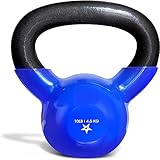
Longevity and resale. A Yes4All vinyl-coated cast iron bell at $20.50 (5-pound) up through the 100-pound models is essentially a lifetime purchase. Vinyl coating protects floors and resists rust, and used fixed bells sell quickly because buyers trust them.
Handling feel. Fixed bells have consistent handle diameter (typically 33–35 mm on mid-size bells) and proper clearance between handle and bell. Cheap adjustables often have cramped handles that punish two-handed grips.
Buying a second bell is cheap. At $16.12 for a 10-pound Yes4All or around $40 for a 25-pounder, adding bells as you progress is incremental rather than a new system purchase.
Cost Over 5 Years
Adjustable route: one convertible set at $68, plus maybe $20 in replacement fasteners or padding. Five-year total: roughly $90.
Fixed route: start with a 25-pound bell ($35), add a 15-pound ($28) in year one and a 35-pound ($45) in year two. Five-year total: about $110 — and you still own all three, all fully functional, with resale value of maybe $60 if you ever sell.
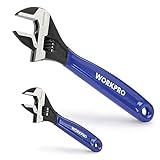
The gap is smaller than people expect. Adjustables win clearly only if your progression would have demanded four or more fixed bells (a 5–50 pound ladder at retail runs $150–$200). If you top out at one or two working weights, fixed bells cost nearly the same and hold value better. Note that adjustable bells — unlike wrenches such as a $17.99 WORKPRO set, where the adjustment mechanism is the product — use their mechanism under dynamic load, which is why moving parts matter more here.
Which One for Your Home
Small apartment or studio
Go adjustable — ideally a convertible set. With under 15 square feet of workout space, one compact unit that stores under a bed or in a closet beats three fixed bells on display. The FDS1-style multi-function sets earn their footprint twice over since they double as a barbell and push-up stand. Prioritize a set with a flat base so it doesn’t rock during renegade rows.
Family with kids or pets
Fixed wins on safety. Vinyl-coated cast iron (the Yes4All blue 10-pounder at $16.12 is a classic starter) has rounded corners, floor-friendly coating, and no loose plates a curious toddler could pull off. Adjustable sets have small parts and pinch points. Store any bell — fixed or adjustable — out of reach; even 10 pounds of cast iron is a serious hazard falling off a shelf.
Rental or temporary living
Adjustable, for portability and floor protection. One 45-pound set moves in a single box, and vinyl or rubber-coated plates won’t scar hardwood. Fixed bells also travel fine, but a collection of three or four gets heavy fast on moving day. If your lease is a year or two, avoid building a fixed-bell collection you’ll just have to haul or sell at a loss.
Long-term home
Fixed, all day. When you’re not moving and space isn’t at a premium, build a small permanent corner: a 15-pound bell for presses and halos, a 25–35 for swings, a 45–55 for goblet squats. Total investment of $110–$140, zero maintenance beyond a wipe-down, equipment that lasts decades and looks fine in a living room. This is the buy-once path.
FAQ
Are adjustable kettlebells safe for swings?
They’re usable for moderate-rep Russian swings if you verify the locking mechanism before every set, but most designs have edges and plate overhang that make high-rep ballistics uncomfortable on the forearms and wrists. For serious swing volume, a fixed bell is the safer and more pleasant choice.
What weight should a beginner start with?
Most women start with an 8–15 pound bell for presses and a 20–25 for squats; most men start around 15–25 pounds for presses and 35 for swings. If you’re unsure, an adjustable covers you while you find your numbers.
Do vinyl-coated kettlebells last as long as bare cast iron?
The cast iron inside lasts just as long. The vinyl coating can chip if dropped on concrete, but for home use on mats or wood floors it holds up for years and protects your floors in exchange.
Can I just use adjustable dumbbells as kettlebells?
For goblet squats and deadlifts, yes. For swings and cleans, no — a dumbbell’s center of mass sits between your hands rather than below the handle, which changes the mechanics and stresses your grip. Sets that include a true kettlebell conversion, like multi-function plates with a dedicated handle, are a better middle ground.



Write Your Review
No reviews yet. Be the first to share your experience!