
Key takeaways
What's inside
Best trap exercises with dumbbells means shrugs, carries, high pulls and upright rows, and every one of them runs into the same wall: grip and top-end weight. Traps handle far more load than most home dumbbell sets provide, which changes what you should buy first. Load, not exercise choice, is the limit.
As an Amazon Associate we earn from qualifying purchases at no extra cost to you. Product prices and availability are accurate as of the date shown and are subject to change.
As an Amazon Associate we earn from qualifying purchases at no extra cost to you. Product prices and availability are accurate as of the date shown and are subject to change.



By Chris Parker
🛒 Best Price Today on Amazon
Prime members get fast, free shipping on everything above, plus member-only deals. New members get a 30-day free trial — cancel anytime.
Start 30-Day Prime Free Trial →See Today’s Amazon DealsHow to Choose Kit for the Best Trap Exercises With Dumbbells
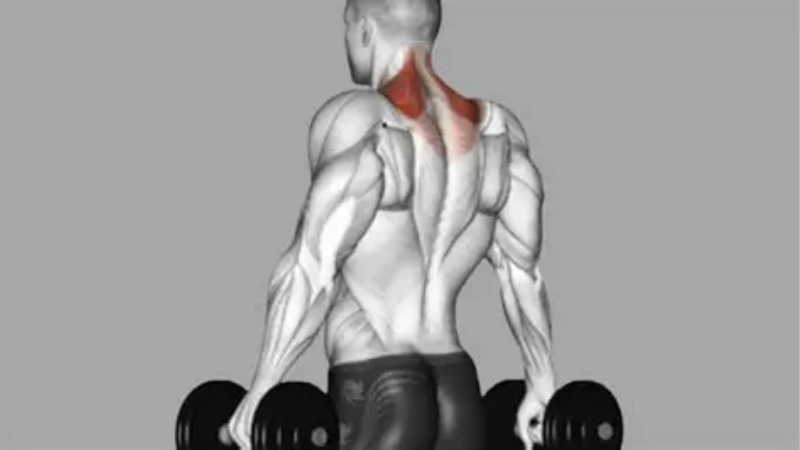
Trap work is a top-end problem rather than a technique problem. Shrugs and carries load heavily from the first month, so a set that caps at 52.5 lb (24 kg) per hand runs out quickly. Grip usually fails before the muscle does, which makes straps the cheapest meaningful upgrade here. Buy them before heavier dumbbells.
Top-End Weight and Increments
Traps tolerate heavy loading, so the maximum weight matters more here than in most dumbbell training. Adjustable sets reaching 80 lb (36 kg) per hand give shrugs somewhere to go, while a 52.5 lb ceiling turns into high-repetition work within a year for most people who train consistently. Plan the top end rather than the starting weight.
Increments matter less than they do for pressing. Steps of 5 lb (2.5 kg) per hand are fine on shrugs and carries, where adding repetitions or a slower tempo bridges the gap easily. Save the small-step sets for pressing and use the top end of your range for the traps. Repetitions cover any gap between settings.
Grip, Straps and Handle Diameter
Grip is the limiting factor on the best trap exercises with dumbbells, particularly on carries and high-repetition shrugs. Straps shift the limit back to the muscle, and 18 in (46 cm) cotton straps cost less than any other upgrade in a home gym while lasting for years. Grip should not end a shrug set early.
Handle diameter changes the feel too. Fat handles make grip the point of the exercise, which is useful occasionally and counterproductive when the target is the traps. Standard handles plus straps on the heaviest sets is the sensible default, with bare hands on the lighter working sets. Fat grips are a separate tool for a different goal.
Footprint, Storage and Floor Protection
Footprint is not about the lift itself, since shrugs need very little room. It is about storage: heavy fixed pairs need a rack of roughly 2 x 2 ft (60 x 60 cm), and adjustable cradles sit around 17 x 9 in (43 x 23 cm) each beside wherever you train. Storage decides more than the lift does in the best trap exercises with dumbbells.
Carries need a clear run of about 15 ft (4.5 m), which most homes do not have indoors, so a hallway or a garden often becomes the answer. Measure the storage corner and the walking run before ordering, and put rubber matting under the area where heavy dumbbells get set down. Measure the run before planning carries.
Top Picks: Dumbbells and Kit for Trap Training
The list below leans heavier than a general dumbbell roundup, because trap work needs it. Straps and a rack matter as much as the dumbbells themselves here. Each entry names a real drawback, since every option in this category trades load, convenience or storage against the others. Straps come first at this end of the range.
| Product | Type | Range | Best for |
|---|---|---|---|
| NÜOBELL 80 lb | Dial adjustable | 5 to 80 lb | Heavy shrugs |
| PowerBlock Elite EXP | Pin adjustable | 5 to 50 lb | Compact storage |
| CAP Rubber Hex Pair | Fixed dumbbells | One weight | Heavy carries |
| Gymreapers Straps | Grip support | 18 in cotton | Cheapest upgrade |
| Flybird Bench | Bench | Flat to incline | Rear delt work |
| Yes4All A-Frame Rack | Storage | Holds pairs | Heavy pairs |
NÜOBELL 80 lb Adjustable Dumbbells
The 80 lb pair is the obvious answer for shrugs, since traps outgrow a 52.5 lb dumbbell faster than any other muscle group trained with dumbbells. The dial sits in the handle, the profile is close to a fixed dumbbell, and changing weight takes about as long as turning a tap. The top end is the reason to buy it.
It is a premium purchase with 5 lb (2.5 kg) steps, and the cradles must be used to change weight, which adds to the floor space. It also cannot be dropped, so heavy shrug sets need a controlled set-down rather than the release most people default to when fatigued. Cradles are part of the footprint too.
PowerBlock Elite EXP
PowerBlock stores in less space than anything else here, which matters when the alternative is a rack of heavy fixed pairs. The Elite EXP covers 5 to 50 lb (2.5 to 23 kg) per hand and takes expansion kits, so the top end can grow as your shrugs get stronger. It stores in a cupboard between sessions.
The square block contacts the forearm and thigh on carries, which some people never get used to. Pin changes are slower than dials. Buy it when storage space is the binding constraint, and expect the handling to feel different from a traditional dumbbell for the first few weeks. Storage is the reason to accept that.
CAP Rubber Hex Dumbbell Pair
One heavy fixed pair is the most practical purchase for trap work: nothing to adjust, nothing to break, and you can set them down hard at the end of a heavy set of shrugs. They also sit closer to the hand, which makes heavy carries far more comfortable to hold over distance. Nothing on a fixed pair can fail mid-set.
Each weight needs its own pair and somewhere to live, so this is an addition to an adjustable set rather than a full solution. Heavy hex pairs are also awkward to carry upstairs. Decide where they will be stored before ordering, since moving them later is a two-person job. One heavy pair goes a long way here.
Gymreapers Lifting Straps
Straps are comfortably the cheapest upgrade on this list by a wide margin. On heavy shrugs and carries the hands give out well before the traps do, and 18 in (46 cm) cotton straps remove that limit for a fraction of the cost of heavier dumbbells or a rack. They last for years with no real maintenance at all.
Using them on every set lets grip strength lag behind, so keep them for the top sets and train the lighter ones bare-handed. A badly wrapped strap also slips mid-set, so practise the wrap with light weight until it is automatic before relying on it under a heavy load. A slipped strap ends the set immediately.
Flybird Adjustable Weight Bench
A bench widens trap work beyond shrugs: incline shrugs, chest-supported rear delt raises and prone Y-raises all need one, and those movements cover the upper back that shrugs alone miss. Flybird benches fold flat, which keeps the room usable when you are not training in it. Rear delt work needs one as well.
Folding frames flex under heavy loading, and the narrow pad suits smaller lifters better. Check the stated capacity, which counts your body weight as well as the dumbbells. The hinge is the part that develops play, so check the bolts every few months as routine maintenance. Capacity counts your body weight too.
Yes4All A-Frame Dumbbell Rack
Once you own heavy fixed pairs, a rack stops them living on the floor where they mark carpet and catch toes. Having the working weight at hand height also makes heavy shrugs easier to start, since lifting 70 lb dumbbells off the floor is its own small workout. A rack keeps the walkway clear as well.
Racks need floor space that small rooms may not have, and budget frames wobble with the heaviest pairs loaded high. Check the stated capacity and whether the spacing fits large hex dumbbells, because wider pairs do not always sit properly on the cheaper A-frame designs. Measure the frame against your floor space.
Frequently Asked Questions
Four questions cover most of what people ask about training traps at home. They are about load, grip and storage rather than programming, since those three are what stop progress in a spare room long before the training itself becomes the limiting factor. Kit decides the best trap exercises with dumbbells.
How heavy do dumbbells need to be for shrugs?
Heavier than most home sets go. Traps tolerate load well, so a 52.5 lb (24 kg) pair becomes high-repetition work within a year for many lifters. Sets reaching 80 lb (36 kg) per hand, or a single heavy fixed pair, keep shrugs progressing for much longer. Top-end load drives the best trap exercises with dumbbells.
Are straps necessary for trap work?
They are not strictly necessary, but they are the cheapest way to stop grip ending the set before the traps are done. Use them on the heaviest sets and go bare-handed on the lighter ones, which keeps grip strength developing rather than quietly falling behind. Straps are a tool, not a permanent crutch.
Are upright rows safe?
They cause shoulder discomfort for some people, particularly with a narrow grip and a high pull. A wider grip and stopping at chest height reduces it. If a movement consistently hurts, swap it for shrugs or high pulls and speak to a physiotherapist rather than working through it. Pain is information, not weakness.
How often should I do the best trap exercises with dumbbells?
Public guidance suggests at least two muscle-strengthening sessions a week across the major muscle groups (WHO, 2020), and traps are usually trained alongside back or shoulder work rather than alone. Speak to a doctor before starting if you have neck or shoulder concerns. Build load slowly on shrugs and carries.
See More:
Final Thoughts
The best trap exercises with dumbbells are limited by top-end weight and grip, not by exercise selection. Buy straps first, then the heaviest adjustable pair the budget allows, and add one fixed pair for carries. Sort the storage and the matting before the dumbbells arrive at the door. Then load the shrugs properly.


Write Your Review
No reviews yet. Be the first to share your experience!