
Key takeaways
What's inside
Best home gym rubber flooring protects your subfloor, deadens noise, and steadies every lift, and the right pick comes down to thickness and coverage. This guide to the best home gym rubber flooring options compares stall mats, rolls, and tiles on thickness, weight, and how much floor a real lifting area needs before you commit.
As an Amazon Associate we earn from qualifying purchases at no extra cost to you. Product prices and availability are accurate as of the date shown and are subject to change.
As an Amazon Associate we earn from qualifying purchases at no extra cost to you. Product prices and availability are accurate as of the date shown and are subject to change.



By Chris Parker
🛒 Best Price Today on Amazon
Prime members get fast, free shipping on everything above, plus member-only deals. New members get a 30-day free trial — cancel anytime.
Start 30-Day Prime Free Trial →See Today’s Amazon DealsHow to Choose the Best Home Gym Rubber Flooring
The best home gym rubber flooring matches the load you drop on it, the format you can install, and the exact area you need to cover. Get thickness and coverage right and everything else follows. Four factors sort a lasting floor from one that tears or lifts at the seams.
Thickness and What You Drop on It
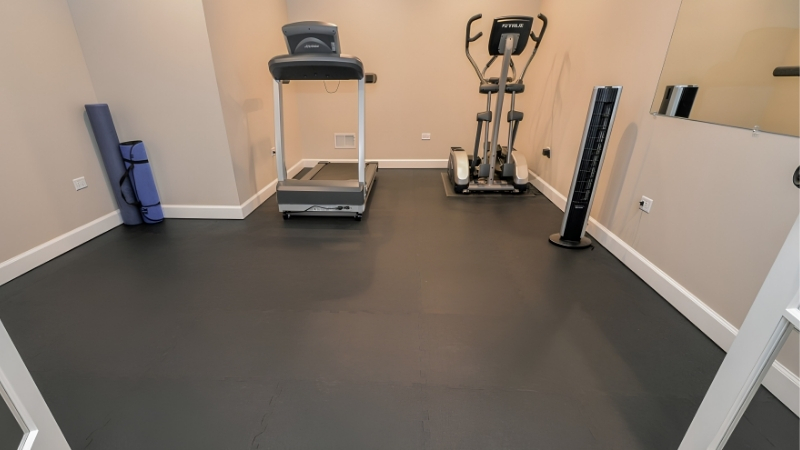
Thickness should match your worst-case load. A 1/2 in (12 mm) surface is fine for cardio, yoga, and bodyweight work. For barbell lifting and dropped loads, step up to 3/4 in (19 mm) recycled rubber, which absorbs impact and shields the subfloor beneath it.
Beware thin foam under heavy iron. EVA puzzle mats at 1/2-1 in (12-25 mm) are cheap and light, but they compress and tear under dropped barbells and dumbbells. Use foam for light training and save dense rubber for anywhere plates hit the floor.
Format: Mats vs Rolls vs Tiles
Stall mats are the lifting standard: 4 x 6 ft (1.2 x 1.8 m), about 3/4 in (19 mm) thick, and roughly 95-100 lb (43-45 kg) each. They are tough and cheap per square foot but heavy to move and leave visible seams you butt together.
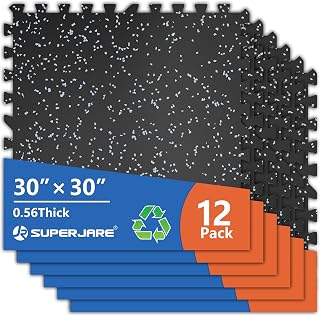
Rubber rolls give a near-seamless surface but are unwieldy and usually cut to fit, while interlocking rubber tiles install like a puzzle for easy DIY, though edges can separate under sliding loads. Match the format to your space and how permanent you want it.
Coverage, Layout, and Footprint
Coverage is where people underestimate. A basic lifting platform runs about 6 x 8 ft (1.8 x 2.4 m), which two to three stall mats cover. Sketch the layout first, accounting for the rack base, door swing, and walking room around the working area.
Leave a small gap around the edges for airflow, especially with fresh recycled rubber. Whether you lay it over concrete, hardwood, or carpet changes how it sits and shifts. Always measure the true area of the room before ordering so you buy the right number of mats.
Odor, Grip, and Subfloor Protection
Recycled rubber off-gasses at first, so a new floor can smell strong for days to a few weeks. Air the room out and wipe the surface down to speed it up. Grip and texture matter too, since a matte, slightly textured top stays sure-footed for lifts and rows.
Under the surface, dense rubber shields hardwood, tile, and concrete from dents and dropped plates. One caution: some rubber can stain light vinyl or LVT over time, so lay a barrier or test a small area first if your subfloor is a pale, soft plank.
Top Picks for the Best Home Gym Rubber Flooring
These six options cover the full range, from heavy stall mats for a lifting platform to light foam tiles for a cardio corner. The table compares format, thickness, and best use before the notes.
| Product | Format | Thickness | Best For |
|---|---|---|---|
| IncStores Rubber Stall Mats | Mats, 4 x 6 ft | 3/4 in (19 mm) | Barbell lifting |
| Rogue Rubber Flooring | Mats / rolls | Up to 3/4 in | Premium builds |
| Rubber-Cal Maxx-Tuff | Protection mat | 1/2 in (12 mm) | Heavy pads |
| American Floor Mats Rubber Rolls | Rolls | 1/4-3/8 in | Seamless cover |
| ProsourceFit Puzzle Mat (EVA) | Foam tiles | 1/2-1 in | Budget cardio |
| BalanceFrom Puzzle Exercise Mat | Foam tiles | 1/2-3/4 in | Light training |
IncStores Rubber Stall Mats
IncStores 3/4 in stall mats are the best home gym rubber flooring for anyone lifting a barbell. Each 4 x 6 ft mat weighs about 95-100 lb (43-45 kg), absorbs dropped plates, and shields the subfloor, and the dense recycled rubber shrugs off years of loading.
The trade-offs are heft and smell: the mats are hard to move alone and off-gas strongly at first. Seams also stay visible where mats meet. For a lifting platform, though, the durability and low cost per square foot are unbeatable.
Rogue Rubber Flooring
Rogue’s rubber mats and rolls are the premium pick, with tight thickness tolerances, clean edges, and a consistent surface that looks and feels a cut above generic stall mats. It suits a showpiece garage gym built to last.
You pay for that finish, and shipping heavy rubber adds cost. Performance under load is excellent, but budget builders can get most of the protection from plain stall mats. Choose Rogue when fit and finish matter as much as function.
Rubber-Cal Maxx-Tuff
The Maxx-Tuff is a thick 1/2 in protection mat aimed at spots that take punishment, such as under a rack, treadmill, or dumbbell drop zone. It is denser than foam, easy to place, and adds a layer of insurance over a nice floor.
It covers a smaller area than full stall mats, so it works best as a targeted pad rather than wall-to-wall flooring. For protecting key impact points without covering a whole room, it is a tidy solution.
American Floor Mats Rubber Rolls
Rubber rolls give the cleanest, most seamless look, and American Floor Mats offers durable options in the 1/4-3/8 in range for cardio areas and light-to-moderate lifting. Rolled flooring covers wide spans with fewer visible joints than mats.
Rolls are heavy and awkward to handle, and cutting to fit takes effort and a sharp blade. At the thinner end they are not ideal for heavy dropped barbells, so pair them with a thicker pad in your drop zone.
ProsourceFit Puzzle Mat (EVA)
These EVA foam puzzle tiles are the budget, lightweight choice for cardio, stretching, and bodyweight work. They interlock in minutes, cushion joints, and lift out just as fast, making them ideal for a multi-use or temporary space.
Foam is the wrong surface under heavy iron: dropped plates dent and tear it, and edges can separate. Keep these to light training and layer denser rubber wherever weights actually hit the floor.
BalanceFrom Puzzle Exercise Mat
BalanceFrom’s foam puzzle mats are another affordable, easy-install option for light workouts, offering comfortable cushioning for floor work and cardio. They are simple to expand tile by tile and store flat when not in use.
Like all foam tiles they compress and mark under heavy loads, so they are not a lifting surface. As a soft, cheap base for a cardio corner, they do the job well.
Frequently Asked Questions
Here are the questions buyers ask most before flooring a home gym.
How thick should home gym rubber flooring be?
For cardio and bodyweight work, 1/2 in (12 mm) is enough. For barbell lifting and dropped loads, use 3/4 in (19 mm) recycled rubber, which absorbs impact and protects the subfloor. Match thickness to the heaviest thing you will drop, not your typical session.
Is rubber or foam better for lifting?
Dense rubber, especially 3/4 in stall mats, is the right surface for lifting because it withstands dropped plates and shields the floor. Foam puzzle tiles compress and tear under heavy iron, so reserve them for cardio, stretching, and light bodyweight training.
Will the best home gym rubber flooring damage my floor underneath?
Quality rubber protects hardwood, tile, and concrete from dents and drops. The one caution is that some rubber can stain light vinyl or LVT over time, so lay a barrier or test a small area first if your subfloor is a pale, soft plank.
How do I get rid of the rubber smell?
New recycled rubber off-gasses for days to a few weeks. Air the room out with a fan or open window, wipe the mats down with mild soap and water, and give them time. The odor fades steadily and is strongest right after unboxing.
See More:
- best ab roller wheel
- best curl barbell
- best ankle straps for cable machine
- What is the best rowing machine
Final Thoughts
The best home gym rubber flooring is the surface that matches your load and covers your space: dense 3/4 in stall mats for barbell lifting, rolls for a seamless span, and light foam tiles for a cardio corner. Sketch your layout, account for the rack and door swing, and always measure the true area of the room before ordering so you buy the right amount and protect the floor you train on.





Write Your Review
No reviews yet. Be the first to share your experience!