
Our Top Picks
To learn how to salt or sugar a cocktail rim, moisten only the outside edge of a clean, chilled glass, press it into a shallow layer of garnish, then let the rim dry for 2–5 minutes before pouring.
What you need for a clean cocktail rim
- Glass: A clean, completely dry rocks, coupe, margarita, or highball glass.
- Garnish: Fine or medium-grain salt, superfine sugar, or a flavored blend.
- Wetting agent: A lime or lemon wedge, citrus juice in a small dish, or simple syrup for a sugar rim.
- Rimming plate: A flat saucer or dedicated rimming tray wider than the glass opening.
- Small towel: Useful for wiping drips from the glass and keeping the work surface dry.
Use about 2 tablespoons of salt or sugar for one glass. A 1/8-inch layer is usually enough for coating, while a deep pile encourages clumps and leaves more garnish unused.
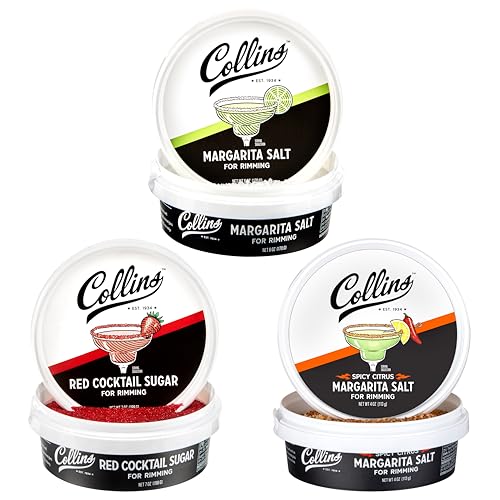
Collins Salt & Sugar Cocktail Rimming Kit – White Margarita Salt, Spicy Citrus Margarita Salt & Red Rimming Sugar – Drink Rimmer Set, Home Bar Accessories, Margarita Gifts
Chosen because it specifies White Margarita Salt and Spicy Citrus Margarita Salt & Red Rimming Sugar.
View on Amazon
KKJCXY Margarita Salt Rimmer Set with Sponge, Glass Rimmer for Cocktails
Chosen because it specifies Glass Rimmer for Cocktails.
View on Amazon
Rokz Lemon Drop & Lime Cocktail Sugar and Salt Rimmerz, 4oz (Pack of 2)
Chosen because it specifies 4oz (Pack of 2).
View on Amazon
Barrel Roll Black Obsidian Cocktail Rimming Salt – All Natural – 8 oz
Chosen because it specifies All Natural and 8 oz.
View on AmazonSalt versus sugar: choose by drink and texture
| Rim material | Best use | Recommended grain | Typical amount per glass | Important limitation |
|---|---|---|---|---|
| Fine sea salt | Margaritas, palomas, savory highballs | 0.3–0.8 mm | 1.5–2 tbsp | Can dissolve quickly if the glass is very wet |
| Flaky or coarse salt | Strong visual contrast and a slower-dissolving bite | 1–3 mm | 2–3 tbsp | Uneven coverage on narrow rims |
| Superfine sugar | Daiquiris, sours, dessert cocktails | 0.2–0.5 mm | 1.5–2 tbsp | Clumps if exposed to juice or humidity |
| Colored or flavored sugar | Sweet cocktails and party presentation | Fine to medium | 2 tbsp | Food coloring and moisture can stain some surfaces |
Fine salt or sugar gives the most continuous coating. Larger crystals create more texture but need a slightly wider, wetter contact area to stay attached.
How to salt or sugar a cocktail rim step by step
1. Clean and dry the glass
Wash the glass, rinse away detergent, and dry the outside and rim with a lint-free towel. Water left on the glass dilutes the wetting agent and makes the garnish slide. Oils from fingers can also prevent an even coating, so hold the glass by its base or lower bowl.
2. Prepare a shallow garnish layer
Pour the salt or sugar onto a flat plate or rimming tray. Spread it into a circle at least 1/2 inch wider than the glass rim. Keep the layer shallow—roughly 1/8 inch deep. A deep pile buries the glass edge and transfers excess material that later falls into the drink.
For a flavored rim, combine the seasoning before wetting the glass. For example, mix 1 tablespoon of fine salt with 1/2 tablespoon of chili powder. Do not add fresh citrus zest directly to a large stored batch: its moisture can make the mixture clump.
3. Wet the correct part of the rim
For a traditional partial rim, cut a small notch in a citrus wedge and run it around one-half to one-third of the outer rim. Keep the cut side in contact with the glass rather than squeezing juice over it.
For a full rim, run the wedge around the complete circumference with light, even pressure. The edge should look glossy, not dripping. If using juice in a dish, dip only the outer edge about 1–2 mm deep. For sugar, simple syrup can provide stronger adhesion, but use a thin film; a heavy coating turns sticky and attracts clumps.
To keep the garnish away from the drink, wet the outside wall and the vertical outer edge, but avoid flooding the inside lip. This creates a cleaner transition between the cocktail and the seasoning.
4. Coat the rim without crushing it
Hold the glass at a slight angle and place the wet edge into the garnish. Rotate the glass slowly through the salt or sugar instead of twisting it forcefully. Gentle rotation coats the surface evenly; pressing down hard pushes wet material into the pile and creates lumps.
For a partial rim, contact only the section that was wetted. For a full rim, make one complete rotation, then lift the glass straight up. A second pass is usually unnecessary and often produces an uneven, oversized band.
5. Tap away loose garnish
Turn the glass upright and tap the base lightly with one finger. Do not knock the rim against the counter, which can crack thin glass and dislodge the coating. Inspect the edge: remove large clumps with a dry fingertip or the corner of a towel before they harden.
6. Dry before pouring
Set the glass upright on a dry surface for 2–5 minutes. Fine salt may be ready in about 2 minutes; sugar or syrup-wetted rims commonly need 5 minutes. Drying lets the garnish adhere instead of sliding down the glass when ice or liquid is added.
If you are preparing several glasses, rim them first and pour the drinks only after the last rim has dried. Pour the cocktail slowly down the center or over an ice cube, not directly onto the seasoned edge.
Decision guide for different situations
| Situation | Best method | Why it works |
|---|---|---|
| First attempt | Citrus wedge plus fine salt on a partial rim | Easy to control and makes uneven coverage less noticeable |
| Several drinks at once | Shallow plate, pre-portioned garnish, 5-minute drying time | Reduces cross-contamination and last-minute clumping |
| Very humid kitchen | Superfine garnish, minimal wetting, immediate use | Limits the time salt or sugar can absorb moisture |
| Decorative dessert cocktail | Thin simple-syrup film and fine sugar | Creates a more uniform, bright coating than juice alone |
| Drink with a strong flavor | Partial rim | Lets the drinker choose how much salt or sugar reaches each sip |
| Maximum garnish coverage | Full rim with medium-grain material | Provides a pronounced texture, though it uses more garnish |
How much garnish will you actually use?
For a 2-tablespoon portion, expect roughly 1 tablespoon to adhere to a typical 2.5–3-inch cocktail rim. The rest remains on the plate, picks up moisture, or falls away during tapping. This is why a shallow layer is more economical than burying the rim in a deep pile.
For four drinks, start with approximately 8 tablespoons of garnish—about 1/2 cup—then discard or separately store any portion that has contacted wet citrus. Do not pour used garnish back into a dry container, because moisture and drink residue shorten its usable life.
Common mistakes that cause clumps or wasted garnish
- Using a dripping wedge: Excess juice dissolves sugar and turns salt into a paste. Squeeze the wedge into the drink separately if more acidity is needed.
- Rimming a warm, wet glass: Condensation behaves like extra liquid. Chill the glass first, then wipe its exterior dry before coating.
- Dipping straight down: This creates a thick ridge and pushes garnish inside the glass. Rotate the edge through a shallow layer instead.
- Using powdered sugar: It absorbs moisture very quickly and can form a sticky film. Superfine granulated sugar is easier to control.
- Coating too early: A rim left exposed for a long period can become damp or lose its crisp texture. A few minutes of drying is useful; an hour is usually excessive.
- Reusing contaminated garnish: Separate fresh garnish from any mixture that touched citrus, syrup, glassware, or a wet countertop.
Cleaning and storage after rimming
Wash the plate or rimming tray promptly, especially after using syrup or flavored blends. Sugar residue attracts moisture and becomes difficult to remove when hardened. Rinse the glass soon after serving; salt and acidic cocktail residue can leave marks if allowed to dry.
Store dry salt or sugar in an airtight container away from steam, sunlight, and the refrigerator. Label flavored mixtures with the preparation date and discard them if they smell stale, show visible moisture, or develop discoloration. Keep separate containers for sweet and savory blends so odors do not transfer.
Quick answer: full rim or partial rim?
Choose a partial rim when you want control over the first sip, less waste, and a balanced cocktail. Choose a full rim when the garnish is central to the drink’s presentation or flavor. Whichever style you use, the dependable sequence is: clean and dry the glass, spread a shallow garnish layer, wet lightly, rotate gently, tap off excess, and dry for several minutes before pouring.










Write Your Review
No reviews yet. Be the first to share your experience!