
Our Top Picks
For most formal occasions in 2026, the best women’s evening gown to own first is a matte stretch-crepe column in a mid-weight fabric — roughly 230–260 gsm — with a full lining, a hidden back zip, and 3–6% elastane, because it covers cocktail through black-tie-optional dress codes while being far more forgiving in fit than structured satin. If the invitation specifies black tie or white tie, the correct step up is a silk-faille or duchesse-satin ball gown with a boned bodice and a floor-sweeping hem. If you want a single dress that spans the widest range of events, a bias-cut satin slip gown with a modest 8–12 inch train is the most versatile purchase you can make.
This guide compares the six specifications that actually decide whether a gown works — fabric weight, stretch content, lining, structure, closure type, and hem allowance — then maps them to dress codes so you can match one dress to one occasion instead of guessing from a photo.

Ever-Pretty Women's Maxi Formal Gowns Sequin Mother of the Bride Dresses
Picked as a relevant option in this category.
View on Amazon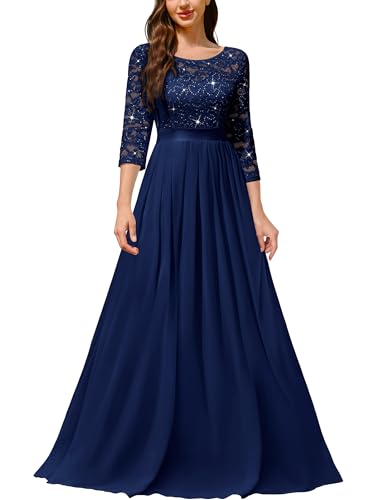
Miusol Women's Classy Scoop Neck Sequin Floral Lace Formal Party Maxi Dress
Picked as a relevant option in this category.
View on Amazon
Ekaliy Women's One Shoulder A Line Maxi Dress for Prom Evening Gown Red
Picked as a relevant option in this category.
View on AmazonQuick comparison: five gown types by dress code and fit risk
| Pick | Best for | Key specs | Typical price range |
|---|---|---|---|
| Matte stretch-crepe column | Best overall; cocktail to black-tie-optional | 230–260 gsm, 4–6% elastane, full acetate lining, 20-inch hidden zip | $180–$420 |
| Silk-faille or duchesse-satin ball gown | Best for black tie and white tie | 280–340 gsm, 0% stretch, 6–10 bones, grosgrain waist tape, horsehair hem | $450–$1,800 |
| Bias-cut satin slip gown | Best for versatility across two or three events | Charmeuse or satin-back crepe, 90–130 gsm, 2–4% stretch, bias panels, 8–12 inch train | $220–$600 |
| Bonded-knit jersey sheath | Best budget option for one event | 200–240 gsm, 8–12% elastane, single layer, no boning | $70–$160 |
| Ruched wrap gown with tie waist | Best for fluctuating or hard-to-grade sizing | Crepe-jersey blend, 6–10% elastane, adjustable tie gives roughly 3 inches of waist range | $150–$380 |
The picks, and who each one suits
Best overall: matte stretch-crepe column
A crepe column in the 230–260 gsm range is the closest thing to a universal gown. The fabric weight is heavy enough to skim rather than cling, and 4–6% elastane buys roughly one size of fit tolerance at the bust and waist, which matters if your bust and hip measurements fall into different sizes on the brand’s chart. Per most manufacturers’ spec sheets, a gown in this class carries a full acetate or cupro lining, a 20-inch concealed zip with a hook-and-eye at the top, and a hem finished with a 1.5–2 inch allowance.
The trade-off: matte crepe photographs flat under direct flash and reads slightly less formal than satin, so it is the right choice for black-tie-optional and cocktail events but not for a white-tie ballroom. It also pills under the arms after repeated wear if the fabric has a high polyester content and you clean it aggressively.
Best for black tie: silk-faille or duchesse-satin ball gown
Structured satins carry no stretch, which is exactly why they hold a sculpted neckline and a defined waist. Look for a bodice with 6–10 vertical bones, a one-inch grosgrain waist tape sewn inside the lining, and a 2–3 inch horsehair braid at the hem — those three details let the dress hold its shape without a bra and stop the hem from collapsing into a limp ring. Faille and mikado are slightly lighter and more matte than duchesse satin; duchesse is the heavier, glossier option and typically sits at the top of the price range.
The trade-off is fit risk. With no stretch, a structured gown has to be altered to your measurements, and a bodice take-in typically runs $60–$180 at a tailor, on top of a $40–$120 hem. Budget for that before you buy.
Best for versatility: bias-cut satin slip gown
A bias-cut slip in satin-back crepe or charmeuse weighs far less than a structured gown — often 90–130 gsm — so it packs flat, resists deep creasing, and works for a destination wedding as easily as a city reception. Because the fabric is cut on the diagonal, it has natural give of 2–4% even without elastane. An 8–12 inch train reads formal; anything longer than 16 inches becomes a handling problem at a seated dinner.
The trade-off: bias-cut satin shows every undergarment line and any fluid retention around the midsection. It is the least forgiving silhouette in this list unless you choose a heavier satin-back crepe over a true charmeuse.
Best budget: bonded-knit jersey sheath
A bonded-knit sheath in the 200–240 gsm range with 8–12% elastane is the cheapest way into a formal look, and the stretch means you can often skip alterations entirely. It is single-layered, so there is no lining to separate or twist, and it machine-washes cold in most cases.
The trade-off is durability and formality. Bonded knits lose recovery after roughly 15–20 wears, the fabric can go shiny at the seat and knees, and a sheath with no boning will not hold a strapless neckline. It is a one-or-two-event dress, not a decade dress.
Best for difficult sizing: ruched wrap gown with tie waist
A wrap or ruched gown with a self-tie waist adjusts across roughly three inches of waist measurement, which is why it suits anyone whose weight fluctuates, anyone between two sizes, and anyone ordering online without a fitting. Ruched side panels also mask the hip-to-waist transition without needing alterations.
The trade-off: ties can work loose over an evening, and ruching adds visual bulk at the hip. Choose a fine, densely gathered ruching over large soft folds if you are pear-shaped.
How to choose: the six specs that decide the dress
| Spec | What to look for | Typical numbers | Why it matters |
|---|---|---|---|
| Fabric weight | Mid-weight crepe, or structured satin/faille | 180–260 gsm (crepe, jersey); 260–340 gsm (satin, faille, mikado) | Below about 160 gsm the dress clings and shows undergarment lines; above 340 gsm satin stands away from the body |
| Stretch content | Elastane or Lycra percentage on the care label | 3–8% in crepe and jersey; 0% in silk satin and faille | About 5% stretch gives roughly one size of fit tolerance at the bust and waist |
| Lining | Full lining, with the bodice lined separately from the skirt | Acetate, cupro, or polyester charmeuse, 60–90 gsm | An unlined satin creases against the body, shows perspiration, and wears the seam allowances faster |
| Structure | Boning, waist tape, horsehair hem | 4–10 bones; 1-inch grosgrain tape; 2–3 inch horsehair braid | Lets a strapless or off-shoulder gown hold shape without a bra |
| Closure | Hidden zip with hook-and-eye, or corset lacing | 16–24 inch zip; lacing adjusts roughly 2–4 inches | Lacing is the only closure that lets you adjust fit on the day of the event |
| Hem allowance | Generous allowance plus a finished facing | 1.5–2 inch allowance; hem sits 0.5–1 cm above the floor in your shoes | Lets a tailor raise or lower the hem by up to 2 inches later without adding fabric |
Two practical rules fall out of that table. First, if you are between sizes, size to your largest measurement — a bodice can be taken in 1–2 inches easily, but letting out more than half an inch is limited by the seam allowance. Second, if the dress code says black tie, do not buy a gown under 260 gsm unless it is a bias-cut satin slip; lighter fabrics read as cocktail in photographs.
The fit math: sizing, hem, and cost per wear
Evening gowns are graded in roughly 2-inch increments between sizes, and most brands run true to their own chart rather than to a universal one, so measure your bust, natural waist, and hip and compare all three against the specific brand’s numbers. A dress that fits the bust but is 3 inches tight at the hip will not stretch into place in a woven fabric.
Hem length is simpler arithmetic than it looks. Most floor-length gowns are cut to sit at the floor in a 2-inch heel. If you plan to wear 3-inch heels, the hem rises about an inch off the floor, which is ideal. If you plan to wear flats, the same gown will drag by roughly 2 inches and will fray within one or two wears — so either commit to heels or budget $40–$120 for a hem.
Cost per wear is where the budget pick stops looking cheap. A $340 crepe column worn six times over three years, dry cleaned three times at about $32, comes to $436 total, or roughly $73 per wear. A $120 knit sheath worn twice with two $24 cleanings comes to $168 total, or $84 per wear. The more expensive gown wins as soon as you will realistically wear it more than four times.
Ownership realities: what wears out first
- Hems go first. The back hem scuffs against pavement and car doors. A 2-inch allowance means a tailor can cut away the damage once.
- Beading and sequins shed thread, not beads. On tulle and mesh, the stitching fails before the embellishment does. Never hang a beaded gown by its straps — use a padded hanger through the inner waist tape.
- Satin water-spots permanently. Silk and acetate satin mark if you dab a spill. Blot, do not rub, and take it to a cleaner rather than treating it at home.
- Crepe pills under the arms after repeated friction. A fabric shaver handles it, but aggressive cleaning accelerates it.
- Dry cleaning is not free maintenance. Most gowns need cleaning every two to four wears, at $25–$45 per visit, and beaded gowns cost more.
- Store in breathable cotton, not plastic. Plastic bags trap solvent residue and moisture, which yellows silk and dulls satin over a season.
Frequently Asked Questions
Is a stretch crepe gown formal enough for a black-tie wedding?
It depends on the venue. A matte crepe column in the 230–260 gsm range is generally accepted at black-tie-optional events and modern black-tie weddings, but traditional white-tie or ballroom black-tie dress codes call for a structured satin or faille gown with a boned bodice. If the invitation says “black tie” without qualification, choose the structured fabric.
Should I size up or down in an evening gown?
Size to your largest measurement — usually the hip or the bust — because a tailor can take a bodice in 1–2 inches far more easily than letting a seam out. If you are between sizes in a fabric with 5% or more elastane, the smaller size often works; in a woven satin or faille with no stretch, take the larger size.
How much should I budget for alterations?
As a general market range, a hem runs $40–$120, a bodice take-in $60–$180, and strap or sleeve adjustment $80–$250. A structured satin gown with boning almost always needs at least a hem, so add $100–$250 to the sticker price when comparing options.
How often does an evening gown need dry cleaning?
Every two to four wears for a lined gown, and after every wear for anything beaded, sequined, or worn in a hot or smoky room. Between cleanings, air the dress overnight and spot-blot rather than rubbing. Over-cleaning wears fabric faster than wearing it does.
Can I wear the same gown to two events in one season?
Yes, and it is the fastest way to lower cost per wear. Change the styling rather than the dress — a bias-cut slip gown reads differently with a structured jacket, a shawl, or different jewelry. If the two events share guests, keep the silhouettes far apart: a column one night and a ball gown the next.
What length is correct for a black-tie-optional dress code?
Floor-length is always safe, but a formal midi that falls between mid-calf and ankle is widely accepted for black-tie-optional. Avoid knee-length unless the event is explicitly cocktail. If you are unsure, a floor-length gown with a 1–2 inch heel clearance sits in the safest middle ground.










Write Your Review
No reviews yet. Be the first to share your experience!