
Our Top Picks
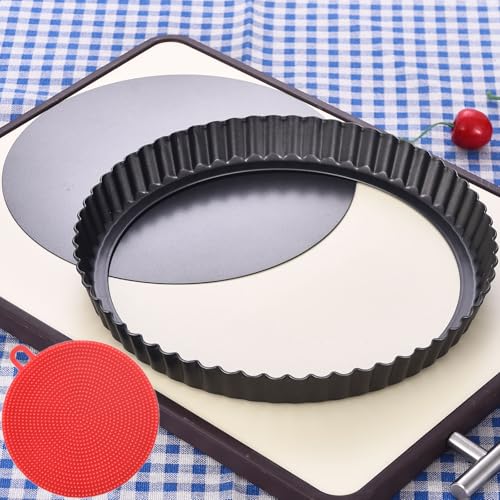 DATANYA Tart Pan 9 Inch Tart Pans Removable9.5 X 1.2 Inch9.5 x 9.5 x 1.2 inches0.9 poundsCheck on Amazon
The best tart pan with removable bottom for most home bakers is a 9-inch, 1-inch-deep aluminum pan with a firm-fitting loose base, rolled rim, and a light nonstick coating; it offers the most useful balance of crust capacity, even browning, easy release, and manageable storage.
A removable bottom is valuable because you can lift the finished tart out without turning it upside down. That matters when the crust is thin, the filling is soft, or the tart has a decorative top that could crack during unmolding. However, not every loose-bottom pan performs equally well. The important differences are diameter, metal thickness, coating quality, how precisely the base fits, and whether the joint allows butter or liquid filling to escape.

FIDZ PAN Tart Pan 9 Inch Removable Bottom- Carbon Steel Quiche Pan, Rust & Temperature Resistant Quiche Baking dish 550-600 °F- Non-Stick, Sturdy & Dishwasher Safe- Perfect for Baking Tarts
Chosen because it specifies Sturdy & Dishwasher Safe- Perfect for Baking Tarts.
View on Amazon
Wilton Excelle Elite Non-Stick - Non-Stick Tart and Quiche Pan with Removable Bottom, 9-Inch, Steel
Chosen because it specifies Non-Stick Tart and Quiche Pan with Removable Bottom and 9-Inch.
View on AmazonDATANYA Tart Pan 9 Inch Tart Pans Removable Bottom, Non-Stick Quiche Pan Carbon Steel Heavy Duty Pie Pan 9 Inch Tart Pan Loose Bottom, extra high of 1.2 Inches
Chosen because it specifies extra high of 1.2 Inches.
View on Amazon
Patz&Patz Classic Tart Pan 9 Inch Removable Bottom with Patented Silicone Crust Shaper | Nonstick Carbon Steel Quiche Baking Dish, Fruit Tart Molds for Baking, Quiche Pan & Pie Mold - PFOA & PTFE-Free
Chosen because it specifies Nonstick Carbon Steel Quiche Baking Dish and Fruit Tart Molds for Baking.
View on AmazonBest tart pan with removable bottom: the specifications that matter
For a first pan, choose a 9-inch diameter and approximately 1 inch of side-wall depth. This size is large enough for a standard tart recipe but small enough to fit comfortably in most ovens and cabinets. A 10- or 11-inch pan is useful for entertaining, although larger pans make thinner crusts and often require recipe adjustments.
| Pan type | Typical diameter | Metal thickness | Approximate weight | Best use | Main compromise |
|---|---|---|---|---|---|
| Lightweight coated aluminum | 9 inches | 0.6–0.8 mm | 6–9 oz | Occasional baking and easy handling | More likely to warp or dent |
| Heavy-gauge aluminum | 9 inches | 1.0–1.5 mm | 9–14 oz | Frequent pastry baking and even browning | Usually costs more |
| Carbon steel with coating | 9–10 inches | 0.8–1.0 mm | 12–18 oz | Firm structure and crisp edges | Can brown darkly and needs careful cleaning |
| Fluted nonstick steel | 9–11 inches | 0.7–1.0 mm | 10–16 oz | Decorative edges and occasional use | Flutes make cleaning and release more demanding |
Why heavy-gauge aluminum is the safest all-round choice
Aluminum transfers heat quickly, helping the bottom and sides of a pastry shell bake before the butter in the dough has a chance to melt excessively. A heavy-gauge version also resists twisting when you lift the removable base. This combination makes it particularly forgiving for shortcrust pastry, pâte sucrée, and blind-baked shells.
Very thin aluminum pans are not automatically poor. They are light and can release pastry well, but their rims may bend after being knocked against a counter or washed in a crowded sink. A bent rim can create an uneven gap around the base, which increases leakage and makes the insert feel loose.
Steel provides more rigidity, but it usually heats more slowly and may produce darker edges. If you prefer a pale, tender crust, heavy-gauge aluminum is generally easier to manage. If you want pronounced browning and a pan that feels exceptionally sturdy, coated carbon steel is a reasonable alternative.
Nonstick coating: useful, but not the whole answer
A nonstick coating helps delicate crusts slide away from the fluted wall, especially when the dough contains little extra fat. It does not compensate for a poorly fitted base. A pan with a flawless coating but a loose insert can still leak butter or custard.
Look for a smooth, continuous coating on the interior, flutes, rim, and removable base. Chips, exposed metal, rough patches, and uneven coating near the base are warning signs. Dark coatings can make browning harder to judge, so check the underside of the crust rather than relying only on color at the edge.
- Use silicone, wood, or nylon tools rather than a knife to loosen the crust.
- Wash by hand with a soft sponge, even when the manufacturer permits a dishwasher.
- Do not stack unprotected metal pans inside one another.
- Avoid aerosol baking sprays if they leave a sticky residue on the coating.
- Replace a pan when the coating is peeling, not merely when it has light surface scratches.
Removable-base fit and leak resistance
The base should sit level and require light, even pressure to insert. It should not rattle, rock, or fall through the ring when the pan is held upside down. A small amount of clearance is necessary because metal expands in the oven, but a visible crescent-shaped gap around one section of the base is a poor sign.
Most loose-bottom tart pans are not designed to be completely watertight. They are excellent for dough-based shells, but unbaked liquid custards can leak through the seam. A water bath is especially unsuitable unless the pan is wrapped securely and the design specifically supports that use.
A simple fit check before baking
- Insert the base and place the empty pan on a sheet of parchment.
- Pour in 120 milliliters of water, roughly ½ cup.
- Wait for five minutes and inspect the parchment underneath.
- Empty and dry the pan completely before using it with pastry.
This test does not prove that the pan is watertight at oven temperature, but it reveals an obviously poor fit. For a liquid filling, blind-bake the crust first, cool it, brush the inside with melted chocolate or egg wash if appropriate for the recipe, and place the filled pan on a preheated baking sheet. The sheet catches minor drips and supplies extra bottom heat.
Which size should you buy?
A 9-inch pan generally holds about 5 to 6 cups of filling when filled conservatively below the rim. An 8-inch pan creates a thicker filling and deeper-looking slice, while a 10-inch pan spreads the same recipe into a thinner layer and may shorten the baking time.
To adapt a recipe between round pans, compare surface area rather than diameter alone. The area is calculated as π × radius². A 10-inch pan has about 23% more surface area than a 9-inch pan:
9-inch area: 3.14 × 4.5² = approximately 63.6 square inches.
10-inch area: 3.14 × 5² = approximately 78.5 square inches.
That means a recipe designed for a 9-inch pan should be increased by roughly 23% for the same filling depth in a 10-inch pan. For a 10-inch tart, multiply each ingredient by 1.23, or accept a shallower tart and begin checking it earlier.
Decision matrix: choose by baking situation
| Your situation | Recommended specification | Why it fits |
|---|---|---|
| First tart pan and limited budget | 9-inch coated aluminum, 0.8–1.0 mm | Light, versatile, and usually available at a general market price of about $12–$25 |
| Baking twice a month or more | 9-inch heavy-gauge aluminum, 1.0–1.5 mm | Better resistance to warping and more predictable heat distribution |
| Very delicate pastry | Smooth-coated pan with a rounded rim and precisely fitted base | Minimizes tearing while lifting the tart from the ring |
| Small kitchen or shallow storage | 8- or 9-inch pan with a removable base | Fits most shelves and requires less filling than a large entertaining pan |
| Deep custard or cheesecake-style tart | 9- or 10-inch pan at least 1.25 inches deep | Provides headroom and reduces spillover during transfer |
| Maximum crust browning | Coated carbon steel or darker steel, used with recipe adjustments | Produces stronger browning but requires closer monitoring |
How delicate crusts release successfully
Even the best tart pan cannot rescue underbaked pastry. Let the shell cool until it is firm but not cold, then place the pan on a stable jar or small can that is narrower than the removable base. Gently lower the outer ring. Do not push the base upward with your fingers while holding the tart by its edge; that concentrates stress on the weakest part of the crust.
For especially fragile dough, chill the shaped shell for at least 20 minutes before baking. Press the dough firmly into the flutes without stretching it, leave a slightly thicker layer at the corners, and trim the rim only after the dough has been chilled. These steps reduce shrinkage and help the finished shell retain its shape.
Ownership realities and common mistakes
The removable base and the coating are the parts most likely to cause problems over time. The base can bend if it is used as a cutting surface, while the coating can wear from metal utensils, abrasive cleaners, and repeated dishwasher cycles. Store the base inside the ring with a cloth or paper towel between pans if you own several.
Do not lift a hot tart by the removable base alone. The base may flex while the crust is still soft. Do not cut directly in the pan, and do not use a leaking pan for a completely liquid mixture without a protective baking sheet and a method suited to the recipe.
Final verdict
Choose a 9-inch heavy-gauge aluminum tart pan with a smooth nonstick interior, a level removable base, a rolled rim, and approximately 1 inch of depth if you want one reliable pan for most recipes. A lighter coated aluminum pan is adequate for occasional baking and costs less, while coated carbon steel is preferable when rigid construction and deeper browning matter more than forgiving heat behavior. Whichever style you choose, inspect the base fit before the first bake and treat the coating gently; those two details have more influence on long-term performance than decorative fluting or an unusually low price.










Write Your Review
No reviews yet. Be the first to share your experience!