
Our Top Picks
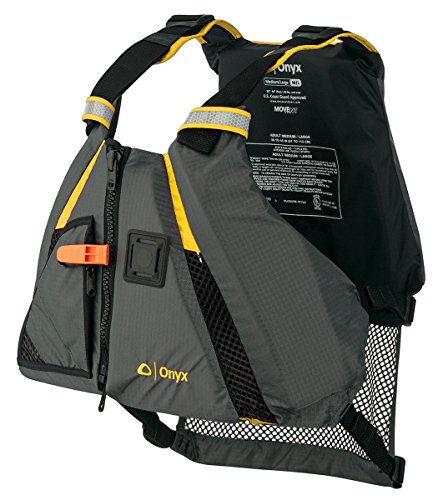 Onyx MoveVent Dynamic Paddle Vest Adult Life JacketMedium-Large23 x 20 x 4 inches1.7 PoundsCheck on Amazon
The best kayak life vests combine a properly rated flotation aid with unrestricted paddle movement, secure adjustment, useful storage, and enough ventilation for the way you sit and paddle. For most recreational and touring kayakers, a Type III adult personal flotation device (PFD) with at least 15.5 lb of buoyancy, a high-back design, and four or more adjustment points is the most versatile choice.
Best kayak life vests by paddling situation
| Best for | Recommended type | Useful target specifications | Why it fits the situation |
|---|---|---|---|
| General recreational kayaking | High-back Type III vest | 15.5–17 lb buoyancy; 4 adjustment points; 1–2 pockets | Balanced comfort, flotation, and affordability |
| Hot weather and frequent paddling | Ventilated low-profile vest | Mesh panels; 1.0–1.8 lb garment weight; 15.5–16.5 lb buoyancy | Reduces heat and bulk around the torso |
| Fishing from a sit-on-top kayak | Fishing-specific PFD | Two or more zippered pockets; 15.5–17 lb buoyancy; durable nylon shell | Provides organized access to small tackle and tools |
| Cold water or long touring trips | Touring or rescue-oriented PFD | 17–22 lb buoyancy; fleece-lined hand warmers; multiple adjustment points | Offers more storage and a secure fit for changing conditions |
| Small cockpit or high-back kayak seat | Low-profile, high-back PFD | Back flotation below the shoulder blades; thin lower back panel | Minimizes interference with the seat back and cockpit rim |
Our top choices among the best kayak life vests
Best all-around: NRS Chinook
The NRS Chinook is a strong all-purpose choice for anglers and recreational paddlers who want useful storage without a very bulky front. Its high-back construction is designed to clear many kayak seats, while multiple adjustment points help prevent the vest from riding up during a wet exit or swim. The fishing-oriented layout typically includes large front pockets, attachment points, and a tool-friendly organization system.
Onyx MoveVent Dynamic Paddle Vest Adult Life Jacket, USCG/TC Approved
Chosen because it specifies USCG/TC Approved.
View on Amazon
JKSPORTS Fly Fishing Vest Fishing Safety Life Jacket for Swimming Sailing Boating Kayak Floating Multifunction Breathable Backpack for Men and Women Kayak Vest Swim Vest (Orange,with Foam)
Chosen because it specifies with Foam).
View on Amazon
JKSPORTS Fly Fishing Vest Fishing Safety Life Jacket for Swimming Sailing Boating Kayak Floating Multifunction Breathable Backpack for Men and Women Kayak Vest Swim Vest (Army Green,with Foam)
Chosen because it specifies with Foam).
View on Amazon
Owntop Women & Men Swim Vest for Kayaking & Paddle Sports, Adjustable Swimming Vest for Adult, Large Armhole Swim Jacket with Waist Strap for Fishing & Boating (Orange, XL/XXL)
Chosen because it specifies Adjustable Swimming Vest for Adult and XL/XXL).
View on AmazonChoose it when pocket capacity matters as much as paddling comfort. It is less appealing if you prefer the lightest possible vest or paddle in very hot weather, because a storage-heavy design adds fabric and insulation around the torso.
Best for hot-weather mobility: Astral V-Eight
The Astral V-Eight is built around airflow and a relatively low-profile fit. Its front ventilation system and lightweight construction make it attractive for warm climates, humid conditions, and paddlers who dislike a vest pressing against the chest. A compact profile can also make torso rotation feel less restricted on long forward strokes.
This style is best for paddlers who carry essentials in a dry bag or deck bag rather than relying on large vest pockets. Check the sizing carefully: a very loose ventilated vest can shift, while an overly tight one defeats the comfort advantage.
Best value for casual use: Onyx MoveVent Dynamic
The Onyx MoveVent Dynamic is a practical option for occasional lake, river, and calm coastal trips. Its mesh sections and high-back shape suit many recreational kayak seats, and its adjustable side and shoulder straps make it easier to achieve a stable fit across different layers. It generally costs less than premium touring and fishing designs, making it sensible for a household that paddles a few times each season.
Its simpler pocket arrangement and basic materials are trade-offs rather than defects. If you paddle weekly, spend long days on exposed water, or need rescue-specific features, a more specialized vest may justify its higher general market price.
Best for fishing storage: Stohlquist Fisherman
The Stohlquist Fisherman is aimed at anglers who want a PFD and tackle organizer in one garment. Its pocket layout is more useful than a single oversized pouch: separate compartments can keep pliers, line cutters, small boxes, and a phone from becoming one tangled load. High-back flotation is generally more compatible with kayak seats than a full-length foam back.
Before buying, sit in your kayak with the vest on. A heavily loaded front pocket can press into the abdomen, alter your paddle posture, or make re-entry more awkward. Storage is useful only when it remains balanced and does not interfere with movement.
What specifications matter most?
Flotation rating
Most adult kayak PFDs are Type III recreational flotation aids with approximately 15.5 lb or more of buoyancy. This rating does not guarantee that an unconscious person will turn face-up, and it is not a substitute for staying with your kayak, wearing the vest continuously, or choosing equipment appropriate for the water.
Higher-buoyancy rescue and touring models can provide more reserve, but they are often thicker and warmer. Foam PFDs are ready to provide buoyancy as soon as they are correctly worn; inflatable models have different limitations, maintenance requirements, and activation procedures and are not suitable for every paddling environment.
Fit and adjustment
Look for at least four adjustment zones: shoulders, sides, and waist or torso. Put the vest on over the clothing you normally paddle in, tighten the waist first, and then adjust the shoulders and sides evenly. A properly fitted vest should feel close to the body without restricting breathing or arm movement.
Use the lift test: ask another person to pull upward firmly on the shoulder straps. The vest should not slide over your chin or face. If it rides up, tighten the adjustments or choose a different size or shape.
Mobility and kayak-seat compatibility
High-back PFDs place much of the lower-back foam above the kayak seat, reducing conflict with a tall seatback. Low-profile backs can work better in narrow cockpits, while a sit-on-top kayak gives you more freedom to use a fuller back panel. In a low-seat touring kayak, bulky front foam can be more noticeable than the back panel because it affects forward lean and torso rotation.
Try three positions before deciding: upright, forward-leaning for a strong stroke, and rotated as if looking behind the kayak. The vest should not catch on the seat, cockpit rim, spray skirt, or shoulder straps.
Ventilation and pocket layout
Mesh panels improve airflow but do not make a vest cool in every condition. Dark fabric, a tight fit, and large closed pockets can still trap heat. For warm-weather paddling, prioritize open mesh at the sides and upper back, a thin front profile, and pockets that do not cover the entire chest.
For storage, two moderate pockets are usually more practical than one deep pouch. Keep heavy items low and close to the body. A phone should be inside a separately waterproof case even when placed in a zippered PFD pocket.
Decision matrix: match the vest to your use
| Your priority | Choose | Avoid |
|---|---|---|
| Lowest reasonable cost and occasional outings | Basic Type III vest with mesh and four adjustment points | Paying for fishing storage you will not use |
| Weekly paddling in warm weather | Lightweight ventilated vest with a thin front panel | Heavy fleece-lined or pocket-heavy designs |
| Fishing from a stable sit-on-top kayak | Angling PFD with balanced, zippered pockets | Overloading one front pocket |
| Narrow cockpit or tall seatback | High-back, low-profile model | Full-length thick foam behind the lower back |
| Cold, moving, or remote water | Touring or rescue-capable PFD with secure hardware | A loose recreational vest selected only by price |
Durability and ownership costs
Shoulder and side straps usually show wear before the flotation foam does. Repeated tightening can fray webbing, while salt, sunscreen, sand, and ultraviolet exposure can degrade fabric, buckles, and zipper operation. A vest used twice a month for three years sees roughly 72 outings; a vest used twice a week through a six-month season can exceed 100 outings in one year. Frequency and storage conditions matter more than the purchase price alone.
After each trip, rinse the vest with fresh water, especially after saltwater use. Hand-wash it with mild soap when needed, rinse thoroughly, and hang it in a shaded, ventilated place. Do not machine-dry it, bleach it, iron it, or leave it compressed in a hot vehicle. Inspect the foam for cuts or hardening, test every buckle, and check that stitching and adjustment straps remain secure.
Replace a PFD if the flotation foam is damaged, waterlogged, badly compressed, or no longer fits securely. Do not sew through flotation panels or modify the vest to add hardware unless the manufacturer specifically permits it. Store it loosely rather than folded under heavy gear.
Final buying advice
For the widest range of kayak seating positions, start with a high-back Type III vest, at least 15.5 lb of buoyancy, four or more adjustment points, and enough ventilation for your climate. Choose the NRS Chinook or Stohlquist Fisherman when organized fishing storage is central to your trips, the Astral V-Eight when airflow and mobility come first, and the Onyx MoveVent Dynamic when you want a functional option for occasional recreational use.
Most importantly, try the vest in your actual kayak while wearing your normal clothing. A model that looks comfortable standing in a shop may press against the seat, ride up, or restrict rotation once you are seated. Fit, continuous wear, and condition-appropriate equipment matter more than a long feature list.









Write Your Review
No reviews yet. Be the first to share your experience!