
Our Top Picks
Best Hydraulic Conduit Benders for Accurate, Efficient Bends
The best hydraulic conduit bender for most electrical contractors is a 1/2- to 2-inch electric-hydraulic model with interchangeable dies, while a hand-pump bender suits occasional work and a larger 2- to 4-inch machine is the better choice for industrial or infrastructure projects.
Hydraulic assistance reduces the physical effort required to bend rigid metal conduit (RMC), intermediate metal conduit (IMC), and larger electrical metallic tubing (EMT). The right choice depends less on maximum force alone than on the conduit sizes you install, how often the bender travels, whether power is available, and whether the supplied die set matches your daily work.
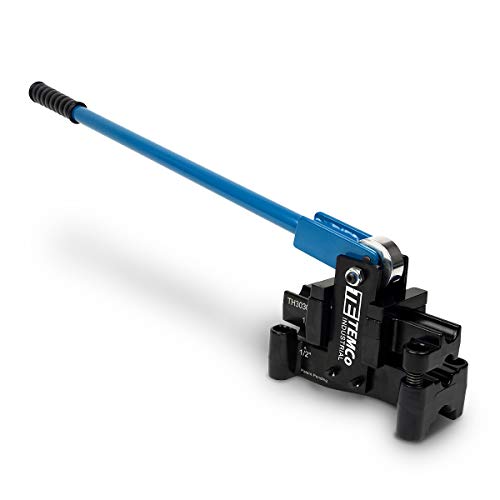
TEMCo TH3030 Dual Size Conduit Offset Bender 2 in 1 - both ½“& ¾” EMT
Chosen because it specifies both ½“& ¾” EMT.
View on Amazon
TEMCo TH3031 Dual Size Hydraulic Conduit Offset Bender Both 1" & 3/4" EMT
Picked as a relevant option in this category.
View on Amazon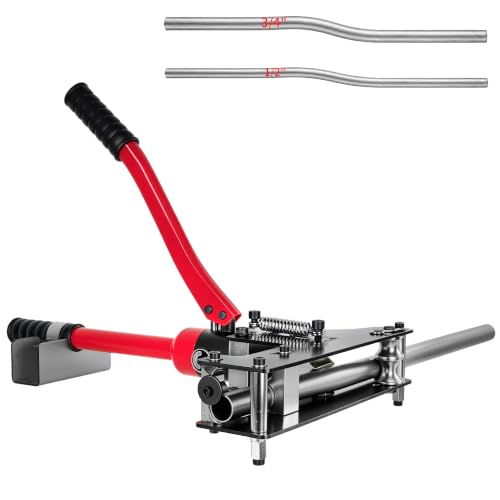
Hydraulic Dual Size Conduit Offset Bender - EMT Bender Tool for 1/2″ & 3/4″
Chosen because it specifies EMT Bender Tool for 1/2″ & 3/4″.
View on Amazon
LookFox Conduit Bender, Adjustable Offset 12~14.3mm(9/16in), Green
Chosen because it specifies Adjustable Offset 12~14.3mm(9/16in) and Green.
View on AmazonBest Hydraulic Conduit Benders by Jobsite Need
| Jobsite situation | Best bender type | Useful capacity | Typical working weight | Why it fits |
|---|---|---|---|---|
| Service work and occasional repairs | Manual hydraulic bender with hand pump | 1/2–2 in. EMT, IMC, and RMC | Approximately 70–130 lb, depending on dies | No electrical supply required and lower purchase cost |
| Frequent commercial installation | Electric-hydraulic 1/2–2 in. bender | 1/2–2 in. EMT, IMC, and RMC | Approximately 140–190 lb | Repeatable bends with much less pumping and faster production |
| Large rigid conduit and industrial work | Heavy-duty hydraulic bender | 2–4 in. conduit, depending on die set | Approximately 250–400 lb | Higher ram capacity and larger shoes handle thick-wall conduit |
| Remote work with no dependable power | Self-contained hand-pump model | Usually 1/2–2 in. | Approximately 90–150 lb | Operates without a generator, battery, or extension cord |
Weights vary with the frame, pump, motor, and included shoes. Treat the table as a selection guide rather than a specification for a particular configuration.
Top Choices and What They Do Best
Greenlee 881-series electric-hydraulic benders: best all-around contractor choice
The Greenlee 881 family is a strong fit for contractors who regularly bend conduit in the common 1/2- to 2-inch range. Configurations are available for combinations of EMT, IMC, and rigid conduit, so the die package matters as much as the machine itself. An electric-hydraulic design provides consistent ram pressure and is more efficient than a manual pump during a day of repeated offsets, saddles, and 90-degree bends.
Choose an 881-series configuration when portability still matters but productivity matters more. Its limitations are typical of this class: the frame and die set are heavy for one person, and a model equipped for one conduit standard may not include every shoe needed for another. Confirm whether the package includes EMT, IMC, rigid, or metric dies before comparing prices.
Greenlee 855GX: best for frequent production bending
The Greenlee 855GX is designed for regular field use where speed, repeatability, and reduced operator fatigue justify a larger machine. It is commonly configured for conduit in the 1/2- to 2-inch range and uses interchangeable bending shoes for different conduit types. Its hydraulic drive is useful when crews must produce many accurate bends rather than complete only a few repairs.
This style of bender is less attractive for small service vans or stair-access jobs. The purchase cost, storage footprint, and transport effort are higher than for a compact hand-pump unit. It becomes easier to justify when several bends are made every day and labor saved is worth more than the additional equipment cost.
Manual hydraulic 1/2- to 2-inch benders: best value for occasional use
A manual hydraulic conduit bender with a separate hand pump is often the sensible budget choice for maintenance departments, apprentices building a tool inventory, and contractors who bend larger conduit only a few times each month. These machines can deliver substantial force without a motor or battery, and many use replaceable shoes covering common EMT, IMC, and rigid sizes.
The trade-off is slower operation. Pumping takes time, the operator must hold alignment carefully, and repeated bending can become tiring. A manual unit is also more dependent on stable positioning because the frame may shift if it is not secured on a level surface.
Heavy-duty 2- to 4-inch hydraulic benders: best for industrial conduit
Industrial installations often require conduit larger than the standard 2-inch contractor range. A heavy-duty hydraulic bender with 2-, 2 1/2-, 3-, and 4-inch shoes is the appropriate category for that work. These machines are substantially heavier and frequently need two-person handling, a cart, or mechanical assistance.
Do not buy a large-capacity bender merely for its headline maximum. A 4-inch machine may be inefficient for everyday 3/4-inch EMT because the frame, setup, and die changes add unnecessary handling. Match the bender to the sizes that account for most of your actual bends.
Five Buying Criteria That Matter More Than Maximum Force
1. Conduit-size and material compatibility
Check each die, not just the product name. EMT, IMC, and RMC have different outside dimensions and wall characteristics, so a shoe intended for one type may produce poor results or be unsafe for another. Metric conduit also requires the correct metric shoe. A package advertised as “1/2 to 2 inches” may cover only selected conduit types within that range.
2. Hydraulic power and control
Electric-hydraulic models are productive because the motor supplies repeated ram strokes, but they require a suitable power source and protected jobsite setup. Hand-pump models work in remote locations and are mechanically simpler. Look for controlled advance and release, a pressure-relief system, and a ram that returns smoothly rather than jerking at the end of a bend.
3. Portability
Consider the complete transport weight: frame, pump, motor, shoes, carrying case, and any stand. A bender weighing 160 pounds may be manageable with two workers but impractical for daily solo loading. Wheels, lifting handles, a compact frame, and a storage system for dies can matter more than a small difference in hydraulic capacity.
4. Included dies
Die sets are expensive and can change the real cost of ownership. A contractor working mainly with 3/4-inch and 1-inch EMT should prioritize those shoes over a package that includes an uncommon large size. Confirm whether the machine includes a follow bar, roller, degree scale, bending chart, and storage rack. Missing accessories can turn an apparently inexpensive bender into a costly upgrade.
5. Frame and component durability
Look for a rigid steel frame, accurately machined pivots, protected hydraulic fittings, and shoes made from durable cast or machined metal. The first parts to show wear are commonly pivot pins, rollers, shoe contact surfaces, hydraulic seals, and power-cord connections. A reputable manufacturer with replacement shoes and seal kits can be more valuable than a lower initial price.
Decision Matrix: Which Type Should You Buy?
| Your priority | Recommended direction | Avoid |
|---|---|---|
| Lowest initial cost | Manual hydraulic 1/2–2 in. unit | Large electric model with unused dies |
| Several dozen bends per week | Electric-hydraulic 1/2–2 in. bender | Hand-pump equipment that slows the crew |
| Limited storage or van space | Compact frame with a focused die set | 4-inch industrial frame unless required |
| Mixed EMT, IMC, and RMC work | Model with clearly labeled interchangeable shoes | Single-material bender with ambiguous compatibility |
| Remote or unfinished jobsites | Hand-pump model or compatible battery-powered system | Corded electric equipment without a reliable power plan |
Ownership Costs and a Simple Payback Check
Suppose a manual bender saves about $1,000 compared with an electric-hydraulic model, but it adds 8 minutes to each completed bend. At 25 bends per week, that is approximately 3.3 hours of extra labor weekly. At a loaded labor cost of $60 per hour, the difference is about $198 per week. Under those conditions, the higher-priced electric model could recover the price gap in roughly five weeks of productive work.
This calculation is only useful when the crew is consistently making that many bends. For ten bends per month, the time savings may not justify the heavier equipment, motor maintenance, and transport requirements.
Setup and Maintenance for Accurate Bends
- Inspect the shoe, roller, pins, and ram before use. Remove grit that could prevent the conduit from seating fully.
- Verify the shoe matches the conduit type and size. Do not force conduit into a close but incorrect die.
- Place the bender on a level, stable surface and support long conduit so its weight does not pull the bend out of alignment.
- Mark the conduit using the correct take-up and deduction information for the shoe and bend angle.
- Advance the ram gradually and watch the degree indicator. Stop at the required angle instead of relying on the hydraulic relief point.
- After use, wipe metal dust and moisture from the frame and shoes. Inspect hydraulic hoses and fittings for leaks, and keep the ram retracted during storage.
Common mistakes include using an EMT shoe on rigid conduit, bending dirty or dented conduit, overloading the frame with unsupported long stock, and storing the machine with hydraulic pressure applied. Follow the manufacturer’s lubrication intervals and hydraulic-fluid specification; incompatible fluid can damage seals.
Final Recommendation
For most commercial electrical work, choose a reputable electric-hydraulic 1/2- to 2-inch bender such as an appropriately configured Greenlee 881-series or 855GX. Choose a manual hydraulic model when use is occasional, power is uncertain, or purchase cost is the main constraint. Move to a heavy-duty 2- to 4-inch hydraulic bender only when large rigid conduit is a regular part of the workload. In every case, compare the included die set, total transport weight, replacement-part support, and material compatibility—not just the maximum conduit size.









Write Your Review
No reviews yet. Be the first to share your experience!