
Our Top Picks
The best drones under $500 are the DJI Mini 3 for image quality, the DJI Mini 4K for value, and the Potensic ATOM for buyers who want a three-axis gimbal without moving into premium pricing.
Quick picks for different buyers
- Best overall camera: DJI Mini 3, especially for portraits, travel, sunsets, and vertical social video.
- Best low-cost beginner option: DJI Mini 4K, with reliable automated flight modes and a mechanical gimbal at a relatively modest price.
- Best DJI alternative: Potensic ATOM, which combines a 4K camera, three-axis stabilization, and a compact sub-250-gram aircraft.
- Best for simple recreational flying: DJI Mini 4K with the standard controller and one spare battery.
- Best value bundle: A package that includes three batteries, a charging hub, spare propellers, and a carrying case—provided its total price remains below $500.
Best drones under 500: head-to-head comparison
Prices vary by bundle and seasonal discount, so the ranges below describe typical market positioning rather than a guaranteed selling price. Battery figures are manufacturer estimates; wind, cold weather, aggressive flying, and repeated video recording reduce practical flight time.
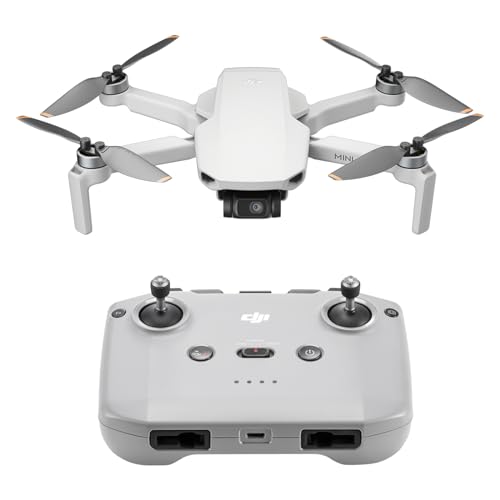
DJI Mini 4K, Drone With 4K UHD Camera, Under 249 g
Chosen because it specifies Drone With 4K UHD Camera and Under 249 g.
View on Amazon
DJI Mini 4K Fly More Combo, Drone with 4K UHD Camera for Adults, Under 249 g, 3-Axis Gimbal Stabilization, 10km Video Transmission, Auto Return, 3 Batteries for 93-Min Max Flight Time, QuickShots
Chosen because it specifies Drone with 4K UHD Camera for Adults and Under 249 g.
View on Amazon
Potensic ATOM SE GPS Drone with 4K EIS Camera, Under 249g, 62 Mins Flight, 4KM FPV Transmission, Brushless Motor, Max Speed 16m/s, Auto Return, Lightweight and Foldable Drone for Adults Beginner
Chosen because it specifies Under 249g and 62 Mins Flight.
View on Amazon
Ruko Drone with Camera for Adults 4K Video & 8K Photo, 96 Mins Flight Time
Chosen because it specifies 96 Mins Flight Time.
View on Amazon| Drone | Camera and stabilization | Practical flight time | Transmission range | Obstacle sensing | Approximate aircraft weight | Typical price range |
|---|---|---|---|---|---|---|
| DJI Mini 3 | 4K HDR video; 48MP stills; three-axis mechanical gimbal; vertical shooting | About 25–30 minutes from a standard battery | Up to 10 km in FCC conditions with DJI O2 transmission | Downward positioning sensors; no full forward, rear, or side avoidance | 249 g | $350–$500 depending on controller and battery bundle |
| DJI Mini 4K | 4K video at up to 30 fps; 12MP stills; three-axis mechanical gimbal | About 22–27 minutes in ordinary use | Up to 10 km in FCC conditions with DJI O2 transmission | Downward positioning sensors; no omnidirectional obstacle avoidance | 246 g | $250–$400 |
| Potensic ATOM | 4K video at up to 30 fps; 12MP stills; three-axis mechanical gimbal | About 25–29 minutes in ordinary use | Up to 6 km in FCC conditions | Downward vision positioning; no comprehensive obstacle avoidance | Less than 249 g | $300–$450, often with a multi-battery bundle |
| Potensic ATOM SE | 4K video; electronic stabilization with a simpler gimbal design than the ATOM | About 23–28 minutes in ordinary use | Up to 4 km in FCC conditions | Basic positioning assistance; no full obstacle avoidance | Less than 249 g | $220–$350 |
Camera quality: resolution is only the beginning
All four options can produce 4K footage, but they are not interchangeable. A resolution label tells you how many pixels are recorded; it does not describe how smoothly the camera moves, how much detail survives shadows, or how easy the footage is to frame.
DJI Mini 3: best for changing formats
The Mini 3 is the strongest choice when one drone must handle landscape video and portrait-oriented content. Its rotating camera can record true vertical video without simply cropping a horizontal frame. The larger camera sensor also gives it an advantage at dawn, dusk, and in scenes containing bright sky and darker ground. It does not include the more advanced obstacle-sensing system found on higher-priced models, so its image advantages do not make it safer to fly near trees or buildings.
DJI Mini 4K: best stabilized footage per dollar
The Mini 4K uses a three-axis mechanical gimbal, which corrects pitch, roll, and yaw movement. That matters more than a headline megapixel number when you want smooth footage while the aircraft turns or encounters light wind. Its camera is less capable than the Mini 3 in difficult light, but it is a sensible first drone for parks, open fields, vacations, and learning basic camera movements.
Potensic ATOM: the closest direct rival
The ATOM offers a three-axis mechanical gimbal and 4K video in a compact body. Its shorter advertised transmission range than DJI’s does not usually matter in a legal, line-of-sight flight, but it can matter in rural areas where the pilot wants a stronger connection margin. The ATOM SE costs less, but its simpler stabilization makes the regular ATOM the better photography purchase if the price difference is manageable.
Decision matrix: which one fits your situation?
| Your situation | Best fit | Why | What to accept |
|---|---|---|---|
| First drone, limited budget, occasional use | DJI Mini 4K | Easy-to-use flight software, strong transmission, mechanical gimbal, and widely available replacement parts | No obstacle avoidance and a smaller low-light advantage than the Mini 3 |
| Travel photos, vertical video, and frequent outdoor use | DJI Mini 3 | Vertical shooting, better imaging flexibility, and longer standard-battery endurance | The most useful bundle may approach the $500 ceiling |
| Want a DJI alternative with a three-axis gimbal | Potensic ATOM | Compact design, 4K camera, and a useful multi-battery package in many configurations | Shorter transmission range and a smaller accessory ecosystem |
| Flying mostly in open spaces for fun | Potensic ATOM SE | Lower purchase cost and adequate 4K video for casual clips | Less sophisticated stabilization and less headroom for demanding camera work |
| Flying near trees, walls, or other obstacles | None of these as a first choice | These models lack comprehensive forward, rear, and side obstacle avoidance | Move to a model with obstacle sensing, or fly only in wide, unobstructed areas |
Controller features and transmission range
The standard DJI controller supplied with many budget bundles uses a phone as the display. This keeps the package affordable but adds setup friction: the phone must be charged, bright enough to read outdoors, and securely mounted. DJI’s screen-equipped controller may be available in some bundles, but it can push the total cost beyond $500.
Potensic controllers also commonly use a connected phone. Compare the controller, not just the aircraft: a package with a better screen, a reliable phone clamp, dedicated return-to-home and flight-mode buttons, and a comfortable control layout can be more enjoyable than a slightly cheaper aircraft-only deal.
Advertised transmission distance is a maximum under favorable regulatory and environmental conditions. Buildings, trees, radio interference, and local power limits reduce it. Treat the number as connection capacity, not permission to fly beyond visual line of sight. Always follow the aviation rules that apply where you fly.
Calculate the real cost before choosing
A single-battery package can look inexpensive but become poor value if you fly for more than a few minutes at a time. Consider a DJI Mini 4K package at roughly $300, then add one spare battery at approximately $50–$70, a charging accessory at $40–$70, spare propellers at $10–$20, and a basic case at $20–$40. The realistic starter total is about $420–$500.
For example, if you fly twice a month for a year, that starter total equals approximately $17.50–$20.80 per flying session before travel and registration costs. A multi-battery bundle may cost more initially but lower the cost per usable minute and reduce the annoyance of waiting for a recharge. Remove the case and extra charger if you mostly fly near home; buy spare propellers before decorative accessories.
Repairability and ownership realities
The first parts likely to wear or break are propellers, propeller screws, landing surfaces, gimbal protectors, and battery contacts. Propellers can look intact while carrying a small bend that causes vibration or unstable hovering. Replace a damaged matched set rather than trying to straighten it.
- Inspect each propeller before every flight and check that the gimbal moves freely after removing its protector.
- Keep the aircraft away from loose sand, tall wet grass, and blowing dust; small particles can enter motors and gimbal mechanisms.
- Let a cold battery warm to a normal operating temperature before demanding climbs or long flights.
- Do not store batteries fully charged for weeks. Follow the manufacturer’s storage guidance and inspect for swelling.
- After a hard landing, check the arms, motor sound, camera horizon, and return-to-home behavior before flying farther away.
- Download firmware and map updates while connected to a stable network, then verify that the controller and aircraft still pair before leaving home.
DJI generally has the deeper parts and accessory ecosystem, while Potensic can offer attractive bundles and straightforward value. Either way, ask whether replacement propellers, batteries, gimbals, and crash-repair service are available in your country. A drone that is inexpensive to buy but difficult to repair can cost more over several seasons.
Bottom line
Choose the DJI Mini 3 if camera flexibility and vertical video matter most. Choose the DJI Mini 4K if you want the safest all-around value among compact beginner drones. Choose the Potensic ATOM if its bundle price and three-axis gimbal are more attractive than DJI’s larger software and accessory ecosystem. Whichever you select, reserve part of the $500 budget for a spare battery and propellers—and remember that none of these models should be treated as obstacle-proof.










Write Your Review
No reviews yet. Be the first to share your experience!