
Our Top Picks
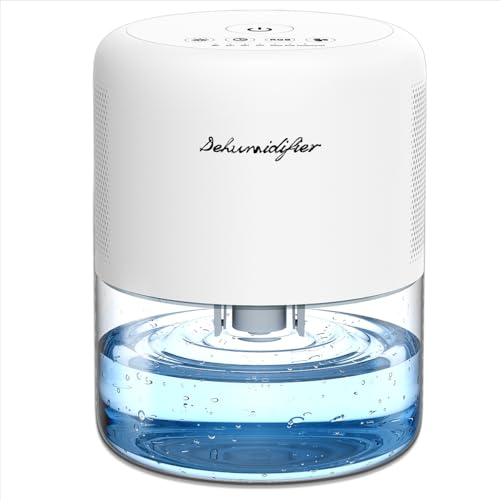 NeedDuck Dehumidifier for Home Small Quiet Dehumidifiers forSmall5.91 x 5.91 x 8.46 inches2.56 PoundsCheck on Amazon
The best dehumidifier for a sauna is one that never goes inside it: a small, quiet unit parked in the changing room, hallway or utility space next to the cabin, where it can pull the sweat, steam and towel moisture out of the air that leaks from the door. On paper, the ToLife 95-ounce tank model is the most sensible default for that job, with the 44-ounce NeedDuck and Windangel units as compact backups for tight vestibules. Nobody on the team has run any of them near a sauna, so every capacity claim below is a listing claim or a labeled estimate.
The cabin itself is a different matter. It is built to be hot and wet, and the heater, vents and wood interior are designed to handle that cycle. The rooms around it are usually ordinary drywall, laminate or concrete, and they are not designed to take a daily hit of humid air. This guide is about protecting those rooms.
The one rule: nothing electric of this kind goes in the cabin
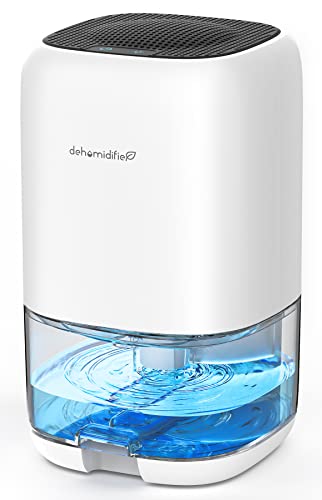
TABYIK 35 OZ Dehumidifier for Bedroom RV, Quiet with Auto Shut Off, White | 280 Sq.Ft Small Dehumidifiers for Home Bathroom Closet, 7 Color Light, 28dB Ultra Quiet, 35OZ Water Tank
One of the moisture-control product options compared in this guide.
View on Amazon
Dehumidifiers for Home, 1000 Sq Ft Dehumidifier with 95oz Tank Auto Shutoff | Quiet for Bedroom, Bathroom and Basement with Sleep Mode 7-Color LED Light, Grey
One of the moisture-control product options compared in this guide.
View on Amazon
BEDRED Dehumidifier, 95Oz Dehumidifier for Home 1000 Sq.Ft | Quiet, Auto Shutoff, Sleep Mode, 7 Color Ambient Light for Bedroom, Bathroom, Basement (Deep Black)
One of the moisture-control product options compared in this guide.
View on Amazon
ToLife Dehumidifier, 1000 Sq Ft 95 oz Tank with Sleep Mode, Auto Shutoff | Portable for Home, Bedroom, Bathroom and Basement with 7-Color LED Light, Grey
One of the moisture-control product options compared in this guide.
View on Amazon
Eva-Dry Wireless Mini Dehumidifier, White (E-333)
One of the moisture-control product options compared in this guide.
View on AmazonNeedDuck Dehumidifier for Home Small Quiet Dehumidifiers for 44OZ Water Tank Auto Defrost and Shutoff 10 Colors Light 4 Timer Options 3 Modes Portable Dehumidifiers for Bedroom Bathroom Closet RV
One of the moisture-control product options compared in this guide.
View on Amazon
Windangel 44oz(1.3L) Small Dehumidifier for Home Auto-Off Quiet Portable Dehumidifier with 3 Modes 10 Color Lights 4 Timer Settings for Bedroom Bathroom Closet (215 sq.ft)
One of the moisture-control product options compared in this guide.
View on Amazon
BonAura Non-Electric Dehumidifier – Moisture Absorber for Basement, Bathroom, Closet & RV, Includes 24oz Refill Pack with Dehumidifier Granules, Reusable, White
One of the moisture-control product options compared in this guide.
View on AmazonA traditional Finnish-style cabin runs at roughly 150 to 195 degrees Fahrenheit, an infrared cabin at around 100 to 150, and a steam room near 110 to 120 with close to 100 percent humidity. Household dehumidifiers are designed to operate in ordinary living temperatures, and manuals commonly set a maximum somewhere around the mid-90s Fahrenheit. A machine placed inside the cabin would be far outside that range, and it would also put a plastic housing, a mains cord and an electronics board in a wet, hot box with a person sitting nearby.
So the answer to “can it go in the sauna” is no, for every unit in this roundup and every unit like them. The question to ask is how the surrounding rooms are laid out, and which zone suits a machine. If you are still choosing the heater side of the setup, our comparison of sauna heaters covers how heater type shapes how much steam reaches those rooms in the first place.
Mapping the zones around your sauna
| Zone | What it is like | Dehumidifier here? |
|---|---|---|
| Inside the cabin | Very hot, steamy, wood surfaces | Never |
| Shower or splash area | Direct water, wet floor | No, keep the unit out of spray |
| Changing room or vestibule | Humid air from the door, wet towels | Yes, 3+ feet from the door and shower |
| Utility or mechanical room | Heater controller, wiring, storage | Yes, on a shelf above any floor water |
| Basement or garage next to the cabin | Larger volume, floor drain possible | Yes, consider a hose drain |
| Gear locker or cabinet | Tiny, enclosed, damp | Passive absorber only |
The practical position is usually the changing room: close enough to catch the vapor leaking from the cabin door, far enough from the shower. If the room is tiny, put the unit just outside it in the hallway and keep the door open while it runs.
How much moisture a session actually sends out
Start with a physics sketch. An 8 by 10 foot changing room with 8-foot ceilings contains 640 cubic feet of air, about 18 cubic meters. Air at 75 degrees can hold a maximum of roughly 22 grams of water vapor per cubic meter, so this room holds around 400 grams, a bit under a pint, at saturation. At 50 percent relative humidity it holds about half that.
Now compare that to the load. Two people in a cabin for 30 minutes can sweat more than a pint each, and much of it lands in towels and on the bench, but some evaporates and drifts out with the cabin air. Add a ladle of water on the rocks, a hot shower afterward and wet towels hung to dry, and a single session can plausibly release a pint or more into the surrounding area. These are rough estimates, not measurements, and the real number depends on the heater, ventilation and how long the door stays open.
The result is that a closed changing room cannot hold what a session produces. The excess condenses on cool surfaces: mirrors, metal fixtures, the underside of a bench, the inside of a window. This is why a changing room can look dry on Monday and slick with water on Tuesday evening. Moving the moisture out, whether by ventilation, drying or both, matters more than the size of the machine. If you use a portable steam sauna instead of a built cabin, the same logic applies, and the steam is added directly to the room you sit in.
Corrosion, drainage and electrical safety
Corrosion
Humid air carries moisture into everything, and the first victims are bare-steel screws, the hinges on the sauna door, light fixtures and the controller box. A dehumidifier lowers the humidity near them but does not protect them. Use stainless or coated fasteners, wipe metal parts weekly and leave the cabin door ajar after each session to let the wood dry. The machine itself has coils and a tank that can grow musty, so empty the tank after each use and wipe it monthly.
Drainage
For a small changing room, an emptied tank is the simplest drainage and lets you place the machine anywhere. For a basement or garage sauna with a floor drain, a continuous hose is convenient, but it must slope downhill all the way. The titles in this roundup do not mention a hose for any of the small tank units, so confirm in the listing. Put the unit on a stand or a shelf, a few inches off the floor, so a shower spill does not reach the base.
Electrical safety
Water, mains power and bare feet are a bad combination. Plug the unit into a ground-fault protected outlet if the room has any water source, and never run the cord through a wet floor or under a door. Do not use an extension cord, and do not place the unit near a heater controller or on the same circuit as a high-load sauna heater without asking an electrician. Check the unit’s cord for damage before each season. If your changing room has no suitable outlet, that is a job for a licensed electrician, not a long cord.
The 95-ounce tank units for changing rooms
These three share a headline: a large tank and a 1000 square foot claim, in the budget and mid-range tiers. The tank of 95 ounces is about 5.9 pints, which is several sessions’ worth of moisture in a small room.
ToLife 95 oz: our default for a changing room
ToLife’s title lists a 1000 square foot rating, a 95-ounce tank, sleep mode, auto shut-off and portable use for home, bedroom, bathroom and basement, with a seven-color LED and a grey finish. In a changing room, its main virtue is that the tank gives you a buffer: you can empty it every few sessions instead of daily.
The room is usually small, so the 1000 square foot figure is mostly headroom, and the unit will reach the target quickly and then cycle on and off. A timer is not listed in this title, so use a hygrometer and run it for a couple of hours after each session, or leave it on auto shut-off if you plan to be away.
Because the title does not give a pint-per-day rating or wattage, you cannot estimate running costs precisely; the cost table below uses assumptions. Look at the listing for the label wattage.
Place it at least 3 feet from the shower and on a stand, with the exhaust pointing away from the sauna door and the cord on the far side from any water source. Turn off the colored light, since a glowing machine in a dim spa room is distracting.
A simple schedule works well. After the last person leaves the cabin, prop the cabin door open, close the changing-room door to contain the moisture, start the machine and set a hygrometer on the far wall. When the reading drops below about 50 percent, empty the tank, wipe the base and call it done. Over a week you will learn how many hours your room needs.
Pros
- Large tank of about 5.9 pints cuts the daily emptying chore
- Auto shut-off listed for unattended runs
- Budget tier with plenty of coverage headroom
Cons
- No pint-per-day or wattage figure in the title
- No hose or pump option stated
- Standard plastic housing, not rated for the cabin
Who it is for: a home sauna with a small changing room and an owner who wants a low-fuss unit.
NineSky 95 oz: the near-twin
The NineSky title tracks the ToLife one: 1000 square feet, a 95-ounce tank, auto shut-off, sleep mode and a seven-color LED, with a note that it is quiet for bedroom, bathroom and basement. Because the spec line matches so closely, treat the two as interchangeable on paper and decide on return policy and the listing detail.
For sauna use, the useful question is how each handles a humid environment, and the titles are silent. Look in the product photos for the tank location, the air intake position and whether the control panel is protected. A control panel on top is more exposed to drips from a wet towel hung nearby than one on the front.
The word quiet matters in a spa room more than in a utility room. A sauna session is meant to be relaxing, and a fan humming beside the bench does not help. Buyer comments are the best source for noise, and a sleep mode, if it dims the lights and slows the fan, is worth judging against your own tolerance. We cannot say what sleep mode does on this model, so check the manual.
Leave it running during the cool-down period after a session, when the room is still thick with moisture, then let auto shut-off or a timer end the run.
Placement matters near the door. Putting the unit 6 to 10 feet from the cabin door, toward the far corner of the room, gives the air time to mix and cool before it reaches the intake, which suits a dehumidifier better than a blast of hot steam. Run the cord along the wall rather than across a walking path, because bare feet and a wet floor deserve respect.
Pros
- Large tank and a generous coverage claim at a budget price
- Sleep mode may suit a quiet spa space
- Auto shut-off listed
Cons
- On-paper specs match other listings
- Humidity resistance of the housing not described
- No decibel figure in the title
Who it is for: bargain hunters who want a changing-room unit and will pick between near-twins on seller terms.
BEDRED 95 oz: the premium finish for a visible spa room
BEDRED’s listing repeats the 95-ounce, 1000 square foot, auto shut-off and sleep mode specs and adds a Deep Black finish at the mid-range tier. In a sauna room that is designed as a small spa, with dark tile or wood paneling, a black unit can blend in better than a grey one.
That is the extent of what the title offers over the cheaper listings. Whether the price difference covers a better fan, better components or just a color is not stated. If you are paying a premium, look for a stronger warranty statement on the listing or the manufacturer’s site, and check how long the cord is, since outlets in sauna rooms are often placed for the heater, not for you.
The finish also matters for practical reasons. Dark glossy plastic shows water spots from a damp cloth or a drip from a wet towel, and in a humid room it may show a film of dust faster. Plan to wipe it with a dry microfiber cloth during the weekly clean.
Since the title lists the same coverage as the other 95-ounce units, think about whether the room really needs a premium one. A sauna with a changing room, a shower and a utility closet can be served by one unit in the changing room and a cheap one in the utility space, which gives you control over each zone rather than one machine fighting a long hallway.
If you are on the fence, the price gap matters: it is large enough to buy a second budget 95-ounce model for a hallway or garage storage area instead.
Pros
- Deep Black finish suits a dark spa room
- Same tank and coverage as the budget listings
- Sleep mode and auto shut-off listed
Cons
- Mid-range tier for the same on-paper specs
- Glossy finish shows water spots
- Warranty terms not in the title
Who it is for: buyers who care about how the unit looks in a finished spa-style changing room.
Compact units for vestibules and tight spaces
If the changing area is a narrow vestibule or a closet-sized alcove, the compact trio below fits better. Their tanks are smaller, so they need more attention.
TABYIK 35 oz: the smallest and quietest claim
TABYIK’s title advertises 35 ounces (about 2.2 pints), 280 square feet, 28 dB ultra quiet, auto shut-off and use in a bedroom, RV, bathroom or closet. In the sauna setting, that points to a vestibule or a small storage alcove right outside the cabin door.
The 28 dB claim is a manufacturer figure and the only decibel number among the eight listings. In a sauna room, where people want calm, it is the most relevant spec in the title. The small tank is the trade-off: if a session sends a pint or more of moisture into the air, the tank could fill within two or three sessions, so plan to empty it after each use.
Place it on a small shelf, not the floor, at a distance from the shower, with 6 to 12 inches of clearance around the vents. If the room is really only 40 or 50 square feet, the unit has plenty of coverage on paper, and the small body can tuck beside a bench or under a shelf without looking like equipment.
Do not mistake the RV mention for a sign that it handles damp environments better; it simply means small spaces. If you plan to use it near a shower, keep it out of the splash zone.
A routine for a unit this small: empty and rinse the tank each time, leave the tank open to air-dry, and wipe the intake screen weekly. A tank left with a little water inside can grow slime within days in a warm, humid room, and a sauna changing room is both.
Pros
- Lowest decibel claim, 28 dB, for a quiet room
- Small footprint fits a vestibule or shelf
- Budget tier
Cons
- 35 oz tank needs emptying after each session
- 280 square foot rating is for small spaces only
- No pint rating stated
Who it is for: a home sauna with a small vestibule where quiet matters more than capacity.
NeedDuck 44 oz: defrost and timers for an unheated space
NeedDuck’s title lists a 44-ounce tank (about 2.75 pints), auto defrost and shut-off, ten color lights, four timer options, three modes and portable use in a bedroom, bathroom, closet or RV. No coverage figure is given, which is itself useful information: you cannot size this one by square footage from the title alone.
The defrost function is the draw for sauna rooms that are unheated between sessions. An outbuilding sauna, a garage-based cabin or a basement can sit at 50 to 60 degrees overnight, and small units that lack a defrost function can ice up in cold air. We do not know the minimum operating temperature from the title, so check the manual.
The four timers are a good match for a session pattern: set it to run for two hours after you finish and shut off, so it is not running all night. Three modes may include a continuous or a quiet setting, but the title does not say.
Use it in a vestibule or outbuilding changing area of up to roughly 100 square feet; if the room is larger, take the 95-ounce class instead. Make sure the outlet is protected and out of splash range.
In a cold outbuilding, think about what the sauna does to the room temperature. After a session the changing area warms up and the humidity jumps, and the unit works hardest in that window. Overnight, as the room cools toward 50 degrees, it may do little, so a timer that ends the run a couple of hours after the session saves power without losing the benefit.
Pros
- Auto defrost listed for cool rooms
- Four timer options for post-session runs
- 44 oz tank is a middle size for a vestibule
Cons
- No coverage figure in the title
- Decorative lights have no use in a spa room
- Minimum operating temperature not stated
Who it is for: an outbuilding or garage sauna where the changing area gets cold between sessions.
Windangel 44 oz: a stated 215 square feet
Windangel offers a 44-ounce (1.3 liter) tank, auto-off, quiet portable design, three modes, ten color lights, four timer settings and a 215 square foot rating for a bedroom, bathroom or closet. Compared with the NeedDuck, the two share a tank size and a feature list, and the visible difference is that Windangel states its coverage.
That number is useful for planning, as long as you remember it is a claim for a closed room. A changing room of 8 by 8 feet, 64 square feet, is well within 215, which leaves a margin for the door that opens and closes with each person. A larger room of 150 square feet is still within the number, but you may find the tank fills quickly.
Think of Windangel and NeedDuck as a pair: if your outlet is on the left side of the room or the shelf is shallow, choose the one whose photos show the more suitable shape and control layout. The cord length, tank handle and display visibility are the details that will annoy you daily.
As with all electric units here, the title is silent on wattage and on any humidity resistance; use a GFCI outlet and keep the machine out of direct splash.
Of the compact group, this is the one to buy when you want to size on paper. If your changing room is 8 by 10 feet, 80 square feet is well under 215, a margin of about 2.7 times. Margin matters because the door opens, the shower runs and the sauna leaks warm air, none of which a coverage number accounts for, and a 2 to 3 times margin is a sensible rule for a damp room.
Pros
- Stated 215 square foot coverage helps with sizing
- Four timers and three modes
- Budget tier
Cons
- 44 oz tank means frequent emptying in busy use
- No pint-per-day or wattage figure
- Lights are decoration only
Who it is for: a sauna owner who wants a compact unit with a stated coverage number for a small changing room.
Passive helpers for lockers and gear cabinets
Eva-Dry E-333: the wireless mini for a cabinet
The Eva-Dry listing is titled Wireless Mini Dehumidifier, white (E-333), and says nothing about coverage, tank size or how it works. That makes it the least comparable listing in the group. It belongs in the sauna conversation only as a cabinet-level helper: a shelf with towels, a locker for shoes and sandals, a toolbox holding the sauna thermometer and hygrometer.
The word wireless suggests there is no plug, but the mechanism and the life of the unit are for the listing to confirm. In general, small units of this kind handle a few cubic feet of air, not a room, and some need recharging or replacement. Ask whether the listing says how often, and do not assume.
The cheapest tier makes it an easy add-on. A pair, one in the towel cabinet and one in the shoe locker, costs less than the premium finish on the BEDRED. But the value stops there; it will not stop condensation on a changing-room mirror.
The safest use is next to, not inside, the cabin. Do not put it on a cabin bench or in a steam room. Keep it away from the heater and treat it as a small accessory.
Before buying, think about what you are trying to protect. Leather straps, wooden buckets, metal thermometers and cotton robes each respond differently to damp, and a cabinet that is open to the changing room will see swings in humidity that a sealed one will not. If the cabinet door never closes properly, an absorber has little to do, and the fix is a better door.
Pros
- Lowest price tier of the eight
- Wireless; no cord to route near water
- Fits cabinets and small shelves
Cons
- No capacity or coverage in the title
- Cannot dry a room
- Mechanism and life span must be checked on the listing
Who it is for: someone protecting towels, shoes or gear in a small cabinet.
BonAura non-electric: refillable granules for a locker
BonAura’s title calls it a non-electric dehumidifier and moisture absorber for basement, bathroom, closet and RV, with a 24-ounce refill pack of granules included, reusable, in white. No power means no cord, no plug and no electrical risk, which is attractive in a room where people walk around wet.
The trade-off is capacity. An absorber holds water until its granules are saturated, then needs a refill, and the title does not tell you how many weeks that takes. In a locker that sees a damp towel every day, expect to refill relatively often; in a closet with occasional humidity, a month or more may be realistic. Check the listing for the refill schedule and cost.
Use it in a sealed or semi-sealed space such as a locker or a cabinet, where the absorber has a small volume to work on. In an open changing room it will do nothing visible. Keep it away from the sauna door, hold it upright and watch for leaks as it fills, and read the manual for handling the granules.
Together with a unit such as the TABYIK or the ToLife, it makes a two-layer plan: the electric machine handles the room, the absorber protects the gear.
Write the refill date on the container with a marker. A saturated absorber stops working silently, and the first sign is the smell of damp in a locker you thought was protected. Because the title says reusable, check the listing for how to dry or replace the granules, and whether the refill pack is the same material as the original.
Pros
- No electricity, safe near wet spaces
- Reusable with a refill pack included
- Low price tier
Cons
- Limited capacity; refills needed regularly
- Does nothing for a whole room
- Refill interval is not stated in the title
Who it is for: owners who want a zero-power moisture guard for lockers and cabinets.
A running-cost estimate with the assumptions spelled out
None of the titles state wattage, so this table uses assumed figures. Replace them with the number on the unit’s label. The calculation is watts times hours divided by 1,000, multiplied by an electricity rate of 16 cents per kilowatt-hour, over 30 days.
| Assumed draw | Hours per day | kWh per month | Approx. monthly cost |
|---|---|---|---|
| 50 W (small tank unit) | 4 | 6 | about 1 dollar |
| 50 W | 8 | 12 | about 2 dollars |
| 250 W (larger unit) | 4 | 30 | about 5 dollars |
| 250 W | 8 | 60 | about 10 dollars |
The point of the table is the order of magnitude. Even at the high end, running a dehumidifier beside a sauna costs far less than the heater, which is where the real electricity goes. If you want to confirm, a plug-in watt meter will give you the real figure in a day.
If you are choosing between a cabin and a blanket
Some readers ask about dehumidifiers because their cabin dampens the house. If the sauna is not yet bought, a lower-moisture option is an infrared sauna blanket, which has no steam and no cabin to vent. Our guide to portable sauna blankets covers that route. The blanket still generates sweat and a damp towel, but the volume of moisture released into a room is far smaller than a steam session.
How we picked these
The Editorial team compared published specifications, manufacturer documentation and buyer reviews for each listing. Nobody on the team used or measured these units, and none has been placed near a sauna, so there are no observed results here. Coverage, tank size, decibel and timer claims come from the titles; running costs, session moisture and refill intervals are estimates and assumptions.
The selection logic followed the rooms around a sauna: a larger-tank group for changing rooms, a compact group for vestibules and outbuildings, and two passive options for cabinets. We looked for a stated coverage or tank size, auto shut-off, timers and defrost, and then flagged what each title leaves out, such as wattage, hose options, humidity resistance and warranty. We did not rely on brand names.
Price tiers are relative to this list: Budget is the cheapest band, and Mid-range sits above it. The safety guidance is general; follow the manual for each unit and consult a licensed electrician for wiring questions.
Mistakes sauna owners make
- Placing the unit inside the cabin. It is outside any household unit’s rated temperature and is an electrical hazard.
- Putting it in the shower spray. Keep it 3 feet or more away from direct water.
- Using an extension cord. A damp floor and an extension cord is a combination to avoid; have an outlet installed.
- Ignoring ventilation. A dehumidifier cannot keep up if the door is shut and no exhaust runs.
- Skipping stainless hardware. Moisture rusts cheap screws long before it harms the machine.
- Oversizing the tank, undersizing the fix. A big tank does not help if the room is closed and the moisture has nowhere to go.
Verdict
For most home saunas, the ToLife 95 oz is the default: a large tank, a big coverage claim and a budget price, placed in the changing room well away from the shower. The NineSky is a near-twin if you prefer its seller terms, and the BEDRED is the choice for a dark, finished spa room. For a narrow vestibule, the TABYIK has the only decibel claim, while the NeedDuck suits cold outbuildings with its defrost function and the Windangel gives you a stated 215 square feet. Add the Eva-Dry or BonAura to protect lockers. Keep every unit out of the cabin, plug it into a protected outlet, and check wattage and warranty on the listing.
Frequently asked questions
Can I put a dehumidifier inside a sauna?
No. A traditional sauna cabin runs roughly 150 to 195 degrees Fahrenheit and an infrared cabin around 100 to 150, far above what household dehumidifiers are designed for, and the combination of heat, steam and mains electricity is hazardous. Put the unit in the changing room, hallway or utility space outside the cabin, away from the shower splash zone, and check the manual for its maximum operating temperature.
Why does the room around my sauna feel so damp?
Every session sends sweat, steam and humid air out each time the door opens, and towels, wet floors and showers keep adding to it. A small closed changing room can hold less than a pint of water vapor even at saturation, so the surplus condenses on walls, mirrors and floors. Ventilation and a dehumidifier sized to the room remove that moisture before it feeds mold or rusts metal fixtures.
What size dehumidifier do I need for a sauna changing room?
For an enclosed room of 60 to 120 square feet, a unit listed for 215 to 280 square feet is usually enough, and a 95 ounce tank model listed for 1000 square feet gives extra margin plus a bigger tank. The listing’s coverage figure assumes a closed room, so size up if the sauna door opens often or the space joins a larger basement or garage.
Do I need a drain hose for a sauna room dehumidifier?
Not for a small changing room, where a 44 to 95 ounce tank emptied after each use is practical. If the sauna sits in a basement or garage with a floor drain, a continuous hose avoids the daily chore. The title of the tank units here does not mention a hose, so check the listing, and never run a hose across a walkway where it can be tripped on.
Are non-electric moisture absorbers enough for a sauna?
They help in lockers, gear cabinets and small closets, but they hold only a limited amount of water and cannot dry a whole room. Treat them as supplements that protect towels, shoes and metal accessories. Check the listing for how often the granules need a refill, since a saturated absorber stops working without any warning. For a changing room that stays damp after sessions, an electric unit with a tank or drain, plus ventilation, does the heavy work.
FAQ
Can I put a dehumidifier inside a sauna?
Why does the room around my sauna feel so damp?
What size dehumidifier do I need for a sauna changing room?
Do I need a drain hose for a sauna room dehumidifier?
Are non-electric moisture absorbers enough for a sauna?
More from Amazon
Programs that pair well with the guide above. Offers and eligibility are set by Amazon and may change.
Free shipping on eligible items, Prime Video and more. Eligible new members can start with a free trial.
Start a Prime free trialA Prime membership for ages 18-24 with a trial period. Eligibility is set by Amazon.
See Prime for Young AdultsAudiobooks and podcasts to listen to on the go. Eligible new members can start with a free trial.
Try Audible freeAd-free music streaming. Eligible new subscribers can start with a free trial.
Try Music Unlimited freeAs an Amazon Associate we earn from qualifying purchases.









Write Your Review
No reviews yet. Be the first to share your experience!