
Our Top Picks
Best Computer Vacuums for Dust-Free PC Cleaning
The best computer vacuum for most desktop owners is a compact, low-suction, ESD-safe corded electronics vacuum with a brushless nozzle, a fine-particle filter, and narrow attachments; choose a rechargeable mini vacuum if portability matters more than sustained runtime. A regular household vacuum is not a safe substitute: its stronger airflow and plastic nozzle can create static, and its suction may pull on small cables or components.
What matters more than raw suction
Computer cleaning calls for controlled airflow, not maximum power. Look for a tool designed for electronics or explicitly described as ESD-safe, with a grounded or static-dissipative design. “Anti-static” on a listing is not enough by itself: check that the manufacturer describes the ESD protection and intended use. Avoid touching a running vacuum nozzle to circuit boards, fans, or connectors.
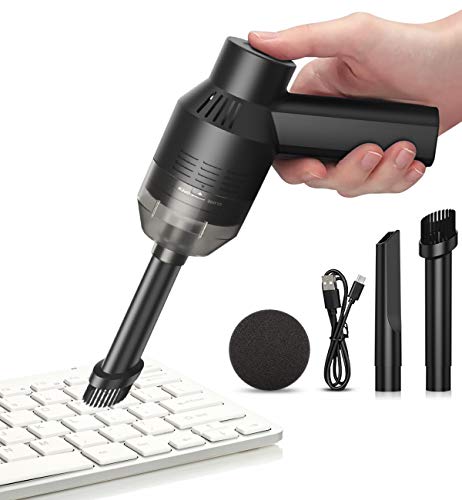
HONKYOB [Upgrade] Mini Vacuum Cordless Vacuum Keyboard Cleaner Rechargeable,for Cleaning Dust,Hair,Crumbs,Eraser Scrap,Laptop,Pet House,Sewing Machine
Chosen because it specifies for Cleaning Dust and Hair.
View on Amazon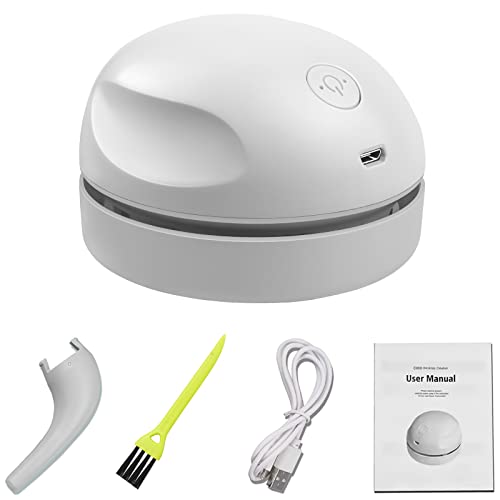
prowithlin Desktop Vacuum Cleaner USB Charging with Vacuum Nozzle Cleaning Brush, Detachable Design & Portable Mini Table Dust Vaccum Cleaners, Cleaning Dust, Crumbs, Piano, Computer, Car Etc(Gray)
Chosen because it specifies Detachable Design & Portable Mini Table Dust Vaccum Cleaners and Cleaning Dust.
View on Amazon
Yuly Portable Mini Keyboards Vacuum Cleaners Household Micro Computer Cleaner Dust Brush Notebook Computer Vacuum Cleaners USB Keyboards Vacuum Cleaner Mini
Picked as a relevant option in this category.
View on Amazon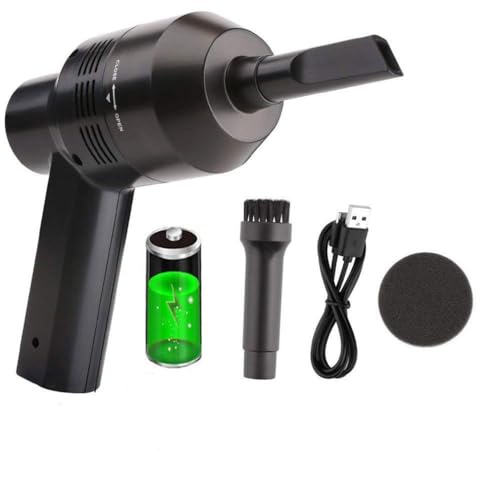
WWBDZSW USB Vacuum Cleaner Mini Desk Electric,Portable Handheld Duster Kit,Versatile Suction Nozzle,Easy to Clean Keyboard,Computer,Office Desk,Pet House,Vaccum for Car Home Office-Wireless
Chosen because it specifies Portable Handheld Duster Kit and Versatile Suction Nozzle.
View on Amazon- Suction control: Multiple power settings or a low-suction mode make it easier to lift loose dust without tugging at wires or small parts.
- Filtration: A fine-particle or HEPA-type filter can help retain dust instead of sending it back into the room. Check whether the filter is replaceable and whether the manufacturer specifies a particle standard.
- Attachments: A soft brush helps with broad, delicate surfaces; a crevice nozzle reaches case corners. Use a small nozzle around components only with restrained suction and a steady hand.
- Power and storage: Corded models do not run out of charge during a full tower cleanup. Rechargeable models are easier to grab for a quick keyboard or vent clean, but their batteries add wear and eventual replacement concerns.
Compare the main vacuum types
Exact specifications vary by model, so treat the figures below as practical buying targets rather than specifications for a single product. Verify dimensions, weight, runtime, and filter details on the manufacturer’s current product page before buying.
| Type | Useful buying target | Best fit | Trade-off |
|---|---|---|---|
| Compact corded electronics vacuum | About 0.5–1.5 kg; 2 or more suction settings; roughly 3–5 m cord | Regular desktop cleaning and longer sessions | Needs an outlet and cord management |
| Rechargeable mini vacuum | About 0.2–0.7 kg; 10–30 minutes’ rated runtime; USB charging | Small desks, travel, and quick touch-ups | Runtime falls with high power; battery ages |
| ESD-safe electronics vacuum | Typically 1–3 kg; grounded or dissipative components; fine-particle filtration | Frequent maintenance or sensitive electronics work | Often costs more and can be bulkier |
| Handheld household vacuum | Often 0.7–2 kg; commonly high suction and general-purpose filtration | Desk surfaces and non-sensitive debris | Usually a poor choice for exposed PC components |
Choose by your setup
| Your situation | Better choice | Why |
|---|---|---|
| One desktop, cleaned every few months | Compact corded electronics vacuum | Consistent power is more useful than a premium battery for occasional sessions. |
| Several PCs or weekly dust buildup | ESD-safe model with a replaceable fine filter | Durable filtration and a suitable static-control design matter more with frequent use. |
| Little storage space or no convenient outlet | Rechargeable mini vacuum | It stores easily and is ready for brief cleanups; check real-world runtime at its lower setting. |
| Very tight budget | Entry-level electronics vacuum, not a household vacuum | Prioritize controlled suction, a brush attachment, and a washable or replaceable filter over extra accessories. |
How to clean a desktop without damaging it
- Shut down and unplug the PC. Switch off the power supply and disconnect the power cable. Let hot components cool.
- Move the tower to a ventilated work area. This keeps dislodged dust away from your desk and gives you room to reach the case.
- Secure fan blades before cleaning. Hold each fan still with a nonconductive tool or finger where safe and accessible. Do not let airflow spin fans freely; overspinning can stress bearings or generate unwanted voltage.
- Start at low suction. Keep the nozzle a short distance from components and use a soft brush to loosen dust. Avoid scraping the board, pulling cables, or forcing the nozzle between parts.
- Clean filters and check airflow. Follow the vacuum’s filter instructions. Reinstall only a completely dry washable filter, and replace damaged or clogged filters rather than operating without one.
A vacuum is useful for lifting loosened dust, but it may not clear tightly packed heatsink fins. For stubborn deposits, use a purpose-made electronics cleaning method and follow its safety instructions; do not use liquids on powered equipment.
Ownership costs and common mistakes
Budget electronics vacuums commonly fall in the general range of about $20–$60, while more specialized ESD-safe units can run roughly $60–$200 or more. These are broad market ranges, not quotes for a particular model. A low purchase price can be offset by proprietary filters, weak battery life, or attachments that are hard to replace.
Filters are the first routine consumable to inspect: fine dust clogs them, reducing airflow and making the motor work harder. On rechargeable models, battery capacity is the longer-term wear point; storing the unit discharged or leaving it in heat can shorten useful life. Keep attachments together in a small case or bag so the narrow nozzle and brush do not disappear between cleaning sessions.
Common mistakes include using maximum suction by default, vacuuming an open PC with an ordinary household tool, letting fans spin, and assuming a washable filter can go back in while damp. For exposed components, static safety and careful technique matter more than the highest advertised power.
Bottom line
For most PC owners, a compact corded electronics vacuum with adjustable suction, a fine filter, and a soft brush is the most balanced pick. Choose a rechargeable model for portability and short touch-ups, or spend more on an ESD-safe unit if you clean sensitive electronics frequently. Whichever type you choose, use low suction, keep the nozzle off components, and secure fans before cleaning.
More from Amazon
Programs that pair well with the guide above. Offers and eligibility are set by Amazon and may change.
Free shipping on eligible items, Prime Video and more. Eligible new members can start with a free trial.
Start a Prime free trialA Prime membership for ages 18-24 with a trial period. Eligibility is set by Amazon.
See Prime for Young AdultsAudiobooks and podcasts to listen to on the go. Eligible new members can start with a free trial.
Try Audible freeAd-free music streaming. Eligible new subscribers can start with a free trial.
Try Music Unlimited freeAs an Amazon Associate we earn from qualifying purchases.








Write Your Review
No reviews yet. Be the first to share your experience!