
Our Top Picks
 Dog Agility Course Backyard Set,Dog Agility Equipment10 PCS SET59 x 26.38 x 35.5 inches13.7 poundsCheck on Amazon
Best Agility Training Starter Kits for the Backyard
The best agility training starter kit for a backyard is a portable, adjustable set with flexible hurdles, secure cones, and enough markers to create a course that fits your usable space—not simply the kit with the most pieces. For most beginners, a set with 6–12 cones, 6–10 adjustable hurdles, and a 12–15-foot agility ladder offers a useful mix of drills without demanding a large lawn.
Choose by backyard, budget, and training frequency
| Backyard situation | Kit configuration to look for | Why it fits | Typical general price range |
|---|---|---|---|
| Small lawn or patio, occasional sessions | 6–8 cones, 4–6 low hurdles, ladder around 10–12 ft | Short course, fewer pieces to store, easy to rearrange | $25–$50 |
| Beginner with a medium lawn | 8–12 cones, 6–10 adjustable hurdles, ladder around 12–15 ft | Supports straight-line and turning drills with room to progress | $40–$80 |
| Frequent practice or more than one participant | 12–20 cones, 10–12 hurdles, ladder around 15–20 ft, carry bag | Lets you build parallel lanes or leave a course set up temporarily | $70–$130 |
| Hard surface or mixed indoor/outdoor use | Flexible, low-profile hurdles; flat ladder; weighted or grippy markers | Reduces sliding and avoids relying on stakes that cannot anchor into paving | $35–$100 |
These are general market ranges, not quotes for a particular brand or model. Kit contents and materials vary, so check the listed dimensions and included connectors before buying.

JMMPOO Dog Agility Training Equipment, 60-piece Dog Obstacle Course Training Starter Kit Pet Outdoor Game with Tunnel, Agility Hurdle, Weave Poles, Jump Ring, Pause Box, Toy Balls and Storage Bag
Chosen because it specifies Agility Hurdle and Weave Poles.
View on Amazon
XiaZ Dog Agility Course Backyard Set, Dog Obstacle Course Training Starter Kit Pet Outdoor Game with Tunnel, Agility Hurdle, Weave Poles, Jump Ring, Pause Box, Collapsible Dog Bowls and Storage Bag
Chosen because it specifies Agility Hurdle and Weave Poles.
View on AmazonDog Agility Course Backyard Set,Dog Agility Equipment, Dog Obstacle Course Backyard With 2-Set Agility Hurdle ,Jump Ring, 8 Weave Poles, Tunnel, Pause Box, Toy Balls And 2 Portable Carrying Bags
Chosen because it specifies 8 Weave Poles and Tunnel.
View on Amazon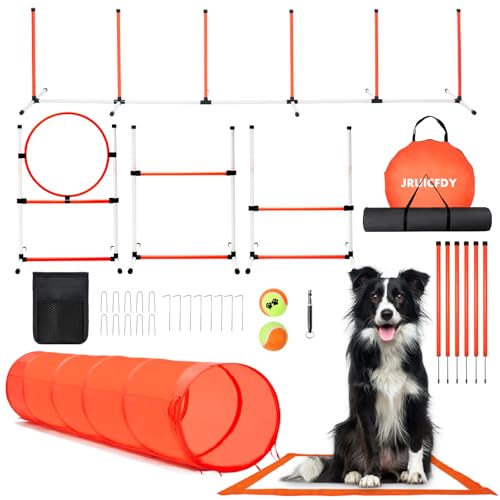
Dog Agility Course Backyard Set, Dog Agility Equipment, Pet obstacle Course Backyard with 6 Dual Mode Weave Poles, 2 Adjustable Hurdle, Jump Ring, Tunnel, Pause Box, Toy Balls and 2 Carrying Bags
Chosen because it specifies Dog Agility Equipment and Pet obstacle Course Backyard with 6 Dual Mode Weave Poles.
View on AmazonWhat matters more than the piece count
Obstacle spacing and usable course length
A kit’s total length is not the same as the space you need. A 15-foot ladder occupies about 15 feet in a straight line, but you also need room to approach, turn, and slow down. As a practical starting point, allow roughly 5–8 feet beyond each end of a drill. For a short backyard, arrange cones in a compact zigzag and use only part of the ladder rather than forcing a full-length course into a cramped area.
Start with generous gaps between hurdles—about 3–5 feet for basic stepping and low hops—then adjust based on the drill and the participant’s control. These are setup suggestions, not fixed performance standards. Wider spacing encourages a controlled approach; closer spacing requires quicker foot placement. Keep enough lateral room that a missed step does not send someone into a fence, garden edging, or another obstacle.
Adjustment, stability, and materials
Look for hurdles with more than one height setting, but begin at the lowest setting. Flexible plastic is less likely to cause a hard impact than rigid metal if a foot catches a bar. Cones should be visible and stable enough not to skate away in a breeze. Flat, lightweight ladders are easier to carry, but their rungs can bunch up; ladders with adjustable rung spacing are useful when the course needs to match the available space.
For a first kit, useful contents are usually a ladder, low hurdles, cones, and a storage bag. Extra accessories are worthwhile only if they support a drill you will actually use. A kit containing many small pieces may look like better value, yet take longer to lay out and be easier to misplace.
Setup time and portability in real use
A simple kit can take about 5–10 minutes to unpack, lay out, check, and put away once you know the routine. A larger course with several hurdle lines may take 10–20 minutes, especially if the ladder needs straightening or the markers must be moved around obstacles. These estimates assume one person and a clear area; uneven ground and complicated layouts add time.
Before buying, check the packed dimensions and whether the longest pieces fit your storage space. A carrying bag makes cones and short hurdle bars easier to manage, but it does not make a long ladder compact. If setup time is your main barrier, favor fewer components and a course you can reset in the same arrangement.
Match the kit to the surface
- Grass: Check for holes, roots, wet patches, and uneven ground before setting up. Stakes can help secure some markers, but avoid sharp stakes where people will step or fall. Grass can hide divots, so do not assume a soft-looking lawn is level.
- Artificial turf: Use low-profile equipment and confirm that the ladder or cones do not slide on the surface. Do not pierce the turf with stakes unless the surface owner allows it.
- Concrete or paving: Choose flexible hurdles and markers with non-slip bases. Avoid hard, tall obstacles and stop if equipment shifts. A thin exercise mat is not a substitute for a stable, clear running area.
- Wet or windy conditions: Postpone fast drills if footing is slick. Lightweight cones and ladder rungs can move in wind; secure them appropriately or choose a calmer day.
Buying picks by use case
Best value for a first-time user: a compact mixed kit
Choose a set with a 12–15-foot ladder, 6–8 low adjustable hurdles, and 8–12 cones. It covers ladder footwork, short accelerations, and basic changes of direction without filling a typical small lawn. Favor a sturdy bag and replaceable connectors over a large accessory count.
Best for limited space: a marker-led kit
If the usable area is short or narrow, prioritize cones and a shorter ladder over a dozen hurdles. Markers can define turns and lanes in a compact layout, while a long hurdle line may leave too little room to stop. Confirm that you can leave a clear buffer from walls, fences, and hard edges.
Best for regular sessions: a modular set
For frequent use, look for additional bars or connectors that let you build two short lanes, plus a bag that keeps components together. Modularity matters more than maximum height: low hurdles and adjustable spacing give a beginner room to progress while keeping the setup adaptable.
A safe first setup—and what wears out
Use this quick setup sequence:
- Clear and inspect the area. Remove toys, branches, hoses, and loose stones; check the surface for slick spots or holes.
- Lay out a short course. Start with one ladder or a few widely spaced markers, leaving a clear run-out zone at both ends.
- Check every connection. Press lightly on hurdle joints and reposition anything that rocks, slides, or catches a shoe.
- Begin slowly. Walk through the pattern before adding speed or height. Stop if the surface becomes slippery or equipment shifts.
- Pack equipment dry and clean. Brush off dirt, let wet parts air-dry, and store them out of direct sun when possible.
In regular backyard use, the first annoyances are often bent or missing connectors, cracked plastic exposed to sun or cold, and ladder rungs that twist or bunch. Inspect bars and joints for cracks before each session; retire damaged pieces rather than taping over a structural split. Count small parts after use, and avoid leaving lightweight equipment outdoors where weather can weaken it or blow it away.
Agility drills involve movement and potential falls. Keep the course appropriate to the participant’s experience, use footwear suited to the surface, and avoid raising hurdles simply to make a kit seem more challenging. For individual exercise guidance—particularly after an injury or with a health concern—consult a qualified professional.









Write Your Review
No reviews yet. Be the first to share your experience!