
Choosing a barbell pad vs alternatives starts with the problem you want to solve. A sleeve changes where a bar contacts your body, while a flat pad spreads contact over a wider area. Dumbbells, a squat bar, or a machine change the exercise setup itself and may suit a room where the barbell is hard to use.
Barbell pad vs alternatives at a glance
Use a wraparound pad when you want to keep the same straight bar and cushion the contact point. Consider a flat pad when hip coverage is the main issue. Change the exercise setup when the bar’s length, starting height, or support requirements are the problem. Those choices affect different parts of the workout.
| Option | What it changes | Useful when | Main trade-off |
|---|---|---|---|
| Wraparound barbell pad | Cushions the bar’s contact with the body | You already have a compatible bar for hip thrusts or squats | Can rotate if loose and takes up some clearance |
| Flat hip thrust pad | Spreads contact across the hips | You want a broader surface during barbell thrusts or bridges | Positioned separately from the shaft |
| Folded towel or mat | Adds a temporary layer at the contact point | Light trial where the layer can stay flat and centered | Can bunch, migrate, or compress unevenly |
| Dumbbell hip thrust or floor bridge | Replaces the long bar with a shorter implement | You train moderate loads or have limited room | Load range and ability to hold it steady depend on the implement |
| Safety squat bar | Changes the bar, shoulder support, and hand position | You want a different rack-based squat setup | Needs compatible supports and additional storage |
| Hip thrust or glute drive machine | Changes loading, support, and movement path | A purpose-built station is already accessible | Higher cost and footprint for a new home setup |
Decide whether you want to preserve the exercise. A barbell hip thrust with a flat pad retains the same bar and plates, with a different interface at the hips. A dumbbell bridge changes the equipment and can change the starting position. A dedicated machine supplies its own support and resistance path. The choice follows from the original problem.
Compare different ways to cushion the same bar
If your bar and exercise setup already work, compare the products that change only the contact surface. These include molded sleeves, full-wrap pads, and flat pads. The trade-offs are where the cushion sits, how it stays in place, how it affects the entry height, and how easily it can be positioned in the same spot again.
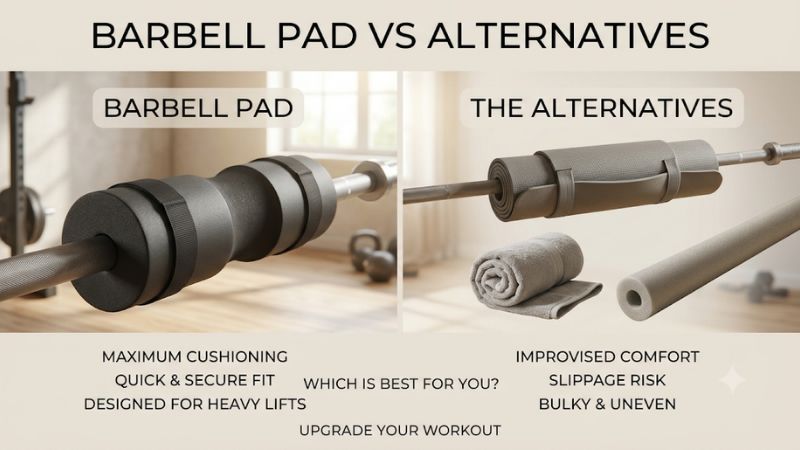
Use a wraparound pad for a shaft-mounted cushion
A wraparound pad stays on the shaft when installed as directed. It is available as molded foam, one-piece material with a full closure, or foam secured by compatible straps. It works well when you want a repeatable contact position tied to the bar and need to move the equipment between sets.
The cylinder adds material below the shaft while the bar rests on the floor. Check the opening under the pad when using the smallest plates in your program. If a thicker cylinder solves the contact issue and uses too much of that space, consider whether a flatter pad or a suitable change to plate diameter would address both concerns.
For squats, consider the distance added between the bar and your usual contact area. A slim version can preserve more of the familiar position. A thick hip thrust cylinder may feel different on the upper back when you unrack or rerack. Compare the actual hand, hook, and bar position with an appropriately light weight before committing to the changed setup.
Use a flat pad when hip coverage matters more
A purpose-built flat hip thrust pad sits across the hips with the bar placed over it. Some use a firmer top layer and softer padding underneath. The wider face can spread contact across an area beyond the narrow footprint of a cylinder. The pad needs to be positioned as a separate piece whenever you set up.
Compare the placement with your bench, plate diameter, and room for entry. In a setup where you can move underneath the shaft and place the pad easily, the wider coverage may be useful. In a gym where you have to reposition a bench or bar frequently, a pad that stays attached to the shaft can be simpler.
Use the flat pad only as its maker intends. A product designed to rest across the hips serves a different job from a pad that attaches to a bar for squats. If you want one item for both lifts, compare a suitable wraparound pad first. If hip thrusts are the main reason for buying, give coverage and repeatable placement more weight.
Compare a folded towel or mat for a temporary light setup
A folded layer is inexpensive if you already own it, and you can vary its thickness by changing the folds. The practical concern is whether it stays flat and centered. Loose material can move, bunch, or compress differently from one set to the next. For heavy or repeated bar work, choose a design made for the contact position.
A towel can show whether adding some cushioning changes the point of contact in a lightly loaded rehearsal. Pay attention to whether the layer remains smooth and whether you can set it in the same position. If you are constantly adjusting it, that is evidence that a fitted wrap or purpose-built flat pad would improve your routine.
Avoid treating a folded floor mat as a loaded support under the plates or around rack hardware. Those are separate equipment functions. A cushion between body and bar changes contact. The floor, bar, bench, and supports still need to work as specified for the load and movement.
Consider using the bare bar when its contact already suits you
Some lifters prefer the feel of a bare shaft for squats because it lets them place the bar directly at their usual contact point. If the bar, grip, and squat setup already feel consistent, a separate pad may add little. Try the position with a light load and check that the bar remains where you intend it to sit.
For hip thrusts, decide whether a bare bar allows the exercise you want under your expected working weights. Contact can feel different as you add plates or change the position of the bar. If you notice that you keep repositioning the shaft at every set, a purpose-built pad may help you create a more repeatable interface. Assess the setup before progressing the load.
The bare-bar option is also a useful reference when comparing pad bulk. A pad can cushion an area while changing leverage or position simply by adding distance. Identify the change you want and use enough cushioning to solve it, alongside the appropriate setup and platform for the exercise.
Compare alternatives that change hip thrust setup
When the bar itself is the problem, replacing the cushion may buy little space. A dumbbell, floor bridge, supported machine, or another loading method can change where you stand and the amount of hardware you need to move. Compare the exact exercise and planned load before choosing an alternative for a compact room.
Dumbbell hip thrusts for less equipment width
A dumbbell is much shorter than a loaded straight bar and has no long sleeves to clear during entry. It can be useful in a room that fits a bench and a lifter but leaves little space for barbell plates at the sides. Check whether you can position and hold the dumbbell securely through your planned range.
The trade-off becomes clearer as the dumbbell gets heavier or bulkier. One load may be easy to hold in place, while the next size can be difficult to position at the start or move at the end. Check the size and shape of your current dumbbell before buying a heavier one solely for this exercise. If the manufacturer limits how its adjustable model can be supported or placed, follow that guidance.
For a moderate home program, a dumbbell can fit the room and remove the need for a barbell pad. Some people still choose a purpose-built cushion beneath the dumbbell when the setup supports it. When you want precise increases with plate pairs and heavier overall loading, the barbell route may give you more flexibility if the room can accommodate it.
Floor glute bridges when the bench is the obstacle
A floor bridge can simplify a station that is too shallow for a bench-based setup. It still needs room for your feet, the path of the load, and a usable position at the floor. A bodyweight or dumbbell bridge can use less lateral space, while a barbell bridge keeps the clearance requirements of a straight bar and plates.
A floor bridge changes the movement relative to a bench-supported hip thrust. Pick it when it covers the exercise you intended to train and fits your space. If you use a bar and pad, repeat the floor-to-pad clearance check with your lightest plates. Smaller plates can put the bar close to the floor even after you remove the bench.
For a home gym that shares space with furniture, moving to a floor-based version can remove the largest fixed object in the station. The setup also gives you a way to see whether you really need another pad or your limiting issue is the bench’s position. Work within the load and range you can use with control.
A hip thrust machine when supported setup saves time
A dedicated hip thrust or glute drive machine provides its own support surfaces and resistance mechanism. Some models use a padded belt, while others use a moving pad or lever. It can suit a lifter with access to a station where the machine adjusts to their body and supports the exercise they want to repeat.
Compare the entry and exit steps and how the machine holds the load. A provided belt changes where the resistance contacts you. A fixed support changes how you place your shoulders or feet. The model’s range of motion, starting resistance, and adjustability can differ substantially from a free barbell setup.
A machine can free you from assembling a bench and bar every time at a commercial gym. At home it may add a large piece of equipment with delivery, assembly, and operating clearance requirements. If you can already set up a bar, plates, pad, and bench efficiently, check whether the machine’s convenience justifies the permanent space.
A band-based version when you already have a rated setup
Bands are useful if you have an appropriate anchor arrangement and want an exercise with elastic resistance. They can reduce the need to move a long weighted bar, but the direction of pull and the resistance change through the movement. Plan the setup using the band and equipment manufacturers’ intended use.
A banded bridge or thrust can be convenient in a small room with few plates. Its load is measured differently from the weight on a bar. Record the band, anchor position, body position, and intended range so you can recreate the exercise. Use equipment rated for the arrangement. An anchor that moves or a band that shifts changes the setup quickly.
This option works best when you value portability and have a stable, compatible arrangement available. If your training goal involves progressively adding known barbell loads, bands serve a different purpose. Compare the exercise you want to do and choose the equipment you can use consistently.
Compare alternatives that change the squat
For squats, decide whether you want the contact of a straight bar to change or whether you want an entirely different way to hold the load. A slim sleeve changes the cushioning. A safety squat bar changes the way you hold and rack the bar. A goblet squat brings the weight around in front of your body.
Use a safety squat bar for different handles and support
A safety squat bar has built-in shoulder and neck padding and handles positioned in front of the lifter on common designs. It has its own bar weight, camber, and load position. That makes it a useful comparison when you want a different squat setup as well as padding on the upper back.
Start with the rack. Check the fit of the particular bar, the geometry of its support points, and its starting weight. The shape may take more space in storage and require different care for the built-in pad. The hands also sit in a different place, so compare the entire exercise rather than looking only at the cushioning.
For a conventional squat program, a pad on a compatible straight bar can be a small change. A safety squat bar is a larger purchase with more specific benefits when you prefer its handles and support. If you expect to use it regularly, compare the fit and load path in your rack before choosing it on padding alone.
Use a goblet or dumbbell squat when shoulder contact is the issue
A goblet squat holds the resistance in front of the body. A dumbbell squat can also place weights at the sides or in another supported position depending on the exercise. These choices remove the straight bar from the upper back, and a compact room can often fit them without a rack.
The main trade-off is how the load is held and how much weight the equipment provides. For some lifters the ability to support a weight in front becomes a practical limit before the legs reach the planned effort. A barbell setup can support heavier progression when the rack, bar, and lifting position suit your program.
If your priority is general lower-body training and you already own suitable dumbbells, that may cover the need with no pad purchase. If you need a standardized back squat or a larger loading range, keep the straight-bar setup and decide whether a slim or thicker pad is appropriate for the way you squat.
Use a machine when its support and range fit your sessions
A machine squat, hack squat, or leg press has a manufacturer-defined setup, with fixed or adjustable supports and a particular load path. Some use shoulder pads and others load through a footplate. If you already have access to a suitable station, compare its actual contact points and how you can adjust them.
A machine can suit a lower-body session where the desired movement fits its range and setup. It provides a different training and space commitment from using a barbell and a small pad. Check how often you will use it, whether it needs permanent floor space, and whether the model’s starting resistance matches your available training range.
If your reason for shopping is a small amount of contact cushioning on a squat you already perform, a compatible pad or an adjustment to the equipment setup is the simpler comparison. Choose a machine when the support position and exercise change are features you specifically want.
Choose the option that addresses the actual difficulty
Separate four questions before buying. Is the issue concentrated contact, the pad moving, the amount of room under or beside the bar, or the movement you want to train? A single accessory can solve the first two when it fits. Space or exercise constraints may justify changing the bar, station, or exercise entirely.
When pressure is the issue, change the contact area first
If the bench and bar fit and the problem is the area pressed by the shaft, compare a thick cylindrical wrap and a broad flat pad intended for the exercise. Check whether either compromise changes the loading sequence or restricts entry. Try the configuration at an appropriately light load and see whether you can position it consistently.
If the pad moves, inspect its fit and closure before buying more thickness. Verify that it is centered on the actual shaft and the fastening is engaged. A molded pad and a full wrap use different ways to stay in place. Choose the one that gives a repeatable fit on the bar you use.
When room is the issue, compare the complete footprint
Measure the bar and bench in use and identify whether the problem is width, depth, or height. A compact pad helps with some clearance questions. If the long bar blocks the only route into the gym or one sleeve cannot be loaded, a shorter compatible bar or a dumbbell version may create more usable space.
Separate what fits during exercise from what fits in storage. A flat pad alone can be easy to put away, and a complete barbell setup still takes a large lane. A dumbbell can store compactly and need enough room around the bench for positioning. Compare both parts of the workflow before buying.
Frequently asked questions
Choosing between a pad and another implement gets easier once you decide what you want to preserve. Compare cushioning if you want the same bar and exercise. Compare movement, load range, support, and work area if you are prepared to change how the exercise is performed.
Can a flat hip thrust pad replace a regular barbell pad?
It can replace the cylindrical pad for hip thrusts if its intended placement and width fit your setup. It sits between the bar and the hips as a separate piece. For a squat, use a model designed to attach appropriately to the shaft if you want cushioning on the upper back.
Is a folded towel enough for a first session?
It can help you judge whether a little cushioning changes contact in a lightly loaded rehearsal where it stays flat and centered. If it moves, compresses unevenly, or needs repeated adjustment, choose a purpose-built pad suited to that lift before increasing the load.
Do I need a separate pad if the machine has a belt?
Check the manufacturer’s intended equipment and adjustment instructions. Many dedicated machines are designed to use a provided belt or padded support as the contact surface. Add an accessory only if it is supported and fits without interfering with the machine’s range or adjustment.
Should I switch exercises because a thick pad makes entry difficult?
Check the actual constraint first. Plate diameter, bench placement, and pad outer size all affect entry. A compatible thinner pad, a different plate setup, or a flat pad can solve some cases. If you still cannot get into position with control, choose an exercise and setup that fit the space.
Conclusion
Use a wrap to keep an existing barbell exercise with added cushioning, or a flat pad for wider hip coverage. Choose a dumbbell or floor bridge when room is the restriction. A safety squat bar or dedicated machine makes sense when you want its different handles, support, or movement path and have room to use it.
More from Amazon
Programs that pair well with the guide above. Offers and eligibility are set by Amazon and may change.
Free shipping on eligible items, Prime Video and more. Eligible new members can start with a free trial.
Start a Prime free trialA Prime membership for ages 18-24 with a trial period. Eligibility is set by Amazon.
See Prime for Young AdultsAudiobooks and podcasts to listen to on the go. Eligible new members can start with a free trial.
Try Audible freeAd-free music streaming. Eligible new subscribers can start with a free trial.
Try Music Unlimited freeAs an Amazon Associate we earn from qualifying purchases.
Write Your Review
No reviews yet. Be the first to share your experience!