
Key takeaways
What's inside
Best workout equipment home buyers keep using twelve months later has little to do with feature lists. It comes down to whether the load ceiling is still challenging, whether the thing stores where it belongs, and whether worn parts can be replaced. These six pass all three tests, and the table shows where each of them eventually stops.
As an Amazon Associate we earn from qualifying purchases at no extra cost to you. Product prices and availability are accurate as of the date shown and are subject to change.

#1 Pick

#2 Pick

#3 Pick

#4 Pick

#5 Pick

#6 Pick

#7 Pick

As an Amazon Associate we earn from qualifying purchases at no extra cost to you. Product prices and availability are accurate as of the date shown and are subject to change.
By Chris Parker
🛒 Best Price Today on Amazon
Prime members get fast, free shipping on everything above, plus member-only deals. New members get a 30-day free trial — cancel anytime.
How to Judge the Best Workout Equipment Home Setups Keep
The best workout equipment home buyers abandon usually fails for one of three reasons: it became too light, it never had a proper home, or a broken part could not be replaced. The four criteria below test for each of those before the money leaves your account.
What Still Gets Used After a Year
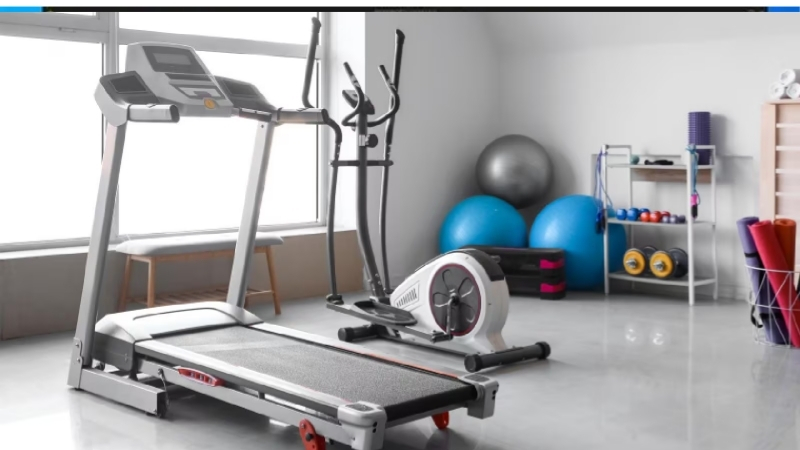
The best workout equipment home setups keep shares one trait: they can be set up and packed away in under a minute. Anything requiring reassembly, threading straps or clearing furniture gets used enthusiastically for about six weeks and then quietly stops being touched.
The second trait is that the item covers more than one movement pattern. Single-purpose equipment competes for space against everything else in the room and usually loses, whatever its quality, because the storage cost per exercise is too high.
Novelty is the strongest predictor of abandonment. Kit bought because it looked interesting rather than because it filled an identified gap in a programme has a much shorter useful life than kit bought to solve a specific loading problem.
Load Ceiling and Whether You Outgrow It
Ask where the ceiling of any best workout equipment home purchase sits relative to eighteen months from now, not where you are now. A 50 lb (22.7 kg) per hand dumbbell ceiling covers most people for two or three years; a 20 lb (9 kg) kettlebell is outgrown in months.
Body-weight tools have a ceiling set by your own mass, which means progression comes from leverage, tempo or added load in a vest rather than from the tool. That is a real limit rather than a flaw, but it needs planning for at the point of purchase.
Conditioning equipment is the exception, because the ceiling is your own output rather than the machine’s. A rower or a rope stays challenging indefinitely, which is one reason those items survive longer in home setups than most strength kit does.
Footprint, Storage and Sharing the Room
Stored size is the number that determines whether a shared room stays usable, and it is the number listings omit. A folding bench stands upright in under 2 sq ft, a wall-mounted rack folds to a few inches of wall depth, and a rower splits or stands on end.
Flooring is part of the footprint calculation, not an accessory. Rubber tiles or stall matting define the working area, protect the surface underneath, and cut impact noise transmitted to rooms below far more effectively than any rug.
Measure the actual dimensions of the space you intend to use before ordering, including ceiling height, doorway width and the wall depth a folding rack needs when open. Working clearance is almost never published alongside assembled dimensions.
Parts, Warranty and Resale Value
Read warranties as separate documents for frame, moving parts and upholstery, because the terms rarely match and the shortest one describes the realistic service life. Then check whether individual parts are listed as orderable spares.
Mechanical equipment holds value. Bars, plates, kettlebells, racks and benches sell readily second-hand years later, while anything whose core function depends on an active subscription or a proprietary app depreciates far faster.
Most of this category is still designed around wide garages, which leaves compact and folding options a thin slice of the market. Anyone equipping a spare bedroom is choosing from a much shorter list than the total product count suggests, and that shortage is worth planning around.
Top Picks: 6 Pieces of the Best Workout Equipment Home Owners Keep
Each of these picks for the best workout equipment home training retains covers multiple patterns, stores in a defined place and has replaceable parts. The table compares load ceiling against stored size, because between them those two numbers explain most abandoned equipment.
| Item | Load ceiling | Stored | Wear part | Why it survives |
|---|---|---|---|---|
| Bowflex SelectTech 552 | 52.5 lb (23.8 kg) per hand | Cradles under a bed | Dial and shroud | Covers four patterns |
| Concept2 RowErg | Your own output | Splits, stands upright | Chain and seat rollers | Never becomes too light |
| Cast iron kettlebell | Fixed weight | A corner | None | Nothing to break |
| Fitness Reality 1000 bench | Rated to 800 lb (363 kg) | Folds upright | Upholstery | Doubles dumbbell range |
| Wall-mounted folding rack | Bar and plate limited | Flat against the wall | Pins and pull-up bar | Squats without a garage |
| Interlocking rubber tiles | Not applicable | Stay down | Surface wear | Protects floor and neighbours |
1. Bowflex SelectTech 552 Adjustable Dumbbells
Still the highest survival rate of anything in a home setup. One pair replaces fifteen fixed sets, adjusts from 5 to 52.5 lb (2.3 to 23.8 kg) per hand, and the cradles slide out of sight in seconds, which removes the main reason equipment stops being used.
They cannot be dropped or rested on their ends, and the increment widens to 5 lb above 25 lb. Legs outgrow the ceiling long before the upper body does, so most owners eventually add a barbell rather than replacing the dumbbells themselves.
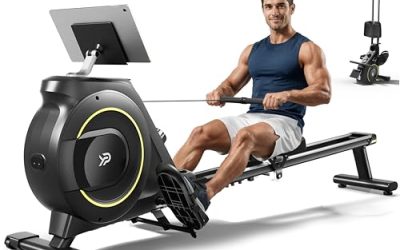
2. Concept2 RowErg
The clearest example of equipment you cannot outgrow, because resistance scales with your own effort rather than a setting. It separates into two pieces to stand in a corner, parts are available years later, and second-hand demand keeps resale value unusually high.
It needs roughly 96 in (244 cm) of clear length in use, which many spare rooms cannot offer, and the chain and flywheel produce a noise that carries through floors in a flat. Neither is a defect, but both need planning before delivery.
3. A Cast Iron Kettlebell
No mechanism, no upholstery, nothing to service. One bell in a sensible weight covers swings, goblet squats, carries and presses, and the hinge pattern in particular works far better with a bell than with a dumbbell held at the hip.
Fixed weight is the limitation, so progression means buying another bell rather than adjusting this one, and each occupies its own corner. Set it down rather than dropping it, and keep matting underneath if the floor is tile or laminate.
4. Fitness Reality 1000 Super Max Bench
A bench roughly doubles what dumbbells can do, adding incline and decline pressing plus supported rows. This one carries a high rated capacity, offers multiple back positions, and folds upright so a shared room returns to normal after training.
The pad is firm and the frame is heavier than budget folding benches, which makes it less convenient to move between rooms. Upholstery is the wear part, splitting at the seams first, so check whether replacement pads are available.
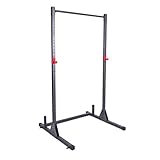
5. A Wall-Mounted Folding Power Rack
The compact answer to squatting and pressing safely alone. Mounted to studs or masonry, it folds flat to a few inches of wall depth between sessions, which is realistically the only way most spare bedrooms accommodate a full rack at all.
It demands a structurally sound wall and proper fixings rather than plasterboard anchors, and installation is a drilling job. Depth when folded out is fixed, so measure the swing clearance for a 7 ft (213 cm) bar before committing to a wall.
6. Interlocking Rubber Floor Tiles
The least exciting purchase here and among the most used. Tiles define the working area, protect laminate and tile from plate edges and dumbbell ends, and cut the impact noise that otherwise travels straight through joists to a neighbour below.
Thin tiles compress under rack feet and can shift during dynamic work unless the area is fully covered, and cheaper foam versions dent permanently. Buy proper rubber tiles rather than foam ones if a barbell or heavy dumbbells are involved.
Frequently Asked Questions
Questions about the best workout equipment home setups retain tend to cluster around abandonment, floor space and buying second-hand. Each answer below deals with measurable factors such as space, ceiling and parts rather than motivation.
What Gets Abandoned Most Often?
Single-purpose equipment that needs setup time and has a low ceiling. Vibration plates, ab devices and light fixed dumbbells top the list, because each competes for storage against everything else in the room while covering only one movement.
Is a Rower Worth the Floor Space?
If you have 96 in (244 cm) of clear length, usually yes, because it is one of the few pieces you cannot outgrow and it works the whole body rather than legs alone. In a smaller room, a rope and a kettlebell cover conditioning in a fraction of the space.
Do Wall-Mounted Racks Need Special Walls?
They need timber studs or solid masonry and the manufacturer’s specified fixings. Plasterboard anchors are not suitable at any rating. Locate the studs before ordering, and check that the folded depth still leaves a usable walkway in the room.
Should I Buy Second-Hand?
For bars, plates, kettlebells, racks and benches, second-hand is usually sound value, since these have few failure modes and inspect easily. Be more cautious with cable machines, rod systems and anything app-dependent, where parts and software support may already have ended.
See More:
- Best changeable dumbbells
- Best rated yoga mat
- Best mat yoga
- Best home gym equipmen
- Best fitness equipment for home gym
Final Thoughts
The best workout equipment home training actually retains is whatever packs away in under a minute, still challenges you in a year and has parts you can still buy. Measure the storage space before the training space, and put flooring down before anything heavy arrives.





Write Your Review
No reviews yet. Be the first to share your experience!