
The best budget weight lifting chains are the lowest-cost pair you can mount correctly and use through the bar path you train. A bare pair can save money if you already own feeders. A kit with collars or a complete suspension system can cost less overall when you are starting with only a barbell and plates.
Budget weight lifting chains by total setup cost
Two Rogue 10-pound singles make an inexpensive matching main pair for an existing suspension system. VEVOR and Power Systems offer affordable collar packages. The Bells of Steel 28 LB Set includes separate feeders, while Titan offers more working-chain weight if you already have a compatible way to hang the pair.
| Product or configuration | U.S. reference price | Listed weight | What to account for |
|---|---|---|---|
| Two Rogue 1/2-inch 10 LB singles | $54.00 for two | 20 lb main pair | Feeder and attachment hardware purchased separately |
| VEVOR Silver 26 LB Olympic Set | $75.99 | 26 lb across both chains | Included Olympic attachment collars and hardware |
| Power Systems Lifting Chains, 20 LB | $77.00 sale, $154 regular reference | 20 lb pair including collars | Sale is variant-specific |
| Titan 6 FT 5/8-inch Heavy-Duty Chains | $116.97 sale, $129.99 regular reference | 40 lb main pair | Carabiners included, feeder arrangement separate |
| Bells of Steel 28 LB Set | $117.99 | 23 lb main pair plus 5 lb lead pair | Matched leads and quick links included |
| Ader Zinc 30 LB Olympic Set | $138.00 | 30 lb pair, listed at 15 lb each | Olympic attachment collars included |
Prices are U.S. listing references before tax and any added shipping. Inventory, promotions, and variant prices can change. The weights follow each seller’s coverage, so a listed 20-pound package including collars is different from a bare 20-pound main pair. Check both the contents and final checkout total.
How we compared budget weight lifting chains
We compared the cost of two matched sides, the equipment included, and how much additional hardware a home gym might need. The recommendations come from published specifications and pricing. We favored configurations that solve a clearly defined purchase problem, from adding main chains to an existing system to building a complete first setup.
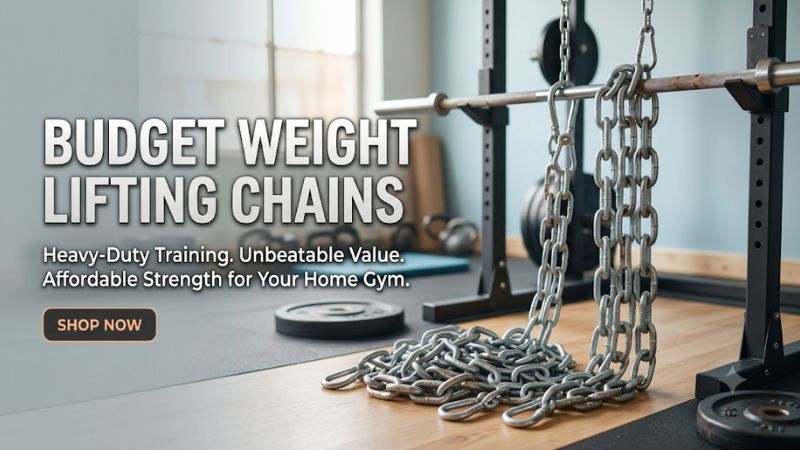
Compare full delivered costs rather than pair prices alone
Write down which parts you already own. Add the two main chains, their approved connectors, and the feeders or attachment collars the manufacturer requires. Include shipping and tax, and budget for suitable flooring or storage if needed. Heavy packages can have a different delivered cost even at similar list prices.
Suppose two main chains cost $54, a compatible feeder and attachment system costs $43, and shipping comes to $16. The delivered total before tax is $113. A $90 complete kit with $10 shipping totals $100. If you already own the appropriate feeder and connectors, the comparison changes because the $43 is no longer a purchase.
Measure usable sleeve space and bar position before you buy a set for its apparent value. A wide mount can force a change to your plate arrangement. A direct collar system that cannot give you the desired pickup on a high squat may require another purchase. The least expensive useful option fits the equipment and the lift.
Compare paid-for weight with the load you can actually use
A pair’s advertised mass describes what you purchase. The bar carries the part of the chain and hardware suspended at a particular height. If a lot of chain rests on the floor at lockout, you may pay for more steel than you use for that particular lift. Check your intended configuration before paying for extra mass.
Say a 26-pound main pair adds 4 pounds at the bottom of a setup and 18 pounds at the top. The measured change is 14 pounds. A different 20-pound pair could create a similar change if positioned to lift a larger fraction of its links. Give weight to the pickup through your actual range of motion.
Expensive hardware can be worth it if it makes the setup predictable. A cheap pair may be entirely sufficient for a fixed bench station. An adjustable feeder may save money in a gym where you use the same chains for higher squats and lower bench work and would otherwise buy more than one pair.
The best budget weight lifting chains by use case
The least expensive option here is a component purchase. The collar-based options give you hardware in the box, while the feeder bundles give you a different way to adjust the chain drop. Read the sections below alongside the exact price and kit contents, especially if you have a short bar or a crowded rack.
Two Rogue 10-pound singles for an existing attachment system
Rogue lists one 1/2-inch main chain at 10 pounds and $27. Ordering two gives you a nominal 20-pound main pair for $54 before delivery. This is the value choice for someone who already owns compatible feeders or loaders and the approved connectors needed to attach the pair to the bar.
Rogue identifies the singles as chain without installation hardware. A current Rogue or other compatible system may already include the parts you need. Verify the connection based on the maker’s instructions, including how the main chain is supported and how the complete suspension stays secure throughout the movement.
If you need to buy everything, compare the two singles plus accessories with Rogue’s 1/2-inch Chain Kit at a $90 reference price. The kit includes the two 10-pound main chains, two four-foot feeders, and carabiners. A $36 difference can disappear quickly once you add separate equipment and delivery.
Buy the singles when you can describe exactly how they will attach to a matched setup. Buy the complete package if you need a known set of compatible components. Record the main pair’s listed weight separately from your existing feeder and connector mass.
VEVOR Silver 26 LB set for a low-cost direct mount
The VEVOR Silver set lists 26 pounds across two chains, roughly 1.6 meters per chain, and includes nominal two-inch Olympic attachment collars. Its $75.99 reference price makes it an accessible whole-package option for a buyer who wants moderate chain mass and can verify that direct mounting fits the room and bar.
The maker lists the collar at about three inches long. That can take substantial room on a compact sleeve, depending on installation. Lay out the intended plate stack and retention hardware before ordering. Confirm which portion of the sleeve the included attachment requires and how it is meant to be secured.
This set makes the most sense when your first lift works at the attachment height provided. A higher squat setup may require a different approved suspension arrangement to achieve the chain pickup you want. Use the listed mass as a buying reference and weigh or measure the complete assembly for accurate training totals.
Buy it when the low delivered cost includes a mount you can use. If your sleeve lacks the necessary room or you want several feeder positions for different lifts, a budget kit with a separate lead chain may prevent a second purchase.
Power Systems 20 LB pair for a light package with collars
Power Systems lists five-foot chains and states that the collars count toward the package weight. Its 20-pound option was listed at a $77 sale reference, with $154 as the regular reference. The set suits a home lifter who wants a lighter combined package and has already checked the approved collar fit.
Because the collars are included in the weight, the moving part of the main chains accounts for less than the headline number. That can suit someone trying to make a small change across a press. Someone targeting a larger variable difference should verify the chain-only mass and measure the pickup instead of relying on the 20-pound figure.
Check which variant is selected. The same page lists 20-, 30-, and 48-pound options. Sale prices and stock can differ, and the value judgment here depends on the 20-pound option’s checked sale price. If the promotion ends, compare the actual total with a lighter Rogue kit or the similarly priced VEVOR package when available.
Buy this pair when you want a small, direct-mounted package and the price is close to the sale reference. Choose a modular set when the same pair must work with different attachment heights or when you specifically want more main-chain mass for the next progression.
Titan 40 LB main pair for more chain per dollar
Titan’s six-foot 5/8-inch chains weigh 20 pounds each and come with carabiners. The checked U.S. listing showed $116.97 on sale against a $129.99 regular reference. That is a useful price for a 40-pound main pair if a suitable feeder or loader is already available and the six-foot chain fits your station.
Price per pound can help when the assembly is otherwise suitable. At the sale reference, the main pair costs about $2.92 per listed pound before delivery. That figure excludes any separate hardware needed to hang it from your bar. Compare the delivered and assembled price rather than treating the raw steel value as the whole decision.
Use the length as another screen. Six-foot chains can suit a higher setup, while producing more material on the floor at lower bar heights. A short bench station may not use enough of the chain to justify the extra weight. Verify your lowest and highest positions and whether the chain has a clear landing path.
Buy Titan if you want a heavier, longer pair and can complete the setup economically. A lighter bundled option can be cheaper and easier to use if you still need an entire system and your first training goal is a modest change.
Bells of Steel 28 LB Set for an adjustable first bundle
The Bells of Steel 28 LB Set includes a 23-pound pair of five-foot main chains, a five-pound pair of six-foot lead chains, and corresponding quick links. The checked package price was $117.99. It is a practical option when you want a separate feeder and know you will use different attachment heights.
The 28-pound name describes both pairs. The heavier links provide the main accumulation of load as they rise. Part of the lead may be contributing to the supported mass as well. Check the effective load at your intended heights and record the configuration rather than assuming there is a full 28-pound increase.
Compare the bundle with separately sold components if you already own some hardware. Bells listed the 23-pound main pair separately. A lower component price can make sense when your existing feeder is approved and fits. For a first setup, the bundle can save you coordinating sizes and buying the connectors separately.
Buy it when you want one matched, adjustable system and the 23-pound working pair makes sense for your target. If only a smaller fixed bench setup matters, compare the lighter direct options and the Rogue starter kit at their actual delivered prices.
Ader Zinc 30 LB set for an included Olympic attachment
Ader’s zinc set lists two approximately five-foot chains at 15 pounds each and includes zinc-coated Olympic attachment collars. The $138 reference price makes it the upper-priced pick in this budget comparison. It remains relevant for a buyer who wants a 30-pound pair and values the collar arrangement supplied with it.
The value appears when the collars fit your bar and save you another purchase. In a gym that keeps one station configured for chains, a direct package can be quicker to reset. Measure where the chain hangs and verify that both sides lift through the same range. Taller or lower bar positions may call for a different suspension setup.
Check how Ader reports the combined mass and verify the actual hardware weight if you log small progressions. A pair with included collars and a longer main chain can take more space in storage than a light kit you use occasionally. That can affect the purchase in a small training room.
Buy Ader if the exact mount and 30-pound pair match the intended lift. If you need a different feeder arrangement or can get the desired resistance with less chain, compare the Bells bundle or Rogue kit before paying the higher reference price.
How to save without buying the wrong chain setup
The price you should compare is the cost of a repeatable first working session. Write down the required hardware, your open sleeve length, and the amount of chain you want supported at two points. Then decide whether to buy a complete kit, add main chains to existing hardware, or shop for a used matched pair.
Keep the first pair close to your actual training goal
A lighter pair is a useful first buy when you are learning how the variable load feels. Choose the first lift and measure the expected pickup through that movement. Adding lighter chains lets you compare configurations without buying more steel than the station or program can use comfortably.
For example, if your target is a modest increase during a short bench press, a 20- to 26-pound pair may give enough room to experiment after adjusting the mount as directed. A longer 40-pound pair could leave much of the chain on the floor. Its extra mass is valuable only if the geometry produces the desired contribution.
Plan your next progression as well. If a lighter kit gives a useful range now and you can add a compatible second pair later, there is little reason to buy both pairs on the first day. Check whether that future addition will fit your sleeves and floor before relying on it as the upgrade path.
Verify used chains by inspecting both matched sides
A used set can be worth buying if the chains and attachment parts can be identified and checked. Ask for the model, chain length, mass of each side, and photographs of the links and closures. Confirm whether the sale includes the complete mounting system or only the working chains.
Inspect connectors, links, and any straps or covers before assigning a price. Bent, damaged, or heavily worn parts can make a bargain unusable. Ask about replacement hardware the manufacturer supports. Test compatibility with the bar unloaded and purchase only a setup whose condition and intended use you can verify.
Local pickup can avoid heavy shipping and let you compare both sides in person. If two sets look similar, weigh them separately and check that all necessary pieces match. A single chain can be a useful replacement only when it matches the model, length, and mass needed to keep both assemblies equivalent.
Compare a modular and a direct-mount kit across two lifts
A direct-mount kit may be the least expensive useful choice for one station. An adjustable feeder system may be cheaper over time when you plan to train several lifts whose bar heights differ substantially. Compare bench and squat positions, or bench and deadlift, before treating them as the same equipment requirement.
Say the direct set mounts easily for a low bench and leaves too much chain suspended during your squat setup. A second attachment purchase or another pair of chains changes the budget. An adjustable kit costs more at first and may cover both positions with approved settings recorded for each lift.
Conversely, a dedicated bench station may never use the extra adjustment. The right budget depends on how many configurations you will actually train. Make your purchase around one confirmed setup and one realistic expansion, rather than every exercise a seller lists.
Frequently asked questions about low-cost lifting chains
Low-cost chains can work well when the pair is matched and the required hardware is included or already available. The common budget mistakes are buying one chain by accident, overestimating usable load, and discovering you need more sleeve space. Check those three details when comparing an entry-level package.
Does a heavier pair always give better value?
A heavier pair offers more main-chain mass for the right setup. Its practical value depends on how much leaves the floor over your working range. A shorter lift or an awkward mount can leave much of a heavy pair supported throughout. Compare your likely load difference before buying by cost per pound alone.
A moderate complete kit can give more use than a heavy component pair if it fits your existing equipment without extra parts. If a heavier pair gives the load change you want and you already own appropriate feeders, the greater main weight may be the better purchase.
Do I need two feeders when using two chains?
Use the mounting method specified for the system. A modular setup often uses a matched feeder or loader on each side so the working chains hang at the intended height. A direct collar set may use a different approved arrangement. Check which parts are included and keep both sides configured consistently.
If you must change the hanging position, follow the manufacturer’s adjustment method and check both sides at a light load. The complete connection and matched pickup are more important than choosing an inexpensive connector that happens to fit through a link.
Are discounts on complete kits worth waiting for?
A promotion helps if it covers the exact model and configuration you measured. A discount on a heavier option or a different length can create a new fit problem. Check the regular price of the most suitable kit and compare the delivered sale total with separately available compatible parts.
If you already have the main components, an affordable matching replacement may make more sense than buying a complete set during a promotion. If you are starting from scratch, a bundle can give you more predictable fit, especially when the seller specifies what each side uses.
Conclusion
Choose two compatible Rogue singles if you already own feeders, or start with VEVOR or Power Systems if you need attachment collars in the box. The Bells 28 LB Set offers more adjustment, and Titan makes sense for heavier main chains. Compare the complete delivered price against the load change you can actually use.
More from Amazon
Programs that pair well with the guide above. Offers and eligibility are set by Amazon and may change.
Free shipping on eligible items, Prime Video and more. Eligible new members can start with a free trial.
Start a Prime free trialA Prime membership for ages 18-24 with a trial period. Eligibility is set by Amazon.
See Prime for Young AdultsAudiobooks and podcasts to listen to on the go. Eligible new members can start with a free trial.
Try Audible freeAd-free music streaming. Eligible new subscribers can start with a free trial.
Try Music Unlimited freeAs an Amazon Associate we earn from qualifying purchases.
Write Your Review
No reviews yet. Be the first to share your experience!