
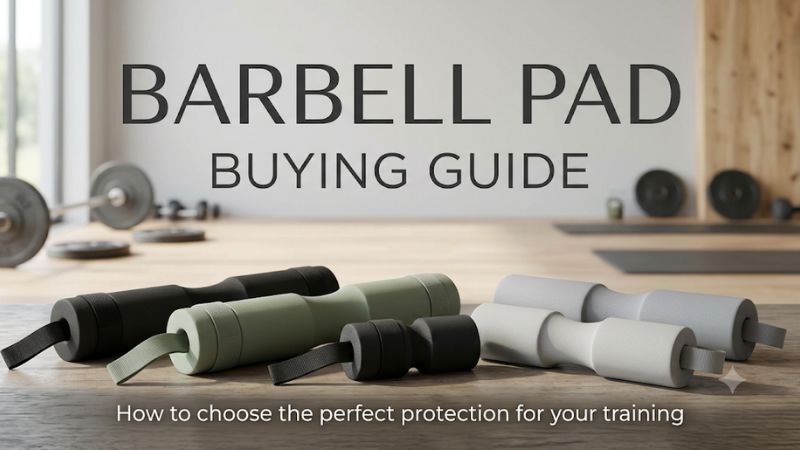
This barbell pad buying guide helps you choose the right shape, closure, and foam profile for your lifting setup. Start with the area the bar touches, then check the center shaft diameter and clearance around your body. Those measurements help you decide between a slim sleeve, a thicker wrap, and a flat pad.
Choose around the exercise and contact area
Start with the lift you do most often and the surface where the bar rests against you. A squat pad rests between the shaft and the upper back, while a hip thrust pad cushions the front of the hips. Each position has a different concern, including how far the pad moves the shaft away from its usual contact point.
A buyer looking for one pad for both moves should make room for both checks. The pad needs to stay centered on the shaft during a squat. For hip thrusts, it should also leave space to get into position and remain centered as you begin a set. Someone focused only on thrusts can choose a wider flat pad or thicker wrap once the loading setup supports it.
Choose squat cushioning that preserves a repeatable bar position
If you squat with a pad, compare how much material sits between the bar and your upper back. A slimmer profile can add cushioning with a smaller change in bar position. A larger cylinder may feel useful at the point of contact and still change where the bar sits when you unrack or step back.
Check a light rehearsal with the pad placed as the manufacturer intends. Notice whether the shaft remains in the same position, whether the pad shifts as you move, and whether both hooks are easy to clear and reach again. If the setup feels different between sets, check the way the pad sits on the shaft and whether your hand position has changed.
Use the product’s length to see whether the covered portion contacts the intended area. A long pad can occupy more of the bar than you want, and a short one may leave part of the contact area exposed. Make the choice against the same squat style and bar you plan to train, especially if those settings change between users.
Choose hip thrust coverage based on how the bar meets your hips
Hip thrust padding has to match the way you set up below the bar. A wrap stays with the shaft and changes the loaded gap underneath. A flat pad lies across the hips separately and changes how you bring the bar into place. Compare the contact width and setup motion for the equipment you already have.
A cylindrical wrap suits people who want a consistent piece of foam attached to the shaft between sets. A flat product can make more sense if the narrowest part of the cylinder still feels concentrated or you want a wider area of contact. Check the flat pad’s height, depth, and model-specific placement. It may be easy to store and still need additional room while getting into position.
Think about your lowest starting height. A pad that works on a bar with full-diameter bumpers may feel restrictive when you use smaller iron plates. Check whether the thickness interferes with entry or the starting position before choosing it for the foam alone. The right dimension can change even when the exercise and total load are similar.
Use a single general-purpose pad when both fits work
One pad can serve squats and hip thrusts when it secures on the actual shaft, gives useful coverage, and you can reproduce the setup in both positions. A medium-profile cylindrical pad is a reasonable place to compare options. Check the important part of both lifts before relying on a product’s claim to support them.
To do that, mock up the hardest fit question first. If you use small plates for hip thrust warm-ups, verify the gap below the pad. If the squat position is sensitive to added material, compare thinner options at the rack. A product that fits both situations has more value than one that is well specified for only the occasional lift.
If different pads make sense for the two exercises, choose from distinct needs. A thin covered sleeve for a conventional squat and a broad hip thrust pad can work well in one gym. A second pad costs more and needs storage. Buy it when each one provides a feature you use regularly enough to notice.
Read the measurements and materials correctly
A listing may report overall length, outside diameter, foam thickness, and inside diameter on the same page. These figures describe different things. Length tells you how much of the shaft is covered. Outside diameter affects clearance. The inside opening and closure govern whether a round pad can sit securely on the bar.
| Specification | What it describes | What to check |
|---|---|---|
| Overall length | How much shaft the pad covers | Fits the straight center section and intended contact area |
| Outside diameter | Width across a cylindrical pad | Clears the floor, your body, and other equipment |
| Foam or core thickness | Material dimension described by the seller | Useful only when comparing similar measurements |
| Inside fit or shaft range | Size the pad is intended to wrap | Matches the exact center of the bar |
| Closure | How the pad stays in position | Seats fully and can be checked before use |
| Flat pad width and depth | The usable shape over the hips | Fits the placement sequence and storage location |
| Cover material | The outer surface you touch and clean | Care, seam position, and wear fit your routine |
Measure the shaft rather than the plate sleeve
The center shaft is the part a wrap goes around. The sleeves at the ends support the plates and are typically much larger on Olympic bars. A nominal 50 mm Olympic sleeve does not mean you need a pad made for a 50 mm shaft. Measure the exact area where the pad will be installed.
You can measure diameter directly with calipers or estimate it from circumference using a flexible tape. Circumference divided by pi estimates diameter. A circle around 89.5 mm gives roughly 28.5 mm. Use a light touch and measure at the contact area, accounting for any texture or coating. If a measurement falls close to the end of the manufacturer’s stated range, verify seating before relying on it.
Check the shape as well as the size. A bar can have a bend, center collar, thick center knurl, or a fixed attachment near the contact area. A pad can match a nominal diameter and still land unevenly over one of those features. Look for a straight usable span that matches the pad’s length.
Separate the full diameter from the amount of foam
A four-inch outside diameter describes the full tube. Part of that size includes the opening for the shaft. Advertised foam thickness may describe the wall at a particular point, the core material, or the thickest area. Curved or cutout pads can also have different thicknesses across a single item.
Use outside diameter to evaluate physical clearance. Use foam thickness only to compare figures measured in the same way, such as a cover manufacturer’s stated core thickness against another core figure. A flat pad’s height also describes a different structure than the outside diameter of a tube. A 1.75-inch flat pad and a 3.5-inch cylinder can change the bar position in different ways despite the apparent numerical relationship.
If a product lists one number and you need the other, look for a dimensioned diagram or ask the seller. Choose a pad whose dimensions you can reasonably compare. A precise-looking specification is less useful when it fails to say which part of the product was measured.
Consider firmness, shape, and contact width together
“High density” describes the material as sold, but competing products may use the phrase without reporting directly comparable foam measurements. Firmness under your working load also depends on the layers, width, and construction. A narrow firm pad can feel different from a broad pad with a firm top and softer body-facing layer.
Look for documented differences in the structure rather than assuming a higher thickness number means more effective cushioning. A pad with a flat, broad shape can use well-defined layers for different contact points. A cylindrical model needs to do more around the fastening opening. These designs can feel different even with similar amounts of foam where the bar first contacts them.
For a purchase you can try, start with an appropriately light setup and assess whether the cushion keeps its position and provides the coverage you want as load changes. Inspect the foam after use for areas that remain compressed or lose their shape. If the same part continues to collapse, consider another construction suited to that lift.
Check how contouring affects where pressure lands
A cutout can change the thickness near the center of the pad. On a squat-first model, it may be shaped to accommodate the neck or upper-back area as the maker intends. For hip thrusts, a continuous section may be more useful if you want similar coverage across the area where the bar rests.
Compare the usable cushioned length rather than treating the outline as the same as the contact area. A 17-inch pad with a central recess and tapered ends may cushion a smaller section than a flat face of similar length. The contour could suit your position well, depending on the bar and where the pad meets your body.
Test how the curve, seams, and closure face during the exercise. A contour turned away from its intended position may produce different contact. Follow the installation instructions instead of rotating it randomly to gain an extra fraction of an inch in clearance.
Pick a closure that works on your equipment
A pad can snap around the shaft, wrap closed with a sewn-in fastening, or use separate straps. Compare what happens when you put it on and take it off, as well as whether it stays in place at a light load. A good fastening choice should fit your shaft and be easy to inspect before a set.
Choose molded snap-on foam for one known shaft
Molded foam opens at a slit and uses its shape to fit around the center of the bar. It is quick to attach when the opening and the shaft match. Check that the foam seats fully and stays centered when you move the empty bar. A loosely seated molded pad needs a fit check before you increase the weight.
This style makes sense when you own the bar and want the same fit each time. It keeps the pad in one piece and reduces the need to handle extra parts in a small gym. If you use a variety of bars, read the actual model’s fit range or try it on the shaft you use most. Models sold for common Olympic formats can have different openings or foam tension.
Inspect the slit and its edges over time. An opening that tears or remains spread can affect how securely the pad sits. Use the specified removal and cleaning method so the foam and seams remain in the shape the manufacturer intended.
Choose an integrated wrap for visible closure
A full-wrap design places cushioning around the bar and fastens it with a built-in closure. It is useful when you want to check how much of the fastening overlaps. Start with the exact shaft, follow the intended orientation, and verify that the wrap is secure without bunching or leaving the seam at the contact point.
A wrap may accommodate a useful range of shafts, depending on its construction and supported dimensions. Buy from that range rather than assuming more fabric means universal fit. If you switch frequently between two bars, check both at the lower and upper end of the fit. A wrap that catches on only a narrow strip of its closure needs attention before use.
Think about maintenance as part of the choice. Hook-and-loop material can collect lint, and a cloth outer needs the appropriate cleaning and drying routine. Check the manufacturer’s care instructions before washing, soaking, or applying cleaner to the foam. Damaged closures and torn covers can change retention even if the thickness appears unchanged.
Choose separate straps when placement helps fit
Separate straps can help close a slit-style pad at points the model is designed to support. Check that the straps are part of the exact kit and install them as directed. Position any overlaps away from body contact where the instructions allow, then verify that the foam stays on the intended straight shaft section.
A buyer who wants more control over fastening may like this design. A buyer who frequently carries the pad may prefer an integrated closure to avoid losing parts. Compare both in the routine you actually use, including how often you take the pad off and whether you have a consistent place to keep the straps between workouts.
Use the supplied fastening method. A loose pad can have a size or wear problem that additional tightening cannot fix. Check the fit of the foam body first, then look at the strap or seam. Replace damaged components according to the maker’s guidance.
Verify the setup before paying for thicker padding
The final choice depends on the combination of your bar, plates, pad, bench, and movement. Check the lightest working configuration and how the bar gets into position. If the bench or bar moves during a light rehearsal, isolate the cause. Thicker foam addresses contact and can reduce the available gap below the shaft.
Check the actual bar height and floor clearance
Take the largest and smallest plates you expect to use and see where the shaft sits when each pair rests level on the floor. A larger plate raises the bar’s center if the plate is the support point. A protruding or thick pad lowers the free space under the shaft. Verify the gap with the actual shape installed.
A simplified example uses a 17.7-inch plate and a four-inch circular pad. The center is about 8.85 inches above the floor if only the plates touch. The pad goes about two inches below the center, leaving about 6.85 inches underneath. Use the real clearance instead of assuming this estimate fits a different plate, offset pad, or a bar resting on different supports.
If entry is the problem, work from the available opening and the movement you can control. Compare a lower-profile pad, a compatible plate setup with more starting height, or a floor-based alternative. A strong fastening feature can still be the wrong purchase if the outer shape blocks the position you need.
Check materials and cleaning before checkout
A molded pad might have a wipeable skin, while a covered pad can use synthetic suede or fabric around the cushioning. Compare what the maker says about the size, cleaning, and use of that particular model. Choose the version you can maintain if it will be used in a shared gym or stored after every workout.
Look at the surfaces most likely to wear. These include the slit, seams, retaining straps, closure, and the contact area facing the shaft. Keep the pad clean and dry in line with the instructions. If the pad remains misshapen, exposes material near the contact point, or no longer fastens properly, reassess the fit before using it again.
Use a short checkout checklist
Record the exercise, shaft diameter and usable width, intended closure, desired pad profile, and clearance in your lightest setup. Add the full price with shipping and any required parts. Match the exact model and variant, especially when one brand sells standard, Olympic, squat-specific, and hip thrust versions.
On arrival, check the item against the listing. Confirm that the pad and included parts fit, install it as specified, and make sure you can put the bar into position under a light load. If two products both satisfy the fit checks, decide from the closure, care, price, and convenience you will notice during a normal week.
Frequently asked questions
Specifications can narrow your choices quickly when you compare like for like. Check the numbers for the exact version you intend to buy, then rehearse the lift with appropriate light equipment. The most useful details to carry into checkout are the center shaft diameter, usable contact length, and actual clearance.
Is a 1.5-inch pad always thicker than a pad listed at 3.5 inches?
Compare what the figures represent. A 1.5-inch listing might describe foam thickness, while 3.5 inches might describe the full outside diameter of another pad. Get the dimensions in the same form before comparing. Check the outside profile when you need to assess floor clearance.
Should I put a barbell pad on a machine bar?
Follow the machine and pad manufacturers’ instructions. Check the mounted bar where the pad will sit, whether the attached closure can engage, and whether the pad interferes with any fixed brackets or stops. A universal claim for a free bar may not establish compatibility with a specific machine.
Can I wash the foam and cover together?
Use the care instructions for the exact model. Some surfaces can be wiped clean, and other products have a removable cover or more specific cleaning requirements. Let the pad dry as directed, and check the fastening and foam shape before its next use.
How do I know whether to choose a flatter or rounder pad?
Choose by the area you want to cushion and how you set up. A round pad moves with the shaft when installed. A flat pad spreads contact over a wider area and is placed separately. If both are compatible with your exercise, compare the process for getting into position and whether the coverage stays useful throughout the set.
Conclusion
Choose the pad by exercise and contact area, then verify shaft fit, closure, and the space available to start the lift. A slimmer sleeve suits modest squat cushioning, a thicker wrap can serve hip thrusts with room to enter, and a flat pad can give broader coverage when its separate placement fits your setup.
More from Amazon
Programs that pair well with the guide above. Offers and eligibility are set by Amazon and may change.
Free shipping on eligible items, Prime Video and more. Eligible new members can start with a free trial.
Start a Prime free trialA Prime membership for ages 18-24 with a trial period. Eligibility is set by Amazon.
See Prime for Young AdultsAudiobooks and podcasts to listen to on the go. Eligible new members can start with a free trial.
Try Audible freeAd-free music streaming. Eligible new subscribers can start with a free trial.
Try Music Unlimited freeAs an Amazon Associate we earn from qualifying purchases.


Write Your Review
No reviews yet. Be the first to share your experience!