
Choosing an EZ curl bar vs alternatives comes down to how your hands move and where resistance comes from. An EZ bar gives both hands a shared angled grip. Dumbbells let each hand turn independently, and a cable can change the line of pull. Pick the tool that fits your main exercise, loading, and home gym.
EZ curl bar vs alternatives at a glance
An EZ curl bar is a good choice if you want two hands on one implement, several fixed grip angles, and small weight increases using compatible plates. A straight bar gives you a single straight grip. Dumbbells, cable attachments, and neutral-grip bars each change the hand position or the way the load moves.
| Equipment | Grip and resistance | Best fit | Practical trade-off |
|---|---|---|---|
| EZ curl bar | Shared shaft with angled grip segments, gravity-driven load | Bilateral curls and lying extensions with a fixed angled grip | Both hands use the same bar and your plate stack must fit |
| Straight barbell | Shared straight shaft, gravity-driven load | Straight-bar curls, a shared bar for pressing, and familiar loading | A heavier empty bar and a longer footprint may limit accessory work |
| Dumbbells | Independent handles, gravity-driven load | Single-arm work, adjustable hand angle, and compact storage | Per-hand limits and adjustment increments vary |
| Cable attachment | Fixed or independent handles pulled toward a pulley | Pushdowns, curls, and training with an adjustable line of pull | Requires a compatible station and enough cable travel |
| Neutral-grip triceps bar | Fixed parallel handles, gravity-driven load | Bilateral extensions or curls with palms facing inward | Handle width and grip orientation have fewer options |
| Preacher curl machine | Supported arm position and a model-specific path | Repeatable isolation work within an available station | Fixed equipment, distinct resistance, and less mobility |
Choose the tool by the ability you want to keep. Someone who wants both arms on a plate-loaded accessory bar has a clear reason to compare the EZ design with a straight shaft. Someone who needs one arm to move differently from the other may benefit more from a dumbbell or independent cable attachment. A buyer with a cable already installed can approach the question by exercise direction instead of buying another bar by default.
EZ curl bar vs straight barbell
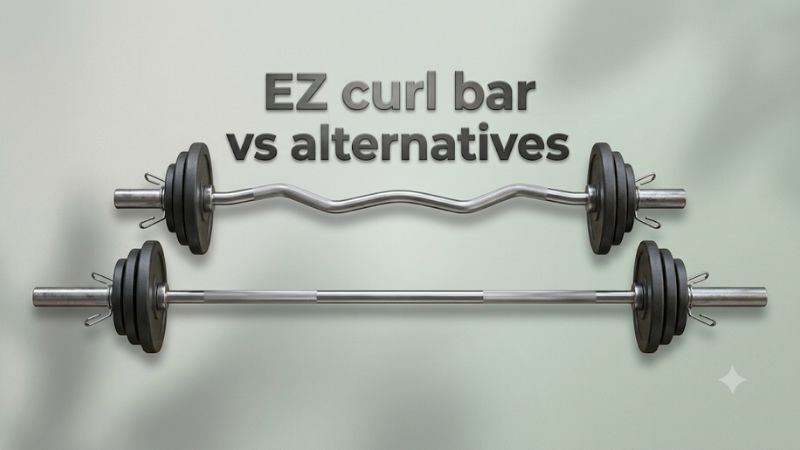
A straight shaft gives both hands a shared horizontal grip and lets you reproduce the same hand spacing across sessions. An EZ bar gives you angled sections at fixed points. The bar you prefer depends on where your hands naturally sit, the weights you use, and the other work your straight bar already covers.
Compare grip position and the lengths you can use
A straight-bar curl is typically done with palms up and hands on a straight shaft. The bends of an EZ bar allow a more angled position when you hold the sloped sections. The exact grip varies with the shape of the bar and which bends you use. Try the positions at a light load before treating either as the better fit.
The difference can show up near the top as well as at the start. One lifter may like a consistent palm-up hold throughout a curl. Another may prefer the angled position for high-repetition work or a close-grip extension. With either shared bar, both hands must follow the same overall path. If that feature feels limiting, compare dumbbells for that exercise.
Check the grip diameter alongside the angle. Many EZ bars are sold with shafts around 25 to 30 mm and a wide range of knurl patterns. A slim EZ bar with a mild bend can feel unlike a thick model with a steeper inside section. If you borrow an EZ bar to test, note which shape you liked before selecting a model online.
Compare empty weight and space with equipment you own
A 45 lb straight bar begins at a different load from a 15 to 30 lb EZ bar. That changes the low end of your training range even when the same Olympic plates fit. A standard full-length straight bar also needs more lateral room. A short straight bar can reduce the footprint while preserving a straight grip.
If your straight bar works for standing curls but starts too heavy for lying extensions, look at the empty weight of any accessory bar before comparing its claimed strength. If your available EZ bar is a 35 lb rackable design, it may solve a grip issue while still falling above your lightest preferred load. Compare the named starting weights rather than relying on general labels.
If you already own an appropriately sized straight bar and the fully palm-up grip feels good, the most economical choice can be using it. A separate EZ bar earns its place when you need one of its angles, a lower starting weight, or a shorter body for the room. Pricing a short bar can also preserve a single set of Olympic plates across both implements.
Interpret curl electromyography in context
A small acute study by Giuseppe Marcolin and colleagues compared dumbbell, straight-bar, and EZ-bar curls using electromyography. It reported differences in electrical activity across the tested conditions, with the EZ curl showing higher activity than the dumbbell variant in some comparisons under that protocol.
Electrical activity measured during one exercise protocol is a different outcome from strength or muscle growth measured over weeks or months. A study can help explain why changing an implement changes the task. It cannot choose a universal bar for someone whose grip, range of motion, budget, or setup differs from the participants’ conditions. Use repeatable training and practical fit to decide how each exercise belongs in your program.
EZ curl bar vs independent dumbbells
Dumbbells give each hand its own path, starting position, and rotation. An EZ curl bar links both arms to one implement and uses small plates to change the total load symmetrically. Compare how you want to perform the exercise, how small the next increase needs to be, and how much equipment you can store.
Use dumbbells when hand rotation or single-arm work matters
You can complete a dumbbell curl with a supinated, neutral, or changing hand position depending on the movement you choose. Each arm can work separately. That makes dumbbells useful when you want a unilateral exercise or one hand naturally follows a different path from the other during curls or extensions.
An EZ bar is useful when you want a fixed shared hand position and a simple way to repeat it. You can mark the exact bend you use for a two-handed curl and set both sides at the same points each time. If you like a hammer-style position for one exercise and a more supinated position for another, dumbbells can cover both without changing bars or looking for another grip section.
Think about the total program. A pair of dumbbells can also be used for rows, presses, and various unilateral movements. The EZ bar may be more appealing if you already have the major exercises covered and want one accessory implement. If you can keep only one purchase in a small room, the available exercise range can outweigh the advantages of a specific curl grip.
Compare progress by the smallest realistic increase
An EZ curl bar that takes two 1.25 lb plates can move up by 2.5 lb total. A pair of dumbbells with a 5 lb step per hand moves up by 10 lb in combined load when both change. Some adjustable dumbbells provide smaller steps and some plate-loaded models allow compatible fractional plates, so use the increments for your exact equipment.
The comparison becomes more meaningful when made for one exercise and a consistent range of movement. If a set of curls currently uses 20 lb per dumbbell, a shift to 25 lb per dumbbell is a substantial change in the per-hand load. A small paired-plate increase on an EZ bar gives you another progression option, though it is still a different movement because the hands are linked.
For fixed-weight dumbbells, consider the number of pairs needed to cover the range. An EZ bar and a compact set of shared plates can be efficient at many steps. With a selectorized pair, the footprint can be smaller because there are no loose plates. Price the entire range you expect to use instead of comparing the bar against a single pair of dumbbells.
Compare storage and setup for lying extensions
An EZ bar has a single frame to bring into position, with plates extending on both sides of the bench. Dumbbells give you two weights to position separately. Choose the format you can handle with control at the start and the end, including the available room beside and behind the bench.
A compact pair of dumbbells may be easier to store in a shared room. A short EZ bar may fit an existing wall holder and use plates you already own. Think through your heaviest ordinary extension set, how you will get the load into place, and where it will go after the set. A reasonable setup can influence equipment choice more than the footprint listed for a bare bar or a bare pair.
EZ curl bar vs cable and machine options
A free-weight curl bar works against gravity. A cable pulls toward the pulley, and a preacher machine applies resistance along its own path and lever geometry. These differences can make one tool useful for part of your program even when all three can train a curl or a triceps exercise in some form.
Use a low cable when line of pull is the feature
With a free-weight curl, gravity acts vertically on the bar. During a standing curl, the leverage around the elbow changes with the position of the forearm. A cable applies force along the direction toward the pulley, so moving the pulley or changing where you stand can change when the exercise feels most demanding.
A straight or angled cable attachment can give two hands a shared grip much like a bar. A rope or two independent handles offer a different hand path. Check the pulley height, usable cable travel, and the station’s supported attachments. If you already own the cable equipment, a compatible handle can be much smaller to buy and store than a whole new bar.
Keep the load numbers separate. The figure on a cable stack may describe stack weight or effective resistance at the handle, depending on the machine. A 2:1 system under simplified conditions may deliver about half the selected stack load at one handle, with the actual feel affected by setup and friction. Track progression within the same machine setup before comparing its numbers with plate-loaded curls.
Use a high pulley when pushdowns are the main triceps lift
A high pulley lets you perform pushdowns with the cable pulling upward along its line of travel. A lying EZ-bar extension loads the implement vertically around its path over the bench. The movements have different positions, resistance paths, and ways to finish the set. Choose according to the exercise you want to keep.
If your triceps work primarily uses pushdowns, an angled cable attachment may solve your grip preference with no new barbell sleeves or plate storage. If you prefer a lying or seated free-weight extension, an EZ bar can support that exercise with equipment already in your plate system. Check that the bench and the path of the loaded bar fit in the room.
A cable setup also depends on the station’s anchoring and where you can stand. Confirm that the setup is approved and appropriate for the planned attachment and load. A tiny attachment itself takes little room, but the complete exercise still needs clearance away from the station and a place for the cable to travel freely.
Use a preacher machine for a repeatable station
A preacher curl machine supports the upper arms and applies resistance through its own mechanism. This can be convenient when a suitable gym station is already available. The fit depends on seat adjustment, pad position, handle width, and how the machine’s range lines up with your body. Test those adjustments when possible.
An EZ bar used with a compatible preacher bench brings a different strength. You can set the plates and choose your grip among the available bends, and then use the same bar away from the bench. You still need a manageable pickup and return. If you only want supported curls and already use a well-fitting machine, a separate bar may add little for that one exercise.
For a home buyer, compare equipment you can permanently accommodate. A dedicated machine costs floor area and may require delivery and assembly. A portable bar and a bench you already own can solve several needs with less physical commitment. Choose by what you actually plan to perform and the degree of adjustment you need.
EZ curl bar vs neutral-grip triceps bar
A neutral-grip triceps bar places your palms facing inward on parallel handles. An EZ curl bar offers one or more angled hand positions through its bends. The dedicated neutral grip can be useful when that orientation is central to your extensions or hammer-style curls and the fixed handle width fits you.
Choose the handle shape by your primary exercise
If you consistently prefer fully inward-facing palms during extensions, a parallel-handle bar gives a fixed version of that grip. Check the distance between the handles and how far the surrounding frame projects from the hands. A frame can change how much room you need over the bench and near the end of the exercise.
An EZ bar gives you more grip angle choices for mixed work. You may use a moderate angle for a curl and an inner angle for an extension. A triceps bar might offer one fixed spacing but give you exactly the position you want for most of your sets. If your program is mixed, compare the two exercises in which you expect to use the bar the most.
The direct test is fit at a light load with the same hand spacing you expect to use. A bar that offers a theoretically appealing orientation can still be awkward if the handles are unusually wide or the frame interferes with your setup. Weight, sleeve room, and plate compatibility should stay in the decision after you settle on the grip.
Compare the complete change in plate storage
A neutral-grip bar and an EZ curl bar can both be sold for Olympic plates, and some use smaller standard-size sleeves. Verify the plate bore and check the collars. Review the heaviest stack together with the frame dimensions. Two specialty bars in the same closet can also require very different holders.
If you want neutral-grip work for one accessory exercise and already own dumbbells, try pricing the exercise with the equipment you own. If you want a dedicated two-handed neutral motion with independent weight progression, compare the relevant triceps bar and the EZ bar you would otherwise buy. The result depends on how often those features get used.
Choose by the equipment and training you already have
Inventory what you own, how low your working loads need to start, and which positions your current equipment cannot provide. The most useful upgrade is the one that solves that specific gap. Compare a complete exercise session, including loading, moving the equipment, and storing it, before choosing a new implement.
If you already have a straight Olympic bar and plates
Add an EZ curl bar when you want the angled grip or a lower starting weight for accessory work, and the bar shares your plates. Check sleeve length if you primarily own thick bumpers. You may be able to add one pair of slim change plates and get the increments you need without reorganizing the entire setup.
Keep your straight bar in any main lifts where the straight shaft and rack setup provide the benefit. The EZ bar’s role can stay narrow. For two or three weekly accessory movements with a common plate system, a compact curl bar can be a useful purchase even when it performs fewer exercises overall.
If your training area has to be cleared after each session
Dumbbells may suit a room where the bar needs to be carried past furniture and an existing closet has very little turning space. An EZ bar can work if you have a clear sleeve-loading area and can store the empty bar safely. Compare the footprint of any plate stand as part of the decision.
If you already have Olympic plates arranged beside a bench, you might be able to add a short bar without moving anything. If you have no loose plates, an adjustable dumbbell pair can cover different exercises with less additional hardware. Choose according to how quickly you can set up and reset the room on an ordinary day.
If a cable station already handles your accessory work
Try the hand position you want with a compatible angled or independent attachment. Compare the resulting load path and cable travel with the free-weight exercise you have in mind. If your goal is a pushdown or a cable curl, the attachment may deliver the movement you want with little added storage.
Add an EZ bar if you also want a specific free-weight curl or lying extension using plates. Both tools can be useful in the same setup when they provide different tasks you train regularly. Avoid treating a number on the stack as directly equivalent to the same listed weight on a barbell.
Frequently asked questions
A fair comparison starts with the result you need from the exercise. Hold the range, setup, and training goal steady while you change the implement. If a bar, dumbbell, or cable changes the hand angle or path, track that variation separately and compare how easily you can repeat and progress it.
Is an EZ curl bar better for building biceps than dumbbells?
Both can support progressive curl training. Choose from grip, range, independent versus shared movement, and available load increments. Acute electromyography findings do not establish which implement will produce greater long-term growth for an individual lifter. The usable exercise and progression matter to the buying decision.
Can I perform triceps extensions with a straight bar?
A suitable straight bar can support extension variations when the grip, load, space, and setup work for you. A cambered bar or neutral-grip bar gives a different hand position. Choose the implement you can get into place, move, and return under control at your intended working weight.
Which is easiest to store, a curl bar or dumbbells?
One pair of adjustable dumbbells is generally compact. A short curl bar also takes little room if you already have suitable plate storage and a compatible holder. Compare the dimensions of the entire system and the route you take from storage to the training area.
Can a cable curl replace all of my EZ-bar curls?
It can cover a curling movement if the line of pull, handle, and range fit your program. Keep the EZ bar when you specifically want a plate-loaded free-weight variation or a predictable setup away from the cable station. Record the two exercises independently when comparing progress.
Conclusion
Choose an EZ curl bar for fixed angled grips and small plate-based progressions. Keep a straight bar for a familiar straight grip, use dumbbells when the hands need independent control, and use cables when the line of pull matters. A neutral-grip bar or preacher machine earns its space when that specific exercise is a regular part of your training.
More from Amazon
Programs that pair well with the guide above. Offers and eligibility are set by Amazon and may change.
Free shipping on eligible items, Prime Video and more. Eligible new members can start with a free trial.
Start a Prime free trialA Prime membership for ages 18-24 with a trial period. Eligibility is set by Amazon.
See Prime for Young AdultsAudiobooks and podcasts to listen to on the go. Eligible new members can start with a free trial.
Try Audible freeAd-free music streaming. Eligible new subscribers can start with a free trial.
Try Music Unlimited freeAs an Amazon Associate we earn from qualifying purchases.
Write Your Review
No reviews yet. Be the first to share your experience!