
The best short Olympic barbell for most rack-based home gyms is a compact model with a full-width grip section and sleeves that hold your working plates plus collars. A shorter shaft makes more sense for floor lifts. These six picks cover both layouts, along with a lighter option for training with an empty bar.
The best short Olympic barbell picks at a glance
The REP Colorado Short Bar is the first pick for a shared rack and general strength training. The Rogue C-70S is a close alternative with a slightly wider span. Start with the Bells of Steel Short Rackable Barbell if overall length is your limiting measurement, or the Rogue C-70 if extra plate room matters more.
| Barbell | Best fit | Overall length | Empty weight | Sleeve space per side |
|---|---|---|---|---|
| REP Colorado Short Bar | Best overall for rack-based home training | 72 in | 15 kg | 8.9 in loadable |
| Rogue C-70S | Rack training with a 52-in shoulder span | 72 in | 15 kg | 8.875 in loadable |
| Bells of Steel Short Rackable Barbell | A shorter rack-oriented layout | 69 in | 29 lb | 7⅞ in loadable |
| Fringe Sport Midas Mini | A compact rack bar with a black-and-gold finish | 72 in | 33 lb | 9 in listed |
| Rogue 10 KG Training Bar | A lighter starting weight and slimmer grip | 66.8 in | 10 kg | 6.625 in loadable |
| Rogue C-70 | Floor training with more sleeve room | 69 in | 35 lb | 12 in loadable |
A listed sleeve length and a confirmed loadable sleeve length can describe different measurements. For a close fit, ask where the usable surface ends. You need enough room for the entire plate stack and the collar’s full engagement on both sides. The rack-oriented models also require adequate space between their sleeve shoulders and the outside edges of your installed J-cups.
How we selected the best short Olympic barbell options
The rankings use published dimensions, intended use, empty weight, grip, and available sleeve space. Rack compatibility and realistic plate capacity determined the order because a bar that misses either requirement can force an equipment change. The recommendations are based on specifications and setup comparisons.
Why two bars the same length can train differently
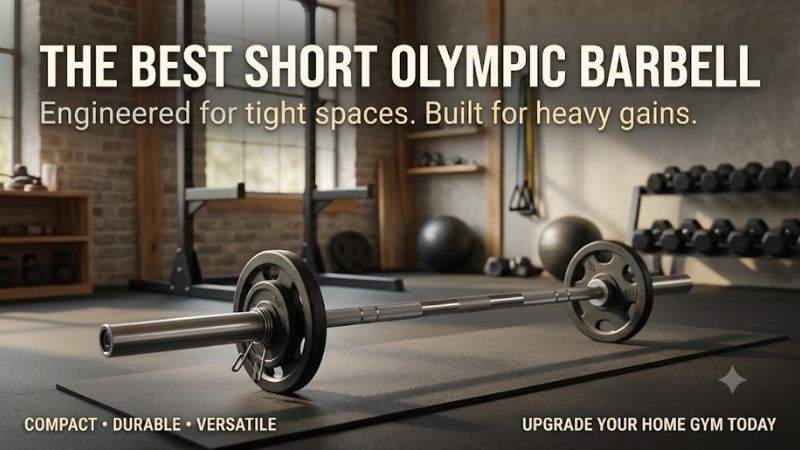
Bar designers can remove length from the sleeves, the shaft, or both. The Rogue C-70 and Bells of Steel Short Rackable Barbell are both about 69 inches long. The C-70 allocates more of its length to plates. The Bells leaves more space between sleeve shoulders for rack hardware and a wider training grip.
That design choice matters even when both products accept your Olympic plates. A bar with 43 inches between sleeves may have plenty of room for bumpers, yet its shoulders can land inside the hooks of a typical power rack. A bar with a shoulder span around 52 inches has a better chance of working with those hooks, while its shorter sleeves may reach their physical limit first. Measure your rack before giving either model a higher score.
Think about what happens after you finish a difficult set. You need to return the bar to the hooks without centering it to a fraction of an inch. Published rackability assumes a suitable rack. If the plate or shoulder clips one side when you guide the bar back into place, the setup needs more clearance even if the empty shaft can rest on both hooks.
Which dimensions matter to the rankings
Overall length determines how much wall-to-wall space the unloaded bar occupies. Between-shoulder length determines whether the supported shaft can sit on your hooks with clearance. Loadable sleeve length sets the room available for your plates and collar. We also considered what the empty bar weighs and how thick the grip is.
These measurements can change the recommendation for two people with the same room. A lifter pressing from a rack with bumpers may need a 52-inch shoulder span and enough sleeve length for several medium plates. A lifter doing floor rows with iron may care more about the shorter overall bar and a comfortable hand position. A 10 kg bar with a 25 mm shaft has an additional advantage for someone whose starting load or grip size makes a heavier 28.5 mm bar awkward.
The published weight limit is a separate filter. Keep the intended use and load within the manufacturer’s instructions, including guidance about dynamic lifts and drops. A lab rating or steel tensile-strength figure does not tell you whether a third bumper and a collar physically fit.
The best short Olympic barbells by setup
Start with the model that meets the requirements of your most important lift. For squats and bench presses, pay particular attention to the distance between the sleeve shoulders. For floor lifts, look at the working grip, plate diameter, and sleeve room. A lighter empty bar matters most when it expands the loads you can use.
REP Colorado Short Bar for the best all-around rack setup
The Colorado Short Bar is 72 inches long, weighs 15 kg, and has 51.5 inches between sleeve shoulders. Its 8.9-inch loadable sleeves and 28.5 mm shaft make it a practical first choice for a home rack used for squats, presses, rows, and controlled deadlifts. REP lists a medium grip texture and dual position marks.
The appeal is the familiar width of the working section. If you already bench or squat with a general-purpose Olympic bar, you can retain similar hand positions while taking length out of the ends. The smooth center also makes sense in a rack shared by lifters who front rack the bar or work in lighter clothing. A lifter who depends on center texture for a back squat should factor that in before buying.
Composite bushings, a coated shaft, and hard-chrome sleeves round out the design. Buy it if you want a single compact bar for several lifts and your stacks fit within 8.9 inches per side with collars installed. Look at a longer-sleeve option if you already need every inch of that length. The most important comparison is between your actual plate stack and the bar’s usable sleeves, especially if you own thick bumpers.
Rogue C-70S for a slightly wider rack interface
The Rogue C-70S combines a 72-inch overall length with 52 inches between the sleeves. It weighs 15 kg, has a 28.5 mm shaft, and gives you 8.875 inches of loadable sleeve per side. The model’s main appeal is its rack-oriented geometry in a short bar that can cover several straight-bar lifts in one setup.
Compared with the REP, the C-70S gives you an extra half-inch in published shoulder span. If both bars center on your rack, that equates to roughly a quarter-inch more nominal space on each side. A difference that small cannot rescue a fundamentally incompatible rack, but it can matter when hooks have thick sidewalls or are mounted near the outside of the supports. Measure the hardware across its actual outer contact points.
There is almost no difference in published sleeve space between these two models. Choose between them on rack clearance, purchase terms, preferred grip and finish, and availability. The C-70S is a balanced pick if you want a 15 kg rack bar for general strength or conditioning and have already checked your plates. Check the model suffix at checkout. The C-70 has different proportions and serves a different setup.
Bells of Steel Short Rackable Barbell for a shorter overall fit
The Bells of Steel Short Rackable Barbell fits a rack-oriented shoulder span into a 69-inch design. It weighs about 29 pounds and offers 7⅞ loadable inches per sleeve. It makes the most sense when a few inches of end clearance will help you slide on a plate or carry the bar through a crowded home gym.
Center the Bells and a 72-inch bar against the same wall and you gain about 1½ inches at either end. That can be worthwhile beside a cabinet or a garage pillar, but plates still need room to clear the tip and line up with the sleeve. Mock up both lengths before deciding how much the difference will help. If the benefit is marginal, compare how your working plates fit on the two bars and favor the option that makes loading easier.
The biggest trade-off is sleeve length. Several narrow iron plates may fit where broad bumpers leave no room to lock the collar. Buy it when you can prove the shorter room fit and have a compatible stack. Confirm the current center texture with the seller if that affects your squat choice, since the product description and imagery are inconsistent on that detail.
Fringe Sport Midas Mini for a black-and-gold rack bar
The Midas Mini is a 72-inch rack-oriented bar with a 28.5 mm shaft, a listed 33-pound empty weight, and sleeves listed at nine inches. Its black shaft and gold-colored sleeves stand out in a garage or basement gym. Under that finish is a bushing-based design with two sets of grip marks for repeatable hand placement.
The Midas Mini makes sense for a buyer who wants the finish and prefers the handling of a conventional multipurpose shaft. Hand marking can be useful when two people share the bar, since each can return to a familiar bench or overhead grip without adding tape. The gold appearance also gives a clear visual distinction if the gym already has a full-size black bar for heavy sessions.
There are two details worth confirming before ordering. Obtain the exact between-shoulder dimension if your rack allowance is tight, and ask how much of the listed sleeve is usable with your collar. Then look at the warranty terms for the kind of training you intend to do. Buy it if the fit works and you value the finish. A simpler bar is a better starting point if you are choosing primarily on price or every usable millimeter of sleeve space.
Rogue 10 KG Training Bar for a lighter first working set
The Rogue 10 KG Training Bar measures 66.8 inches overall and uses a 25 mm shaft with 6.625 inches of loadable sleeve on each side. Rogue lists a shoulder span slightly over 52 inches. This combination suits lifters who want a lower empty load and a slimmer grip while keeping enough shaft length for suitable rack hardware.
Ten kilograms is about 22 pounds. A lifter who wants to press around that weight can start with the empty training bar. A 15 kg bar starts near 33 pounds before adding anything. That roughly 11-pound difference has more immediate value for some households than extra space for plates. The thin grip may also help a lifter with smaller hands get a comfortable hold during warm-ups and technique practice.
The short sleeves and light starting mass specialize the bar toward teaching, warm-ups, and progression from lower loads. For floor work, your plate diameter also affects the starting height. Pair it with suitable plates if you need a particular height and follow the maker’s use guidelines. Buy it if the 10 kg start solves a training problem. Choose a longer-sleeve model if you already rely on substantial bumper stacks.
Rogue C-70 for extra plate room on floor lifts
The standard Rogue C-70 is listed at 69 inches overall, weighs 35 pounds, and offers 12 loadable inches per sleeve. The working shaft is about 43 inches between sleeves. That geometry favors a floor setup where the plates need space and the barbell does not need to land across conventional rack supports.
The extra sleeve length can make a real difference with tall stacks. A group of plates and a collar that use 9.5 inches per side will exceed several rack-oriented picks here and still fit the C-70’s published sleeve. Floor deadlifts and rows are sensible use cases if the grip has the room you want and the manufacturer’s guidance covers the loads and lifting style. Check where you put your hands during wider movements.
Buy the C-70 when your priority is using the plates you own in a short floor-training footprint. Choose the C-70S or another confirmed match when the bar needs to work in a conventional rack. If you train both ways, measure the cost of keeping a single bar and replacing a few thick plates against the cost of owning and storing a second bar. The better deal depends on the rest of your equipment.
How to match a compact bar to your working loads
Before ordering, write down one working set you perform now and one progression you reasonably expect to reach. Record the plates on one side and measure the stack including the collar. This gives you a practical minimum for sleeve length and tells you whether keeping your existing plates changes the best purchase.
Measure the thickest working stack first
The most demanding stack by width may use different plates from your heaviest set. For example, a few thick lighter bumpers and several change plates can take more space than two thin heavy plates. Compare the sets you load frequently before deciding that a particular sleeve length will carry your usual programming.
Suppose a 45-pound plate measures 2.4 inches thick. Three will use 7.2 inches per sleeve. If your chosen collar engages across 1.5 inches, the combined measurement is 8.7 inches, before accounting for any unusable end gap. An 8.9-inch sleeve comes close in this example. On a 7⅞-inch sleeve, that arrangement cannot fit. Changing one plate to a thinner equivalent may free enough room, provided the resulting combination is suitable for the exercise and any ground contact.
Check the weight separately. A 15 kg bar and three 45-pound plates on each end weigh about 303 pounds before collars. When recreating a workout from a full-length 20 kg bar, log the different empty weight. Copying your old plate combination changes the total load.
Allow room to load the bar while it is racked
A 72-inch bar centered across a 96-inch usable wall leaves 12 inches of nominal space beyond each end. The plate still needs to come off the floor or storage pin, pass the end of the sleeve, and travel inward. Your fingers and stance also occupy some of that space. Test both ends at working rack height.
A nearby corner can reduce access on only one side. A sectional garage door track might interfere high up, while a rack storage horn or a bench leg can interfere at floor height. If you have a model in mind, use a light mock-up of the same length and an empty plate or similarly sized cardboard disk to rehearse the loading motion. Verify physical rack fit separately using the manufacturer’s required dimensions and an empty bar before training.
Choose the grip and starting weight for the people lifting
For a general strength routine, many buyers will compare standard-feeling 28 to 28.5 mm shafts first. A smaller grip and lighter bar can help someone who practices at lower loads. Center knurling, handle marks, and sleeve spin become more relevant once you know which exercise will give the bar most of its weekly work.
A shared rack may have a lifter who uses a broad bench grip and another who wants a slimmer shaft for presses. Measure grip positions on the bar each person uses now. The knurl pattern can differ even when two shafts have the same diameter. If one lifter’s minimum useful load is below 15 kg, a lighter bar may solve a problem that two competing 15 kg bars cannot.
Frequently asked questions about short Olympic barbells
Most shopping mistakes come from treating overall length as a rack specification or treating a load rating as a measure of plate capacity. It also helps to understand what “Olympic” refers to on compact bars, since some use that term for the sleeve and are designed around a shorter or lighter training format.
Will a six-foot Olympic barbell fit my power rack?
Some six-foot models preserve enough shaft width to sit on conventional J-cups. Others extend the sleeves inward and leave a shorter shaft. Check the bar’s between-shoulder specification against the actual outside span of the installed supports, then confirm the intended rack configuration and available side clearance.
Consider what sits next to the hooks. Protection pads, thick lips, extra brackets, and wide safeties can change where a shoulder, plate, or hand can move. After confirming fit on paper, start with the empty bar and rehearse the entire unrack and rerack. Keep the working load within the rack and bar instructions.
Can a short bar take the same plates as a full-size bar?
The products here are designed around Olympic-style plate holes commonly described as two inches. That describes the interface with the sleeve. The number of plates you can load depends on their individual thicknesses, the usable length of the sleeve, and the operating room needed for the collar or other approved hardware.
Confirm the bore and collar requirements for your exact model. Nominal sizing can hide small differences, especially with old plates, burrs, damaged sleeves, or a collar designed around a particular profile. A bar advertised for Olympic plates may also have less room behind its outer end than your existing bar. Check the assembled fit before using it for a working set.
When should I buy a full-length bar instead?
A full-length model makes sense when your room gives you enough loading space and your working sets use more sleeve length than compact bars offer. It is also a straightforward choice when the dimensions and starting mass of the bar you train with elsewhere are important to keeping your sessions comparable.
Lay out both options in the room at the height for your main lifts. A full-size bar in a room with unrestricted loading access can work better than a short bar that requires replacing a set of plates. A compact bar earns its place when it frees space you need to train, saves a difficult carry, or starts light enough for the person using it.
Conclusion
Choose the REP Colorado Short Bar for a typical rack-based home gym, the Rogue C-70S if its 52-inch shoulder span gives you a better fit, and the Bells of Steel when a 69-inch overall length helps with loading access. Pick the Rogue 10 KG Training Bar for a lighter start or the C-70 for more plate room during floor lifts. Confirm both rack width and your working plate stack before ordering.
More from Amazon
Programs that pair well with the guide above. Offers and eligibility are set by Amazon and may change.
Free shipping on eligible items, Prime Video and more. Eligible new members can start with a free trial.
Start a Prime free trialA Prime membership for ages 18-24 with a trial period. Eligibility is set by Amazon.
See Prime for Young AdultsAudiobooks and podcasts to listen to on the go. Eligible new members can start with a free trial.
Try Audible freeAd-free music streaming. Eligible new subscribers can start with a free trial.
Try Music Unlimited freeAs an Amazon Associate we earn from qualifying purchases.
Write Your Review
No reviews yet. Be the first to share your experience!