
The best cast iron weight plates fit your bar, leave room for collars, and give you the weight increments you use. REP is a good starting point for an Olympic home gym. Thin Rogue plates, machined Bells of Steel plates, and standard York discs suit lifters with different bars and loading requirements.
Quick verdict
Choose REP Old School Iron for a general Olympic setup, Rogue USA Olympic for thin 45s, and Bells of Steel Machined Iron for a tighter stated tolerance on common heavy sizes. York G-2 offers grip openings, Titan publishes useful 25 lb dimensions, and York Standard Flat Pro fits compatible 1-inch equipment.
Start with the bar you own and the heaviest load you use often. If your loaded sleeves still have plenty of space, a thinner 45 lb plate may make little difference. A rim that is easy to grasp or a lower delivered price can be more useful. If you train with a short bar or already load several heavy pairs, documented thickness deserves more attention.
These recommendations cover traditional cast plates, including castings that are machined after production. Rogue uses ductile iron for its larger USA Olympic plates and gray iron for the small change plates in the line. The buying decision comes down to what the finished plate does on your equipment, including its fit, usable grip, and stated tolerance at the selected weight.
Quick comparison of the best cast iron weight plates
All weights in the table refer to individual discs unless the description specifies a pair or set. Olympic refers to nominal 2-inch sleeves. A standard 1-inch plate requires different equipment. Check package quantity at checkout and measure thickness at the selected weight before planning a full sleeve stack.
| Plate | Best for | Published buying detail | Main trade-off |
|---|---|---|---|
| REP Old School Iron Plates | Best all-around Olympic choice | 52 mm bore, 3% stated weight tolerance, deep lip on one face | A one-sided rim changes how you grasp the disc when it is stored face down |
| Rogue USA Olympic Plates | Thin heavy loading | 45 lb plate listed at 0.89 in thick and 450 mm across, +2% / −0% stated tolerance | Premium construction has limited value when sleeve space is unused |
| Bells of Steel Machined Iron Olympic Plates | Documented tolerance on 25, 35, and 45 lb plates | ±1% at those weights, machined bore specified at 50.5 mm with a +0.4 mm allowance | Smaller weights in the line carry a different tolerance |
| York G-2 Cast Iron Olympic Plates | Two grip openings | 45 lb plate listed at 17.5 in across and 1.5 in thick, interlocking design | Check how mixed plates stack and whether the openings suit your hand |
| Titan Cast Iron Olympic Plates, 25 lb pair | A 25 lb pair with measurable dimensions | 273 mm outside diameter, 37 mm thickness, bore specified at 50.5 mm ±0.2 mm | Other weights in the line may be sold as singles |
| York Standard Flat Pro Cast Iron Plates | Standard 1-inch bars and loadable handles | Published dimensions by weight, including an 8 in diameter and 7/8 in thickness for the 10 lb disc | Confirm thread and retaining hardware clearance on short handles |
How we selected the plates
The comparison uses manufacturer specifications for the exact lines and sizes identified below. We prioritized sleeve fit, measured dimensions, handholds, stated mass tolerance, and the flexibility to buy the weights you need. Differences in storage, loading, and floor height are deductions from those specifications.
Products with named dimensions make it easier to solve a real space problem. For example, a published 45 lb thickness allows you to calculate the space occupied by three plates per sleeve. A statement that a plate is slim or compatible with many bars gives a buyer less to work with. Where a product lists several variants, the recommendation stays tied to the configuration we checked.
This roundup evaluates published information. It does not report direct measurements of actual plate weight, handling comfort, coating life, or impact behavior. If you need close matching or have an unusual sleeve, check the exact dimensions with the seller and verify the parts when they arrive. An Olympic label alone cannot resolve a marginal fit.
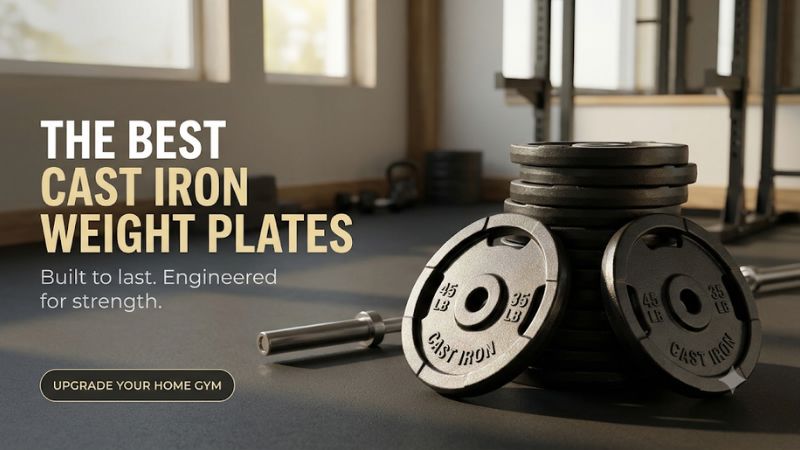
Six cast iron plates for different home gyms
The best plate for a large working stack can differ from the best plate for a small home setup. Each recommendation below covers the reasons to choose the plate, the details worth verifying, and a practical trade-off. Compare the weight you will buy first and the next pair you are likely to add.
REP Fitness Old School Iron Plates
REP is the best all-around choice for a buyer who wants a straightforward set of Olympic plates for controlled strength training. The maker lists pairs from 2.5 to 45 lb and sets with different mixes. A deep lip on one face gives the user a defined place to grasp the plate while loading or returning it.
Best for. Building a general-purpose collection around regularly used 45, 25, and 10 lb plates, with room to add smaller changes.
Why we picked it and key specifications. REP states a 52 mm opening, a matte finish, and a 3% weight tolerance. The 175 lb set includes a pair each at 45, 25, 10, 5, and 2.5 lb. A buyer can check the included pieces and compare that set with the cost of buying only the pairs they need.
Practical use. A nominal 45 lb bar with the 175 lb set can reach 220 lb with all plates loaded evenly, before counting collars. The 2.5 lb pair also gives a 5 lb increase. If you already own equivalent change plates, compare a single new 45 lb pair with the cost of buying duplicated smaller weights in another set.
Pros and cons. Multiple pair and set options make the line easy to build around. The deep lip is useful when accessible. The 3% tolerance gives a broader nominal mass window than a tighter machined or calibrated model. REP also advises against mixing its iron plates with bumpers, so check the product instructions before considering a mixed stack.
Buy if you want a practical Olympic setup with a conventional rim and predictable package contents. Skip if you need a verified slim stack or tighter stated tolerance on your primary heavy plates.
Rogue USA Olympic Plates
Rogue USA Olympic is the strongest thin-plate choice here for lifters who need room at the heavy end. The 45 lb disc is listed at 0.89 in thick and 450 mm in diameter. Rogue specifies ductile iron for its 10 lb and larger discs and gray iron for the lighter change plates, with machining on four surfaces.
Best for. Lifters with short sleeves or heavy working stacks who want a documented 45 lb thickness.
Why we picked it and key specifications. Rogue sells the line in pairs and publishes weight-specific dimensions, including 0.93 in thickness for the 25 lb plate. The stated mass tolerance is +2% / −0%. Under that specification, a nominal 45 lb plate falls between 45 and 45.9 lb. Verification of an individual pair still requires measurement.
Practical use. Three 45 lb discs take up a nominal 2.67 in of axial space per sleeve before other plates and the collar. This provides a way to compare the line with thicker 45s at the same nominal load. Consider the full stack and confirm that your collars seat with enough approved engagement at both ends.
Pros and cons. Detailed thickness and diameter specifications are useful for tight bar setups. The 450 mm diameter also establishes a clear reference when assessing deadlift starting height. A buyer with spare sleeve capacity may see more benefit from a lower-priced pair or a grip-hole design. A thin profile can also give the fingers less edge to grasp in some positions.
Buy if published dimensions solve a clearance problem or the line’s manufacturing details matter to you. Skip if you only need basic controlled lifts and a less expensive suitable pair provides ample sleeve room.
Bells of Steel Machined Iron Olympic Plates
Bells of Steel is the pick for shoppers who want a published tolerance tighter than common entry-level iron on their main working discs. The maker gives ±1% for the 25, 35, and 45 lb plates. It quotes ±3% for the listed smaller sizes, making the exact weight important when comparing this line with another.
Best for. Lifters who want closer nominal mass on common heavy plates and plan to buy matched pairs.
Why we picked it and key specifications. The plates are cast and then machined. The manufacturer specifies a machined 50.5 mm opening with a +0.4 mm allowance. It also explains that material is removed during finishing to refine mass. The published ±1% window on a 45 lb plate corresponds to approximately 44.55–45.45 lb.
Practical use. A lifter comparing sets over time may appreciate a tighter published tolerance, particularly when several working discs are used on each end. The tolerance describes closeness to the label. It does not establish that every pair matches exactly. If close left-to-right matching matters, weigh the individual plates on a suitable scale and record the pair.
Pros and cons. The bore and tolerance specifications make it easier to compare with basic cast plates. Buying pairs also lets you target the weights that benefit from tighter documentation. The smaller change plates use a different stated tolerance, and a verified plate thickness is still needed for a close sleeve fit.
Buy if your important sizes are 25, 35, or 45 lb and you value the published ±1% figure. Skip if the main concern is cost or you need a specific thickness that you cannot confirm for your variant.
York G-2 Cast Iron Olympic Plates
York G-2 is a useful grip-hole choice for lifters who carry plates from a tree to the bar or handle them repeatedly across a session. The design has two openings and an interlocking profile. York lists the 45 lb plate at 17.5 in across and 1.5 in thick, with dimensions published for the other listed weights.
Best for. Someone who values defined handholds while moving compatible Olympic plates.
Why we picked it and key specifications. The line covers 2.5, 5, 10, 25, 35, and 45 lb discs. York lists the 25 lb version at 11.5 in in diameter and 1⅝ in thick. Check the selected size individually. A 25 lb disc can be thicker than a heavier plate in the same line because its outside diameter and shape differ.
Practical use. Handles are especially useful if your plate tree sits a short walk from the rack and you load or unload several pairs. Check the actual openings and give yourself room to use them when the plate is stored. York describes the plates as interlocking. Measure how the exact discs seat together instead of assuming the same fit with every other brand.
Pros and cons. The defined handholds and size chart help buyers assess daily use. The 45 lb disc has a smaller published diameter than a 450 mm plate, which can affect floor-start height or a mixed stack. The 1.5 in thickness also uses more sleeve space than a thinner model at the same mass.
Buy if grip openings make plate handling easier for the way you train. Skip if you need the densest heavy stack or want a direct 450 mm match.
Titan Cast Iron Olympic Plates, 25 lb Pair
The Titan 25 lb pair is a practical middle-weight pick when you need the outside diameter, bore, and thickness before buying. The checked product page lists 273 mm outside diameter, 37 mm thickness, and a 50.5 mm bore with a ±0.2 mm allowance. The package supplies two 25 lb discs rather than a single plate.
Best for. Adding 50 lb of nominal plate mass in a matched size and planning space around the 25 lb discs.
Why we picked it and key specifications. Titan identifies the silver hammered finish and a raised outer edge for handling. The detailed specifications make it easier to check clearance on a plate stand or compare the depth of two proposed stacks. Use the product’s current specification table, since older descriptions or different weights can give different measurements.
Practical use. One pair adds 25 lb to each end of a compatible Olympic bar. A disc about 10.75 in across can occupy less vertical space on storage than a larger plate, even when its thickness is important on a short sleeve. Keep the two dimensions separate when checking the rack and the bar.
Pros and cons. The exact pair quantity and dimensions make the order easy to understand. The 35 and 45 lb versions can be sold individually in this family. Their prices and dimensions should be checked on their own product listings, especially when calculating the cost of a balanced stack.
Buy if you want the 25 lb pair and its documented profile suits the setup. Skip if you need a grip-hole design or another compatible pair has better delivered value at the same size.
York Standard Flat Pro Cast Iron Plates
York Standard Flat Pro is the best fit here for shoppers who already own compatible 1-inch equipment and want published dimensions. The flat, pancake-style line includes sizes from 1.25 through 50 lb. York lists the 10 lb disc at 8 in across and 7/8 in thick, making it possible to plan a short standard sleeve stack.
Best for. A standard bar or approved loadable handle where compact discs and smaller changes are useful.
Why we picked it and key specifications. York publishes both dimensions at several weights. The 5 lb plate is listed at 6¼ in across and ¾ in thick, while the 25 lb plate measures 11 in across and 1⅛ in thick. Check which size fits the expected movement, as well as how many pieces the order supplies.
Practical use. If you are building two matching double-ended dumbbells, plan the approved stack for each end of both handles. Adding a single 5 lb disc to each of four ends uses four discs. On a short threaded handle, confirm that the larger stack still lets the retaining nut engage as designed. Also check whether the plate diameter interferes with your lifting position.
Pros and cons. The standard fit and size table are useful for extending equipment you already use. The flat shape lacks large grip openings, and the larger discs can be awkward on some dumbbell handles. A 1-inch plate cannot be used on a larger Olympic sleeve.
Buy if your equipment calls for a standard plate and the selected dimensions fit. Skip if your bar uses Olympic sleeves or the equipment cannot support the proposed stack.
What to check before buying
The right plate fits three places. It slides onto the intended sleeve, sits within a complete stack that leaves room for the collar, and can be carried and stored without obstructing the room. Check those details at the heaviest regular load. Then compare the number of useful pieces and the delivered price.
Check the bore and stack together
Find the sleeve specification from the bar maker and the bore from the plate maker. On a short bar, measure the usable length, add the thickness of every planned disc on one end, and reserve the space needed for the collar. Check both sleeves at the highest load you expect to use often.
A hypothetical 8 in sleeve with 1 in required for retention has 7 in for plates before any additional requirements. Three 1.5 in discs occupy 4.5 in, while three 0.89 in discs occupy 2.67 in by nominal dimensions. Use actual measurements and the makers’ instructions. This comparison identifies space, independent of the bar’s rating.
Measure outer diameter for lifts that start on the floor
If a plate touches the floor before the others, it helps establish where the bar starts and which plates carry contact at set-down. A 450 mm disc and a 17.5 in disc are close in diameter, but the nominal difference is about 0.22 in across. The associated radius difference is about 0.11 in under the same conditions.
The difference can be much larger for a 25 lb plate. If your working load uses small discs, a pulled-from-floor setup may start lower than with full-diameter plates. Use an appropriate platform or blocks only where compatible with the movement and equipment. Follow manufacturer guidance for any differing diameters in the same stack.
Compare labeled pairs and actual matching
A stated weight tolerance applies at the selected nominal size. With a symmetric ±3% tolerance, a 45 lb plate can deviate by up to about 1.35 lb. Some products specify an asymmetric limit, such as +2% / −0%. Record what the manufacturer states and compare both claims at the same nominal mass.
If accurate pairs matter, use a suitable scale and repeat the measurement. A scale with poor resolution can make small differences look more meaningful than they are. Consistent loading with the same pairs is useful for repeatability, even when you do not need to know every plate to the nearest gram.
Frequently asked questions
The main questions are whether the plates fit, which weights you need, and whether the size and finish make them easier to use. Check the exact model, the number of pieces, and the unit before paying. Follow the lifting and storage instructions for the bar, plates, collars, and floor protection you use together.
Are all cast iron plates made for Olympic bars?
No. Cast iron describes the material. Many Olympic plates have a bore for nominal 2-inch sleeves, and standard plates are available for nominal 1-inch equipment. Check the sleeve where the plates mount. The shaft you grip and the outside diameter of a plate tell you little about bore compatibility.
Should I buy 25 lb plates or add another 45 lb pair?
Buy the sizes that let you reach your actual targets in balanced steps. Two 25s add 50 lb, while two 45s add 90 lb. One 45 lb pair can deliver more total mass when you already have enough intermediate weights. A 25 lb pair can be more useful if you regularly load weights below the next 90 lb increase.
Can ordinary cast iron plates be dropped?
Use them in accordance with the plate and bar instructions. Traditional cast plates are generally bought for controlled lifting and set-downs. For intentional drops, use a bar, plates, collars, and surface explicitly suited to the activity. A protective mat alone does not establish that a conventional cast plate is suitable for drops.
Is a grip hole worth paying extra for?
It can be if you carry plates often or struggle to get a secure hold on a flat face in your storage setup. Check the opening and whether another plate can block it. A defined rim can also be practical. Compare both designs where you will load and store them, and include the difference in delivered price.
Conclusion
Start with REP for a flexible Olympic set, Rogue for thin 45s, or Bells of Steel for documented tolerance on heavy pairs. Choose York G-2 for grip openings, Titan for a measured 25 lb pair, and York Flat Pro for standard sleeves. Buy the weights that fit your loaded bar, collars, and storage.
More from Amazon
Programs that pair well with the guide above. Offers and eligibility are set by Amazon and may change.
Free shipping on eligible items, Prime Video and more. Eligible new members can start with a free trial.
Start a Prime free trialA Prime membership for ages 18-24 with a trial period. Eligibility is set by Amazon.
See Prime for Young AdultsAudiobooks and podcasts to listen to on the go. Eligible new members can start with a free trial.
Try Audible freeAd-free music streaming. Eligible new subscribers can start with a free trial.
Try Music Unlimited freeAs an Amazon Associate we earn from qualifying purchases.


Write Your Review
No reviews yet. Be the first to share your experience!