
Key takeaways
- Length and weight: A 30-foot, 1.5-inch rope offers a challenging standard, while shorter or thinner ropes ease beginners in.
- Anchored vs. ropeless: Traditional ropes need an anchor point and floor space, while cordless designs work anywhere.
- Grip: Heat-shrink or rubber handles prevent slipping as your hands sweat during intervals.
- Durability: Look for a tightly woven poly-dacron rope that resists fraying against the floor.
- Space: Measure your training area, since a 30-foot rope folds to about 15 feet of usable length.
What's inside
Few tools torch calories and build conditioning as ruthlessly as a battle rope. Just 20 seconds of hard waves spikes your heart rate into interval territory, training the cardiovascular system while sculpting the shoulders, arms, and core. In 2026 the category has grown to include traditional heavy anchored ropes and clever cordless ropeless designs that deliver the same movement in tight spaces.
We rounded up the best battle ropes for cardiovascular health and paired each with the exercises it does best, comparing length, weight, portability, and value. Below is a quick buying framework, hands-on reviews of our top picks, and answers to the questions people ask before adding a rope to their conditioning arsenal.
As an Amazon Associate we earn from qualifying purchases at no extra cost to you. Product prices and availability are accurate as of the date shown and are subject to change.



⚡ Save on Your Next PC — Amazon Prime
Prime members get fast free shipping on the systems above, plus early access to Prime Day & Black Friday PC deals. New members get a 30-day free trial.
Watch: Battle Rope Exercises for Cardiovascular Health — Video Review
How to Choose
- Length and weight: A 30-foot, 1.5-inch rope offers a challenging standard, while shorter or thinner ropes ease beginners in.
- Anchored vs. ropeless: Traditional ropes need an anchor point and floor space, while cordless designs work anywhere.
- Grip: Heat-shrink or rubber handles prevent slipping as your hands sweat during intervals.
- Durability: Look for a tightly woven poly-dacron rope that resists fraying against the floor.
- Space: Measure your training area, since a 30-foot rope folds to about 15 feet of usable length.
The Best Picks Reviewed
Battle Rope 1.5 Inch 30ft Heavy Weighted
This classic 30-foot, 1.5-inch heavy training rope around $57 is our top pick for genuine conditioning. Its weight forces your whole body to work through waves, slams, and circles, delivering the most authentic cardiovascular challenge for a home or garage setup with an anchor.
Amazon Basics Battle Rope
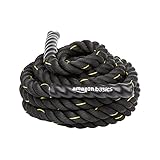
The Amazon Basics battle rope near $36 offers dependable quality for CrossFit-style and strength conditioning at a fair price. It is a solid, no-nonsense choice for those who want a traditional anchored rope without paying a premium.
COCTN Cordless Battle Rope
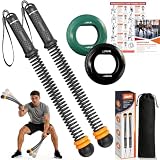
For small spaces, the COCTN cordless battle rope around $23 mimics the wave motion with weighted handles and no anchor or long rope needed. It comes with a poster of exercises and is ideal for apartments where a full rope will not fit.
SPRI Battle Rope
The SPRI weighted exercise rope around $50 is a trusted name in fitness, offering a durable build and comfortable grips for high-intensity intervals. It is a reliable mid-priced option for serious conditioning work.
Dilobio Weighted Ropeless Battle Ropes
At just under $10, the Dilobio ropeless battle ropes are the ultra-budget, ultra-portable pick, delivering the arm and cardio burn of waves with weighted handles you can use anywhere. They are perfect for travel or trying the movement before buying a full rope.
Frequently Asked Questions
How long should a battle rope be?
A 30-foot rope is the standard, folding to about 15 feet in use. Choose a shorter 20-foot rope only if your training space is limited.
Do ropeless battle ropes actually work?
Yes, cordless designs like the COCTN use weighted handles to replicate the wave motion and cardiovascular challenge, making them a genuine option for tight spaces.
How long should a battle rope workout be?
Battle ropes are intense, so intervals of 20 to 30 seconds of hard effort followed by rest, repeated for 10 to 15 minutes, deliver a serious cardio session.
What anchor do I need for a traditional rope?
You can loop the rope around a sturdy post, secure it with a wall or floor anchor, or wrap it around any immovable object that can take the load safely.
Final Thoughts
A battle rope turns short bursts of effort into a powerful cardiovascular workout, and the right one depends on your space. The 30-foot heavy rope is our pick for authentic conditioning, while the COCTN and Dilobio cordless options bring the burn to apartments and travel. Add a few rope intervals to your week and you will build heart-pounding fitness alongside stronger shoulders and arms.



Write Your Review
No reviews yet. Be the first to share your experience!