
Our Top Picks
Best smart tattoos: the short answer
The best smart tattoo depends on what you want it to measure: choose a temporary NFC tattoo for tap-to-share convenience, an electronic skin patch for experimental sensing, or a clinical-grade wearable sensor when dependable health data matters more than a tattoo-like look. These technologies are not interchangeable, and most products marketed as “smart tattoos” are temporary prototypes or research devices—not durable, waterproof fitness trackers.
Before buying, check the sensing method, whether the adhesive and materials suit your skin, how long the device can realistically stay on, what data it records, who can access that data, and the ongoing cost of replacements. “Smart tattoo” can mean anything from printed electronics on a sticker to a flexible sensor patch; it does not necessarily mean ink injected into skin.

HAWINK Temporary Tattoos Markers Body Tattoo Kit 18 Count 56 Stencils
Picked as a relevant option in this category.
View on Amazon
Phomemo M08F Tattoo Stencil Printer, Bluetooth, Wireless, Thermal, Portable
Chosen because it specifies Bluetooth and Wireless.
View on Amazon
Troytatu Wireless Tattoo Gun Kit For Beginners, 7 Adjustable Strokes
Chosen because it specifies 7 Adjustable Strokes.
View on Amazon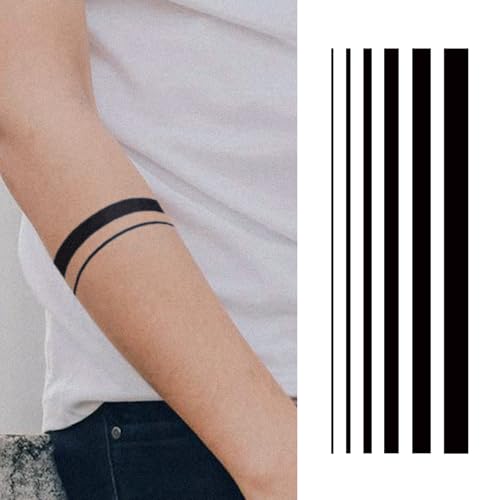
WEEKINK Minimalist Line Temporary Tattoos Armband Fake Tattoos for Adults
Picked as a relevant option in this category.
View on AmazonCompare the main smart-tattoo options
| Technology | How it senses or communicates | Typical wear or use | Data and practical limits | Indicative replacement cost |
|---|---|---|---|---|
| NFC smart tattoo, such as the product category developed by VivaLNK | Passive NFC coil communicates with a nearby phone or reader; the tattoo itself generally does not continuously sense biometrics. | Often several days, depending on the specific adhesive, placement, and care. | Can support tap-to-open information or identification workflows. Usually needs a compatible phone at close range and is not a heart-rate or activity tracker. | Roughly $5–$25 per disposable unit, when available; bundles and business-only supply can change the effective price. |
| Temporary printed-electronics tattoo, including research demonstrations such as those from Microsoft Research | Printed conductive traces, electrodes, or circuits detect a signal or provide an input; some designs connect to a separate device. | Demonstrations and prototype wear are generally short-term; no dependable consumer wear-life standard. | Capabilities are design-specific. A prototype may detect muscle activity or touch but may not offer a finished app, cloud service, or consumer warranty. | No meaningful retail replacement price for research prototypes; do not treat a demonstration as an orderable product. |
| Electronic-skin or epidermal sensor patch | Flexible electrodes or chemical sensors measure signals at the skin surface, such as electrical activity, temperature, or sweat-related measurements. | From a workout or session to multiple days, depending on the device and adhesive. Sweat, friction, and bathing can shorten wear. | May require a small reader, phone, or external transmitter. Research sensors are not automatically validated for diagnosis or for comparing results across brands. | About $10–$100 or more per patch or consumable in commercial-adjacent use; research systems may have no public consumer price. |
| Medical adhesive sensor worn like a “tattoo,” such as a continuous glucose monitor | A small filament beneath the skin measures glucose in interstitial fluid; a transmitter sends readings to a receiver or phone. | Common systems are designed for roughly 10–15 days per sensor, subject to the specific model and local labeling. | Provides time-stamped glucose readings and trend information, but it is a medical device—not a general fitness tracker. Prescription, eligibility, phone compatibility, and regional availability vary. | Often tens to over $100 per sensor without insurance or other coverage; total cost depends heavily on country and eligibility. |
Prices above are broad market estimates, not quotes. Availability and labeling can change by country. Research prototypes are included to clarify what the technology can do, not as purchase recommendations.
Choose by what you need it to do
For tap-to-share, event access, or a small digital calling card
An NFC tattoo is the most practical choice if “smart” means carrying a link or identifier on your skin. It uses near-field communication: someone taps a compatible phone close to the tattoo to read its encoded information. It does not need a battery for a basic passive tag, but it also does not continuously collect workout data. Confirm what can be rewritten or locked, whether the tag works with your phone, and whether the information points to a profile you control.
Skin compatibility is mostly an adhesive question. Apply it to clean, dry, unbroken skin, and remove it if you develop persistent redness, itching, or discomfort. Adhesive formulas vary, so check the maker’s material and removal guidance rather than assuming “temporary” means suitable for sensitive skin.
For experimenting with flexible sensors
Electronic-skin patches are the closest match to a tattoo that actually senses the body. Depending on the design, they may use electrodes for electrical signals, a temperature element, or a chemical sensor that reacts to sweat. Their data can be interesting for research or personal experimentation, but a sensor reading is only useful if the device explains its accuracy, calibration, and limitations. A number in an app is not proof that it measures a health condition reliably.
These systems are best for technically curious users who are comfortable with short wear periods, extra hardware, and uncertain app support. Check whether the sensor is designed for your body area, whether it needs a separate transmitter, and whether the manufacturer provides replacement patches. For anything affecting medical decisions, use an appropriately authorized device and speak with a qualified professional.
For ongoing health monitoring
A continuous glucose monitor can look like a small adhesive patch, but it is fundamentally different from an NFC tattoo or experimental electronic skin. Its sensor filament sits just under the skin and measures glucose in interstitial fluid. The system can provide readings and trends through a reader or compatible phone, but it is intended for diabetes care and is not a general-purpose measure of fitness, calories, or overall wellness. Follow the product’s instructions and a clinician’s advice; do not substitute a novelty patch for medical monitoring.
Skin, wear time, and replacement: the ownership details
Actual wear life is usually shorter than the best-case figure on a package. Repeated sweat, swimming, tight clothing, rubbing, body hair, lotion, and placement near a joint can lift an edge or interfere with a sensor. A tag that peels may still be readable, while an electrode patch that shifts can produce less useful measurements. These are different failure modes, so “water-resistant” or “long-lasting” needs to be interpreted for the specific device.
- Before application: Clean and fully dry the site; avoid oily skin products. Use only the body locations allowed by the manufacturer.
- During wear: Check edges after exercise and avoid picking at lifted adhesive. Do not cover a sensor in a way that blocks its transmitter or traps moisture unless instructions permit it.
- Removal: Peel slowly and follow the supplied method. Stop using it if the skin becomes painful, blistered, or persistently irritated, and seek professional advice when appropriate.
- Replacement: Budget for the sensor or sticker as a consumable. Reusing a single-use patch can compromise adhesion, hygiene, or measurement quality.
For a simple cost check, a $12 NFC tattoo worn for four days costs about $3 per day of wear. A $60 sensor designed for 10 days costs about $6 per day before any reader, subscription, shipping, or insurance considerations. These figures are illustrative: the advertised wear period is not guaranteed, and medical coverage can change the out-of-pocket cost substantially.
Privacy and compatibility checks before buying
Passive NFC tags usually expose only the information encoded on them when a reader comes close, but the destination may collect data once it opens a website or app. Avoid encoding personal details you would not want copied, and check whether you can change or disable the linked content. For sensor patches, look beyond the tattoo itself: the companion app may store readings, account details, location, or device identifiers in the cloud.
- Can you use the device without creating an account or enabling cloud sync?
- Can you export and delete your data, and does the privacy policy explain retention and sharing?
- Does it work with your phone and operating system, or require a separate reader?
- Are firmware updates, app support, replacement supplies, and customer service still available?
For most wearable-tech fans, an NFC tattoo is the lowest-commitment novelty, while a flexible sensor patch is an experimental choice rather than a proven fitness upgrade. If you need dependable health measurements, choose a purpose-built, appropriately authorized wearable and evaluate it for that specific use. The best smart tattoos are the ones whose real function, skin requirements, data handling, and recurring cost match what you actually want—not simply the ones that look most futuristic.










Write Your Review
No reviews yet. Be the first to share your experience!