
Our Top Picks
 Ann Katy Upgrade XL Portable Toilet for AdultsStandard13.7 x 12.2 x 16.5 inches5.9 PoundsCheck on Amazon
The best portable camping toilet for most car campers is a 5-gallon cassette toilet with a separate fresh-water flush, while van travelers usually benefit from a compact 2.5–3-gallon cassette and longer trips from a larger cassette or a urine-diverting dry toilet.
The right choice depends less on flush style than on four practical constraints: whether it fits your storage space, how high the seat is, how many uses it holds, and where you can legally dispose of the waste. A bucket toilet is inexpensive and easy to store, but a sealed cassette toilet is usually more comfortable and less troublesome for repeated use.
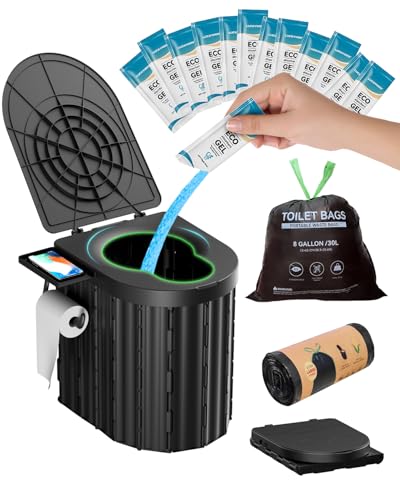
Portable Toilet with Urine Gel & Leak-Proof Bags – Odorless Camping Toilet for Adults & Kids, Outdoor Travel Potty with Ergonomic Design
Chosen because it specifies Odorless Camping Toilet for Adults & Kids and Outdoor Travel Potty with Ergonomic Design.
View on Amazon
Portable Toilet Kit for Adults, Camping Toilet with Pop-Up Privacy Tent and Poo Gel Toilet Bags, Washable Portable Outdoor Showers Changing Rooms
Chosen because it specifies Washable Portable Outdoor Showers Changing Rooms.
View on AmazonAnn Katy Upgrade XL Portable Toilet for Adults, Extra Large Camping Toilets
Chosen because it specifies Extra Large Camping Toilets.
View on Amazon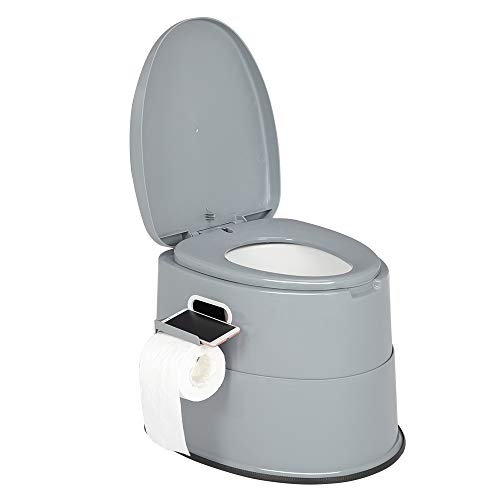
VINGLI Portable Toilet | Indoor Outdoor Commode w/Detachable Inner Bucket & Removable Paper Holder, Lightweight & Compact for Camping, Boat, Van, Emergency Use (Grey)
Chosen because it specifies Lightweight & Compact for Camping and Boat.
View on AmazonBest portable camping toilets by situation
| Camping situation | Best toilet type | Useful target specifications | Why it fits |
|---|---|---|---|
| Occasional car camping | 5-gallon bucket toilet | 11–14 in packed height; 5 gal bucket; 5–9 lb | Lowest purchase cost and simple storage |
| Family car camping | Full-height cassette toilet | 15–17 in seat height; 4–5.5 gal waste tank; 10–15 lb | More chair-like comfort and fewer emptying trips |
| Small van or SUV sleeping platform | Compact cassette toilet | 12–15 in height; 2.5–3 gal waste tank; about 8–11 lb | Fits under beds and is easier to carry to disposal points |
| Longer off-grid trips | Large cassette or urine-diverting dry toilet | 5 gal or more total capacity; replaceable liners or separate containers | Reduces liquid weight and limits the frequency of emptying |
Head-to-head: the main toilet designs
Bucket toilets: best on price and packed size
A bucket toilet uses a sturdy pail, a shaped seat-and-lid attachment, and either disposable liners or reusable waste bags. The Camco Portable Toilet Seat and the Reliance Luggable Loo are familiar examples of this format. A typical setup weighs roughly 5–9 pounds and occupies less space than a flush toilet.
Its advantages are simple mechanics, low cost, and easy replacement of damaged parts. Its limitations are equally important: there is no water seal, odors develop faster in warm weather, and the seat is often only about 11–14 inches high. Use a leak-resistant liner, add the manufacturer-approved absorbent material, and keep the lid closed between uses.
For one or two people on occasional trips, a bucket can be the best portable camping toilet. For a family using it repeatedly inside a van, the lack of a reliable odor seal becomes a significant disadvantage.
Cassette toilets: the best all-rounder
A cassette toilet has a molded seat, a fresh-water tank, a separate sealed waste cassette, and a sliding or rotating valve. Thetford Porta Potti models, including the Porta Potti 365, and Dometic portable cassette models represent this category. Depending on the model, the waste tank is commonly about 2.5–5.5 gallons and the seat is approximately 12–17 inches high.
Thetford Porta Potti 365 is a useful example of the taller family-oriented format: it is roughly 16 inches high, uses separate fresh and waste tanks, and has a waste capacity of about 5.5 gallons. A compact cassette such as the Dometic 972 series is more suitable where every inch matters, but its smaller tank means more frequent emptying.
Cassettes control odor better than open buckets and are more comfortable for adults. They also need more care: seals must stay clean and lubricated, the flush-water tank must be filled, and chemical products should be compatible with the toilet’s materials and the disposal facility.
Urine-diverting dry toilets: best for extended use without water
A urine-diverting toilet separates liquid from solids into different containers. This can make capacity more predictable and avoid carrying unnecessary water, which is valuable in a van or at a remote base camp. The trade-off is a taller, more specialized design and a more involved cleaning routine.
These toilets work best when the user follows the operating instructions precisely. Sitting position, leveling, ventilation, and keeping the separator clean all matter. They are not automatically odor-free: poor ventilation, an overfilled liquid bottle, or wet solids can create strong smells quickly.
Comparison of representative options
| Type or example | Packed size and weight | Seat height | Waste capacity | Disposal method | Cleaning burden |
|---|---|---|---|---|---|
| Bucket toilet, such as Reliance Luggable Loo | About 11–14 in high; 5–9 lb depending on seat and liner | About 11–14 in | 5 gal bucket | Tie off approved liner and dispose of it where permitted | Low hardware maintenance; frequent liner changes |
| Camco portable cassette toilet | About 14–16 in high; approximately 10–12 lb | About 14–15 in | About 5.3 gal on common versions | Remove lower tank and empty at an authorized toilet or dump facility | Moderate; rinse tank and maintain seals |
| Thetford Porta Potti 365 | About 16.3 × 15.2 × 17.7 in; approximately 19 lb empty | About 16.1 in | About 5.5 gal | Sealed cassette to an authorized disposal point | Moderate; flush-water care and seal lubrication |
| Compact cassette toilet, such as Dometic 972 series | Roughly 13–16 in in its smallest configuration; about 8–11 lb | About 12–14 in | About 2.5–3 gal | Remove and empty the cassette at an authorized facility | Moderate; smaller tank needs more frequent rinsing |
| Urine-diverting dry toilet | Commonly 18–24 in high; roughly 20–40 lb | Often 18–21 in | Separate liquid bottle and solid container | Dispose of each stream according to local rules | Moderate to high; separator and containers need regular cleaning |
Dimensions vary by model revision and whether the manufacturer lists the lid closed or the seat raised. Measure the actual storage compartment, including the clearance needed to remove the waste cassette—not just the toilet’s outside dimensions.
How much capacity do you need?
For planning, use approximately 0.25–0.4 gallons of waste volume per person per day for solid waste and toilet paper, then add a margin of at least 20 percent. This is only a planning estimate because use varies widely.
For example, two people on a three-day trip at 0.35 gallons each per day produce about 2.1 gallons:
2 people × 3 days × 0.35 gallons = 2.1 gallons
A 2.6-gallon cassette may be sufficient, but only with little reserve. A 5-gallon cassette gives more flexibility, especially if the toilet is also used overnight or by children. Do not fill a tank to its stated maximum if that makes it difficult to carry safely; waste weighs roughly 8.3 pounds per gallon before adding the tank.
Cleaning and disposal: the ownership details that matter
- Use compatible chemicals. Cassette-toilet chemicals help control odor and break down waste, but not every product is suitable for every seal, septic system, or municipal facility. Follow both the toilet and disposal site instructions.
- Rinse after emptying. Add clean water to the waste tank, agitate it, and empty it again. This removes residue that otherwise hardens around the valve.
- Protect the seals. Inspect the sliding-valve seal and pour spout regularly. Use the manufacturer-recommended lubricant rather than petroleum products, which can damage some rubber components.
- Keep liquids out of a bucket liner when possible. Separating urine reduces weight and odor, but only use a system designed for that purpose; improvised separation can leak.
- Do not leave a full tank in a hot vehicle. Heat increases pressure and odor. Empty it promptly and transport it upright in a secondary container.
- Know the local rules. Bagged human waste, cassette contents, and urine may have different disposal requirements. Never empty waste onto ordinary ground, into a storm drain, or into a waterway.
What wears out first?
On bucket systems, the seat hinges, lid clips, and liner supply are usually the weak points. On cassette toilets, the valve seal, pump or flush mechanism, and tank vent seal commonly need attention before the molded body does. A toilet stored with waste residue or a dry, cracked seal can begin leaking even when the tank itself is intact.
Replacement seals and pumps are worth checking before purchase. A slightly more expensive toilet with available spare parts can cost less over several seasons than a cheaper unit that must be discarded after one failed valve. General market pricing is roughly $25–$70 for a basic bucket setup, $70–$180 for a portable cassette, and $150–$1,000 or more for specialized dry systems, depending on construction and included components. Also budget for liners, absorbent material, chemicals, and disposal fees.
Final buying decision
Choose a bucket toilet if low cost, occasional use, and minimum packed size matter most. Choose a compact cassette if you sleep in a van or have limited storage but still want a sealed tank. Choose a taller 4–5.5-gallon cassette for family camping, frequent overnight use, and easier adult seating. Choose a urine-diverting dry toilet for longer stationary trips when water conservation and separate waste handling justify its extra setup and cleaning.
Before ordering, measure the storage bay, confirm the seat height against the users’ comfort, calculate capacity for the longest trip rather than the average weekend, and identify an authorized disposal point. Those checks are more important than flush buttons, color, or minor differences in advertised packed dimensions.









Write Your Review
No reviews yet. Be the first to share your experience!