
Our Top Picks
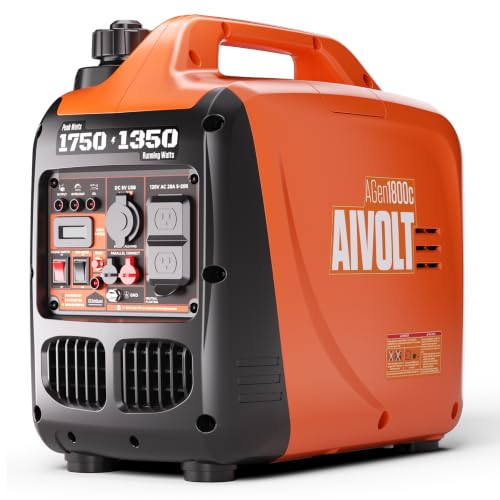 AIVOLT 1750W Inverter Generator Portable Gas Generator for16.9 x 9.9 x 15.7 inches27.6 poundsCheck on Amazon
 PowerSmart 3800 Watt Dual Fuel Inverter Generator for380021.9 x 13.4 x 19.5 inches50.7 poundsCheck on Amazon
 GENMAX Portable Generator,1200W Ultra-Quiet Gas EngineGM1200i16.5 x 9.4 x 15.7 inches25.3 poundsCheck on Amazon
Best Inverter Generators for Camping: Picks by Power Need
The best inverter generator for camping is a lightweight, low-noise model sized to your appliances—not simply the one with the highest peak-watt figure. For most tent campers who want to run small electronics and occasionally a compact appliance, the Honda EU2200i is a strong all-around choice; for lighter loads, the Honda EU1000i is easier to carry, while the Westinghouse iGen4500DFc suits campers who need more output and dual-fuel flexibility at a campsite with enough space for its extra weight.
These are gasoline or dual-fuel generators, not battery power stations. They produce exhaust and must be operated outdoors, well away from tents, vehicles, and occupied spaces. Always follow the manual and campground rules.
AIVOLT 1750W Inverter Generator Portable Gas Generator for Camping Home
Picked as a relevant option in this category.
View on Amazon
Oxseryn 2800-Watts Portable Inverter Generator, Gas Generators for Home Use, Camping, Super Quiet Emergency Home Backup, with Fuel Shut Off, 1.1Gal Fuel Tank, 39Lbs, EPA Compliant
Chosen because it specifies Gas Generators for Home Use and Camping.
View on AmazonPowerSmart 3800 Watt Dual Fuel Inverter Generator for Camping or Home Use
Picked as a relevant option in this category.
View on AmazonGENMAX Portable Generator,1200W Ultra-Quiet Gas Engine, EPA Compliant, Eco-Mode Feature, Ultra Lightweight for Backup Home Use & Camping (GM1200i)
Chosen because it specifies EPA Compliant and Eco-Mode Feature.
View on AmazonQuick comparison
| Model | Running / starting watts | Approx. weight | Fuel and stated runtime | Parallel capability |
|---|---|---|---|---|
| Honda EU1000i | 900 / 1,000 W | 29 lb | Gasoline; up to about 8.3 hours at quarter load | Yes, with a compatible unit and cable |
| Honda EU2200i | 1,800 / 2,200 W | 47 lb | Gasoline; up to about 8.1 hours at quarter load | Yes, with a compatible unit and cable |
| Yamaha EF2200iS | 1,800 / 2,200 W | 55.2 lb | Gasoline; up to about 10.5 hours at quarter load | Yes, with a compatible unit and cable |
| Westinghouse iGen4500DFc | 3,700 / 4,500 W on gasoline | About 104 lb | Gasoline or propane; up to 18 hours on gasoline at 25% load, depending on conditions | Check the specific model configuration and manual |
Figures are manufacturer-published specifications where available; runtime is a best-case reference, not a promise. Starting watts describe a brief surge, while running watts indicate the power available for sustained use. Confirm the current manual before purchase because specifications and included equipment can vary by model year or market.
Choose by campsite and load
- Backpacking or compact-car camping: Consider the EU1000i if your needs are limited to phones, lights, camera batteries, or a small fan. At 29 pounds, it is far easier to lift than a larger generator, but 900 running watts rules out many heating appliances and larger air conditioners.
- One general-purpose generator: The EU2200i offers a practical balance of output, carry weight, and established parallel capability. It can handle a broader selection of small appliances, but its 47-pound weight is a two-person lift for some campers.
- Longer light-load stretches: The Yamaha EF2200iS has similar wattage to the EU2200i and a published quarter-load runtime of up to about 10.5 hours. Its added weight matters if you regularly load and unload it without help.
- Higher loads or propane preference: The Westinghouse iGen4500DFc offers substantially more output and dual-fuel operation, but at roughly 104 pounds it is better suited to vehicle-based camping with room to secure and transport it. Propane runtime and available output differ from gasoline; consult the manual for fuel-specific limits.
How much generator do your appliances need?
Add the running watts of everything you expect to use at the same time, then account for the highest starting-watt surge from motors such as refrigerators or air conditioners. A generator must meet both conditions. Appliance labels and manuals are more reliable than broad online estimates.
Example: Suppose lights draw 40 W, a laptop charger 90 W, and a small fan 50 W. Their combined running load is 180 W. If you also want to start an appliance that needs a 900 W surge, the generator has to accommodate that surge while supplying the other loads. A 900 W surge plus 180 W of existing load is about 1,080 W; a 900-running-watt generator may be marginal once real-world conditions and other loads are considered. Leave headroom rather than planning to operate at the limit.
Do not assume you can power a campsite’s hookup or connect a generator to a building circuit with an improvised cord. Use correctly rated outdoor cords, keep connections dry and off the ground, and follow the equipment instructions.
Quiet operation, weather, and campsite controls
Small inverter generators are generally quieter than conventional open-frame generators, but “quiet” is not silent. Published sound figures depend on distance, load, and measurement method, so compare like with like and check the campground’s noise rules. Eco or economy mode can reduce engine speed and noise under light loads; a sudden heavy demand can still make the engine rev up. Respect quiet hours and place the unit far from neighboring sites, without directing exhaust toward people.
None of these portable models should be treated as weatherproof just because they have enclosed housings. Keep the generator dry, level, and ventilated; do not run it in a tent, vehicle, rain-soaked enclosure, or under a cover that restricts airflow. Use a purpose-designed weather shelter only if the generator maker permits it and clearances are maintained.
For campsite convenience, look for clearly labeled outlets, an accessible fuel shutoff, simple starting controls, and an hour meter or low-oil indicator. A fuel gauge is useful, but it does not replace checking the tank before a long evening. Electric start can be convenient on larger units; on small models, a manual recoil starter keeps the setup simpler and lighter.
Parallel capability: useful, with trade-offs
Parallel operation links two compatible generators to increase available output. It can be a sensible route for a camper who usually needs little power but occasionally wants more: carry one small unit on ordinary trips and bring a second only when the load demands it. However, the second generator, parallel cable, and extra fuel add weight, cost, and setup time. Compatibility is model-specific, and parallel kits may be sold separately. Never connect units unless the manufacturer explicitly approves the pairing and specifies the required equipment.
Ownership details that affect camping
Fuel planning is the biggest source of surprise. Maximum runtimes are usually measured at a low, steady load; running near capacity, using a different fuel, or operating in demanding conditions can shorten the interval. Estimate your likely load, then bring a safe, approved fuel container if the trip requires more than one tank. Store and handle fuel according to local rules and the generator manual.
Oil, air filters, spark plugs, and fuel-system care are routine maintenance items. Follow the service schedule, check oil before trips, and avoid leaving gasoline in the unit for long storage periods unless the manufacturer’s instructions allow it. Stale fuel and neglected storage are common reasons a generator that worked last season will not start. Keep the intake and exhaust clear of dust, leaves, and campsite debris, and let the unit cool before refueling.
For occasional use, a smaller generator may cost less to transport and maintain, even if its limited capacity means switching off one appliance before starting another. If you camp often, consider dealer support, parts availability, and how easily you can lift the unit—not just the purchase price. Small inverter generators commonly span a broad market range from several hundred dollars to over a thousand, with larger dual-fuel models typically costing more; check current local pricing.
Bottom line
Choose the Honda EU1000i for the lightest loads and easier carrying, the Honda EU2200i for a versatile compact setup, or the Yamaha EF2200iS if its published light-load runtime appeals more than its extra weight. Step up to the Westinghouse iGen4500DFc when higher output and gasoline-or-propane flexibility matter more than portability. Before buying, compare your appliances’ running and starting watts, your vehicle’s cargo space, campground noise limits, and the manual’s rules for fuel, weather, and parallel use.










Write Your Review
No reviews yet. Be the first to share your experience!