
Our Top Picks
 AIRHOP 0.56in Thick 48 Sq Ft Exercise Equipment48 Sq Ft (12 Tiles)24 x 24 x 0.56 Inches29 PoundsCheck on Amazon
Pros & cons
- Upgraded interlocking locks keep tiles from separating during use
- Waterproof surface wipes clean with just a damp cloth
- Dual-layer build cushions and reduces noise under heavy gear
- At nearly 29 pounds for the set, it takes effort to lay out
- Covers 48 square feet, so bigger rooms need more sets
 SUPERJARE 0.56'' Thick 48 Sq Ft Rubber Top12 Tiles (48 Sq Ft)96 x 72 x 0.56 inches2.5 PoundsCheck on Amazon
Pros & cons
- Dual-layer EVA and rubber construction cushions heavy equipment
- Interlocking tiles let you resize the layout as needed
- Rubber top reduces noise and vibration during workouts
- Rubber surface can carry a noticeable odor at first
- Covers only 48 square feet, larger rooms need extra tiles
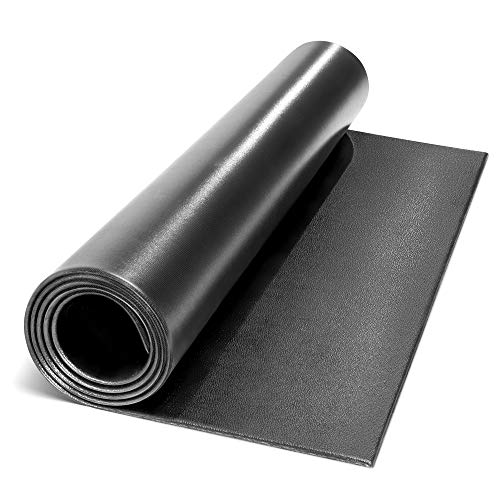 Marcy Fitness Equipment Mat and Floor Protector forMAT-366 (78" x 36" x 0.25")36 x 78 x 0.25 inches6.4 PoundsCheck on Amazon
Pros & cons
- Interlocking tiles let you customize covered floor area
- Extra-thick foam cushions noise and vibration from workouts
- Detachable borders create clean edges where needed
- Covers only 48 square feet across 12 tiles
- Assembling and arranging 12 tiles takes setup time
The best gym rubber mats for a home gym are usually 3/8-inch interlocking tiles for general strength training, 1/2-inch rolls or tiles for heavier equipment, and 3/4-inch to 1-inch rubber flooring when repeated barbell drops or high-impact training are part of the routine.
Quick picks by home-gym situation
| Situation | Recommended rubber flooring | Why it fits | Typical material cost |
|---|---|---|---|
| Bedroom, office, or rental room | 3/8-inch interlocking tiles, 24 x 24 inches | Easy to install and remove; enough protection for dumbbells and benches | $2.50–$5 per sq. ft. |
| Power rack and regular barbell lifting | 1/2-inch rubber tiles or a 4 x 6-foot mat | Better cushioning and load distribution under racks and plates | $3–$7 per sq. ft. |
| Deadlifts and occasional controlled drops | 3/4-inch to 1-inch rubber, preferably with separate lifting platforms | More impact absorption and improved protection for subfloors | $5–$12 per sq. ft. |
| Cardio, mobility, and light resistance training | 1/4-inch to 3/8-inch rubber roll or tiles | Low profile, easier to clean, and sufficient for non-impact equipment | $2–$5 per sq. ft. |
| Garage or commercial-style training area | 1/2-inch to 3/4-inch rolls, 4 feet wide | Fewer seams and better long-term stability over a large area | $3–$9 per sq. ft. |
How thick should gym rubber mats be?
Thickness should follow the heaviest equipment and the way you train, not simply the room’s appearance. A thin mat can make a stationary bike or adjustable bench more stable, but it will not provide the same floor protection under a loaded barbell.
AIRHOP 0.56in Thick 48 Sq Ft Exercise Equipment Mats, 12 Tiles Upgraded Rubber Top with High Density EVA Foam, Large Interlocking Puzzle Gym Flooring for Home Gym, Heavy Weight Workout, 24 x 24in
Chosen because it specifies 12 Tiles Upgraded Rubber Top with High Density EVA Foam and Large Interlocking Puzzle Gym Flooring for Home Gym.
View on AmazonSUPERJARE 0.56'' Thick 48 Sq Ft Rubber Top Gym Flooring for Home Gym
Picked as a relevant option in this category.
View on AmazonMarcy Fitness Equipment Mat and Floor Protector for Treadmills, Exercise Bikes, and Accessories Mat-366 (78" x 36" x 0.25" Thickness) , Black
Chosen because it specifies Exercise Bikes and and Accessories Mat-366 (78" x 36" x 0.25" Thickness).
View on Amazon
SUPERJARE 0.79'' Extra-Thick 12 Pcs 48 Sq Ft Exercise Equipment Mats
Picked as a relevant option in this category.
View on Amazon- 1/4 inch: Suitable for treadmills, ellipticals, bikes, cable machines, stretching, and light dumbbell use. It mainly protects against scratches and minor vibration.
- 3/8 inch: The most versatile choice for many home gyms. It works well under benches, squat stands, moderate dumbbells, kettlebells, and selectorized machines.
- 1/2 inch: A sensible minimum for a rack-and-barbell area when the floor below needs meaningful protection. It also reduces the chance of tiles deforming under concentrated equipment feet.
- 3/4 inch to 1 inch: Better for frequent heavy lifting, Olympic movements, and controlled drops. For repeated hard impacts, use dedicated bumper plates and a lifting platform rather than expecting a mat alone to absorb everything.
Thicker is not automatically better. Very thick soft rubber can feel less stable under a rack, retain more odor, cost substantially more, and create a larger transition at doorways. Dense rubber with a firm, non-compressible feel is generally preferable to a thin, spongy fitness mat for strength equipment.
Tiles versus rolls: which format is better?
Interlocking tiles
Tiles commonly measure 24 x 24 inches, although larger 36 x 36-inch formats are also available. They are practical when the gym occupies only part of a room or when flooring must be removed later. Damaged sections can be replaced individually, and tiles are easier to carry up stairs.
The trade-off is seams. Loose-fitting edges can separate when a heavy rack is dragged or when equipment repeatedly pivots in one place. Interlocking edges also collect dust and may show a visible pattern. Choose dense tiles with tight connections, and avoid moving loaded equipment across them.
Rubber rolls
Rolls are often 4 feet wide and sold in lengths such as 10, 15, or 25 feet. They create fewer seams and a more continuous surface, which is helpful under a full rack, bench, storage system, and cardio equipment. Rolls are usually the better visual choice for a dedicated room or garage.
They are heavy and awkward to install. A 4 x 25-foot roll covers 100 square feet and may weigh several hundred pounds depending on thickness and rubber density. Rolls can also arrive curled at the ends and need time to lie flat. Plan for two or more people during placement, and leave the material unrolled in a ventilated area before final installation if it has a strong manufacturing odor.
Surface grip, odor, and floor protection compared
| Feature | What to look for | Potential compromise |
|---|---|---|
| Grip | Fine textured or low-profile studded surface; enough traction for shoes and equipment feet | A very aggressive texture is harder to sweep and can be uncomfortable for floor exercises |
| Odor | Dense vulcanized or recycled-rubber flooring with published material and emissions information | Recycled rubber often has more initial odor, especially in warm, poorly ventilated rooms |
| Floor protection | At least 3/8 inch for general equipment; 1/2 inch or more for racks and loaded barbells | Extra thickness adds weight, cost, and door-clearance problems |
| Stability | High-density construction that does not noticeably compress under the equipment’s feet | Soft foam-like products may feel comfortable but can dent or shift under heavy loads |
Grip matters in two different ways. Your shoes need traction during squats, lunges, and carries, while the mat needs to resist sliding on the floor. A textured top surface helps the first problem; adequate weight, a flat subfloor, and correctly fitted edges help the second. Mats are not a substitute for anchoring a rack that can tip.
Rubber odor is strongest when the material is new, warm, and enclosed. This is a comfort and indoor-air consideration rather than a reliable indicator of durability. Before buying, check whether the manufacturer provides material composition, emissions testing, or ventilation guidance. If the room has limited airflow, favor lower-odor flooring designed for indoor use, and allow the material to air out before placing it in a sleeping or living area.
Calculate how much flooring you need
Measure the area occupied by equipment plus the movement space around it. For a rack, include the barbell’s full length and enough clearance to load plates safely. A mat that ends exactly at the rack’s feet may protect the floor under the uprights but leave vulnerable areas where plates are set down.
For example, suppose a rack and bench require an area 8 feet wide by 10 feet deep:
- Required coverage: 8 × 10 = 80 square feet.
- Add 10 percent for cutting, irregular walls, and future replacement: 80 × 1.10 = 88 square feet.
- At a general market price of $4–$8 per square foot, the flooring estimate is roughly $352–$704, before delivery or installation.
For 24 x 24-inch tiles, each tile covers 4 square feet. You would need 20 tiles for the measured 80 square feet, but buying 22 tiles provides approximately 88 square feet and leaves a spare or two for future replacement.
What wears first, and how to extend service life
In most home gyms, the first visible wear appears at seams, under narrow equipment feet, and where plates are repeatedly dropped or dragged. Surface texture can polish smooth in high-traffic lanes. Rubber may also compress permanently beneath a rack if the subfloor is uneven or the equipment remains in one position for years.
- Prepare the floor: Remove grit, repair obvious cracks, and confirm that the surface is reasonably level. Dirt beneath a mat can create pressure points.
- Let the rubber acclimate: Unroll or lay out the pieces in a ventilated area. Flatten curled edges before connecting tiles or positioning heavy equipment.
- Clean with mild products: Vacuum or sweep first, then use diluted mild soap and water. Avoid petroleum solvents, harsh degreasers, and excessive water that can seep into seams or damage the subfloor.
- Lift equipment to move it: Dragging a loaded rack can stretch seams and gouge the mat. Use appropriate furniture-moving equipment and inspect the surface afterward.
- Inspect periodically: Check for separated seams, deep cuts, persistent dampness, and areas of compression. Replace a damaged tile rather than allowing a tear to spread.
Do not seal the rubber with an incompatible coating, place it over a wet concrete slab, or assume that an odor will disappear instantly after installation. In a garage, moisture testing and a vapor-conscious installation approach are particularly important because rubber can conceal dampness rather than solve it.
Best overall choice for most home gyms
For a mixed home gym with a rack, bench, dumbbells, and moderate barbell work, 1/2-inch dense rubber is the safest all-purpose recommendation. Use interlocking 24-inch tiles when the room is temporary or divided into zones; choose a 4-foot-wide roll when you want fewer seams across a dedicated training area.
Choose 3/8-inch flooring instead when space is primarily for cardio and general strength training, and step up to 3/4 inch or a purpose-built platform when heavy Olympic lifting or frequent impact is central to the program. The best gym rubber mats are the ones that match the actual load, fit the available room with movement clearance, stay stable underfoot, and can be maintained without creating odor or moisture problems.

Write Your Review
No reviews yet. Be the first to share your experience!