
Key takeaways
- True folding benches (Flybird, Finer Form, Fitness Reality) collapse at the legs or the frame, leaving a slab about 8–12 inches tall that slides under a bed or stands against a wall.
- Stowable benches (Bowflex 3.1S and 5.1S) don’t fold. They tip up on end and stand upright, so they take up a small floor footprint but need about 4–5 feet of vertical space.
The best folding weight bench for most home gyms is the Flybird adjustable bench. It is light, folds flat, offers incline, flat and decline positions, and its weight rating comfortably covers dumbbell training. Step up to the Fitness Reality 2000 Super Max if you want a heavier, more stable frame that still folds, or choose a Bowflex 5.1S or 3.1S if you’d rather stand the bench upright in a corner than fold it. The Finer Form multi-functional bench is a good alternative to the Flybird if you want a few more back-pad positions.
Folding vs Upright Storage: Know Which You Need
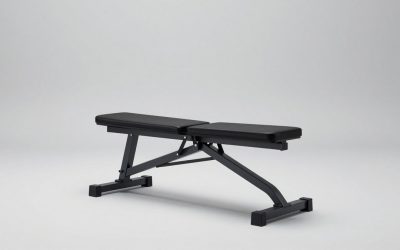
“Folding” covers two different designs, and the difference decides where the bench lives:
- True folding benches (Flybird, Finer Form, Fitness Reality) collapse at the legs or the frame, leaving a slab about 8–12 inches tall that slides under a bed or stands against a wall.
- Stowable benches (Bowflex 3.1S and 5.1S) don’t fold. They tip up on end and stand upright, so they take up a small floor footprint but need about 4–5 feet of vertical space.
If your storage spot is under a bed or behind a sofa, you need a true folder. If it’s a closet corner or a spot beside a rack, a stowable bench works and is usually more solid in use.
Five Benches Compared
| Bench | Storage style | Stated weight capacity | Bench weight (approx.) | Back-pad positions | Decline? | Typical price |
|---|---|---|---|---|---|---|
| Flybird Adjustable Bench | Folds flat | 700–800 lb (varies by model) | 28–32 lb | 7 | Yes | $110–$170 |
| Finer Form Multi-Functional Bench | Folds | About 660 lb | About 30 lb | 8 | Yes | $120–$180 |
| Fitness Reality 2000 Super Max | Folds | About 800 lb+ | About 60–65 lb | 7 | Yes | $170–$260 |
| Bowflex 3.1S Stowable | Stands upright | 480 lb | About 55 lb | 4 (-20°, 0°, 45°, 90°) | Yes | $200–$300 |
| Bowflex 5.1S Stowable | Stands upright | 600 lb | About 60 lb | 6 | Yes | $250–$360 |
Weight capacity is the total load: your body weight plus whatever you’re lifting. A 200 lb lifter pressing two 50 lb dumbbells puts about 300 lb on the bench, plus extra force when lowering. All five benches cover that. Only the heavier frames suit heavy barbell pressing from a rack.
Which Folding Bench Fits Your Training
Flybird adjustable bench: best for most people
The Flybird is the folding bench most home lifters start with, and for good reason. At around 30 lb, it’s easy to carry, folds in seconds, and its decline setting with leg holder adds sit-ups and decline presses. The tradeoffs are typical of light folding benches: there’s a gap between the seat and back pad, the pad is narrower than commercial benches, and it can feel less planted when you drive your feet hard into the floor. Users taller than about 6’2″ may find the back pad short when it’s flat.
Finer Form multi-functional bench: more angles at a similar weight
The Finer Form offers eight back-pad positions and a similar decline setup in a comparable folding frame. It suits people who do a lot of incline work and want finer steps between angles. Like the Flybird, it’s built for dumbbell training rather than heavy barbell work.
Fitness Reality 2000 Super Max: the sturdy folder
At roughly twice the weight of the Flybird, the Super Max trades portability for stability. Its wider base and thicker steel move less during heavy dumbbell presses. It still folds for storage, but you’ll be lifting a 60-plus-pound frame each time, which matters if you put it away after every workout.
Bowflex 3.1S and 5.1S: upright storage, solid feel
Neither Bowflex folds, but both tip up and stand on end, which Bowflex says cuts their floor footprint by more than half. The 3.1S is about 52 inches long without the leg brace, has four positions from -20° to 90°, and is rated for 480 lb. The 5.1S adds more angles, a wider range and a 600 lb rating. Both feel more like a gym bench than the light folders do. Bowflex Results Series SelectTech dumbbells stand neatly beside them if you’re building a matching setup.
Space Math Before You Buy
| Measurement | Typical folding bench | Typical stowable bench |
|---|---|---|
| Length when in use | About 50–55 in | About 52–60 in |
| Width | About 16–24 in | About 20–26 in |
| Stored footprint | About 30–40 in × 16–20 in, 8–12 in tall | About 20–26 in × 20–26 in, 48–60 in tall |
| Clear floor needed to train | Bench length plus about 2 ft at each end; bench width plus about 3 ft on each side for dumbbell flyes | |
As a worked example: a 54-inch bench needs about 102 inches (8.5 feet) of length and roughly 7–8 feet of width to press and fly with dumbbells without hitting walls. Measure that space before ordering, because it’s usually the training area, not the storage spot, that limits small apartments.
Ownership Realities
- Pins and knobs wear first. Pop-pins and adjustment knobs on folding frames loosen over months of use. Check and tighten bolts every few weeks, especially at the fold hinge.
- Vinyl cracks at the seams. Wipe sweat off after each session and keep the bench out of direct sun. A towel over the pad extends its life considerably.
- Uneven floors cause wobble. Lightweight benches magnify uneven flooring. A rubber mat under the bench steadies it and protects the floor.
- Don’t use folding benches as step-ups. Box jumps and step-ups put force on the frame in a direction it isn’t designed for.
- Respect the seat gap. On light benches, set the seat and back angle so the gap doesn’t sit under your lower back during presses.
Quick Decision Guide
| Your situation | Choose |
|---|---|
| Small apartment, dumbbells only, bench goes under a bed | Flybird adjustable bench |
| Lots of incline work, want finer angle steps | Finer Form multi-functional bench |
| Heavier dumbbells, want stability, rarely put it away | Fitness Reality 2000 Super Max |
| Corner storage, want a gym-bench feel | Bowflex 5.1S, or the 3.1S for a lower budget |
If you have a back or shoulder injury, talk to a physical therapist or doctor about safe bench angles before starting incline or decline work.
Write Your Review
No reviews yet. Be the first to share your experience!